Wine Industry Compensation Structure
The wine industry’s highest compensation is concentrated in corporate executive roles managing global beverage portfolios, with significant variation across positions and regions.
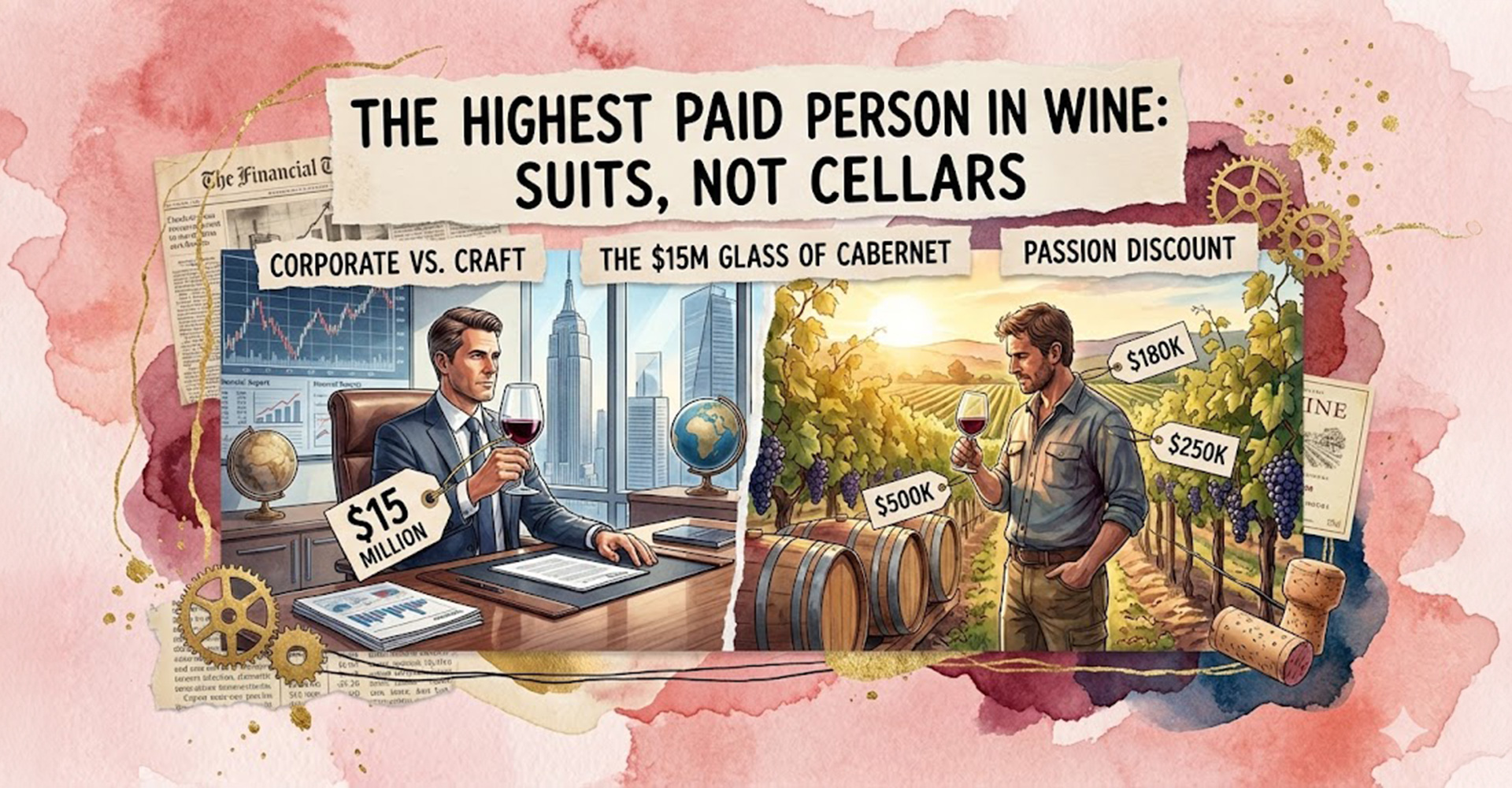
- Top earners are CEOs of global beverage conglomerates, with total compensation around $15 million, largely performance-based.
- Senior roles like CFOs, division presidents, and sales executives earn between $300,000 and $4 million depending on scale and responsibility.
- Technical experts such as senior winemakers and Master Sommeliers earn $160,000 to $180,000, with regional pay differences.
- Direct-to-Consumer roles and commercial leadership are growing in financial importance and compensation.
You’d think the highest-paid person in wine would be a legendary winemaker in Napa, swirling something rare while murmuring about structure and tension.
Or perhaps a Master Sommelier in a Michelin-starred dining room, gliding between tables like a vinous Jedi.
Nope.
The real money in wine sits in a boardroom.
And it wears a suit.
The $15 Million Glass of Cabernet
Data compiled from 2025 proxy statements, industry salary surveys, and regional compensation reports.
The highest paying job in the wine industry is the Chief Executive Officer of a global beverage conglomerate with a serious wine portfolio.
In 2025, the CEO of a major drinks giant earned roughly $15 million in total compensation.
The salary itself isn’t the headline act. Base pay might sit around $1.3 million, but the real fireworks come from stock awards, options, and performance incentives. In some cases, more than 90% of the package is tied to company performance and share price.
The biggest earners in wine don’t make wine. They manage capital, strategy, acquisitions, and global brand portfolios. They’re navigating tariffs, shifting consumer tastes, declining retail sales, and the eternal question: are people still drinking Merlot?
As a business owner myself, I’ve learned that reward follows risk and effort. We see the headline number, but we rarely see the trade-offs underneath it. At that level, compensation is tied to decisions that can move billions in value. The salary reflects accountability as much as status.
Corporate Wine vs Romantic Wine
Wine has two personalities.
There’s the romantic version. Rolling vineyards. Heritage estates. Generations of craftsmanship. Harvest at dawn.
Then there’s the corporate reality. Publicly traded giants managing wine, beer, and spirits across multiple continents. Multi-billion portfolios. Investor calls. EBIT targets.
Scale dictates pay.
While the CEO of a global conglomerate might earn eight figures, the CEO of a large independent winery producing over a million cases annually averages closer to $800,000. Still impressive, but not private jet territory.
Smaller wineries may see leadership salaries nearer $286,000.
Wine is glamorous. But only at the very top.
The Top Paying Roles Beyond the CEO
CFO and C-Suite Executives
The CFO of a major drinks company can earn around $4 million. Wine is capital-intensive. Long ageing cycles. Complex supply chains. International tax structures. It’s agriculture meeting high finance.
President, Wine & Spirits Division
Running the wine division inside a conglomerate can bring in over $2.5 million. This role bridges vineyard heritage and shareholder expectations.
CEO of Large Independent Estates
In premium regions like Napa, senior leadership can comfortably exceed $500,000, especially at scale.
Executive Vice President of Sales
Often north of $300,000 with bonuses. These are the revenue engines of the business. If bottles don’t move, nothing works.
General Manager
Average compensation sits around $243,000 and rising. The operational linchpin. Profit and loss responsibility. Staff retention. Margin protection.
Executive Winemaker
Senior winemakers in Napa can earn $160,000 to $180,000, sometimes more with bonuses. They are the stylistic architects of the brand.
Master Sommelier
Fewer than 300 globally. Median earnings around $164,000 in high-end hospitality, with additional upside from consulting and ambassador roles.
The leap from Advanced Sommelier to Master Sommelier nearly doubles earning potential. Rarity commands value.
Masters of Wine, in particular, are mind-blowing to me. The depth of knowledge, discipline, and global perspective required is extraordinary. It’s not just a qualification. It’s a lifetime commitment to the craft.
The Napa Premium
Geography matters.
Move from California’s Central Coast to Napa and salaries can jump 20 to 30 percent for the same role.
A Head Winemaker in Napa might earn $180,000. In Sonoma, closer to $152,000. Central Coast nearer $141,000.
But higher pay does not always mean higher disposable income. Cost of living quickly narrows the gap. Wine may be global. Rent is local.
The Passion Discount
Wine often pays 5 to 10 percent less than comparable roles in mainstream consumer packaged goods.
Why?
Because people want to work in wine. There’s lifestyle, travel, tastings, prestige, storytelling.
Employers know this.
I’ve felt that pull personally. I’ve done projects in wine at reduced rates, sometimes even gratis, because the sector matters to me. Passion goes a long way in this industry. The upside is purpose and access. The downside is that not everyone gets paid what they might elsewhere. That tension is real.
That said, the discount is shrinking in commercially critical roles, particularly in Direct-to-Consumer, digital marketing, and sales leadership.
The Rise of Direct-to-Consumer Power
Direct-to-Consumer, or DTC, is where margins live.
Wine Club Directors in Napa now earn over $110,000 on average, increasingly structured with performance incentives tied to growth and retention.
The tasting room is no longer just charming hospitality. It’s a profit centre.
Expect these roles to become more commercially structured and more financially rewarding.
The Gender Pay Gap: A Bright Spot
One encouraging development is the narrowing gender pay gap.
Women in the US wine industry now earn approximately $0.95 for every $1 earned by men. That outperforms the broader national average and suggests real progress.
So What Should You Aim For?
If your goal is maximum income in wine, three pathways stand out.
1. The Corporate Strategy Path
Climb into executive leadership at scale. Finance, operations, global brand strategy. High risk, high reward.
2. The Technical Prestige Path
Become a top-tier winemaker in a premium region or achieve Master Sommelier status. Rare expertise attracts premium pay.
3. The Commercial Leadership Path
Run revenue. Sales. General management. Direct-to-Consumer growth.
If a 25-year-old asked me how to make serious money in wine, I’d say this: go into sales for a big global company. Being part of a multi-country deal and taking a slice of that is far more scalable than selling a bottle across a shop counter. Learn how global distribution works. Understand margin. Follow the volume.
Money flows to those who control capital, control margin, or hold rare expertise.
Final Thought
Wine will always sell romance.
But the highest pay cheques come from spreadsheets.
Even so, working in wine means being part of an industry built around stories, craft, culture, and connection.
And that’s not a bad consolation prize.
Cheers.