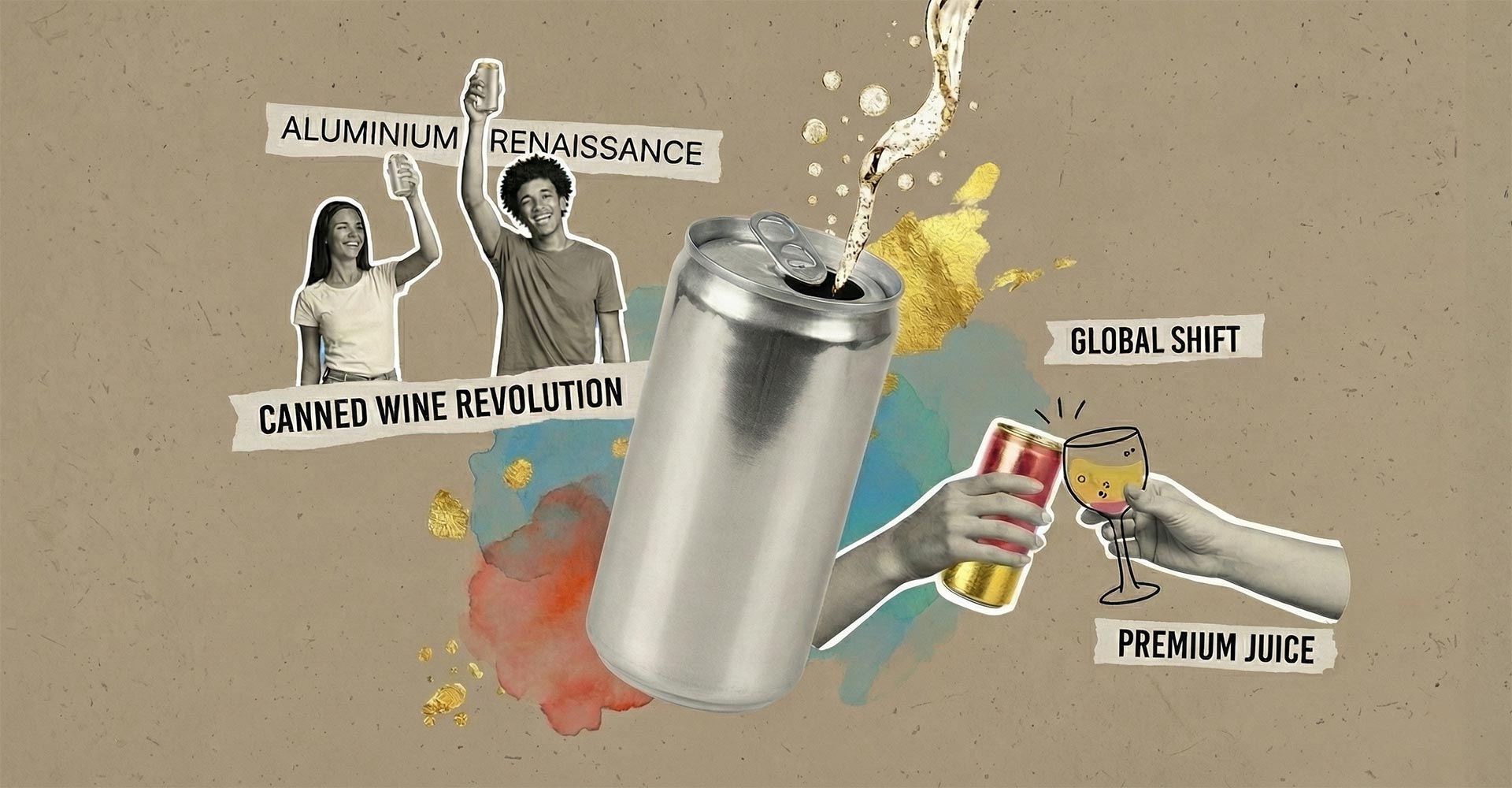
Let’s be honest, if you’d offered someone (especially me!) canned wine ten years ago, you’d have been met with the kind of look usually reserved for flat prosecco or warm Echo Falls. But times, tastes, and tech have changed. Welcome to the aluminium renaissance.
This isn’t about chucking a mediocre rosé into a Red Bull tin. We’re talking global shifts in taste, tech, and consumer culture that are turning wine’s most rebellious format into its most exciting growth engine.
From Picnic Punchline to Premium Player
Canned wine was once the butt of a joke. Now, it’s the reason the wine industry is smiling again (at least for some)
Glass has long been the gold standard, but it’s heavy, fragile, and a nightmare at festivals or beaches. Enter the can: lightweight, chill-friendly, unbreakable, and increasingly packed with genuinely impressive juice.
In fact, top brands are winning awards, scoring 90+ points, and getting listings in places like JetBlue, Regal Cinemas, and even McDonald’s (yes, seriously—Santa Julia’s canned Chenin in Argentina).
Canned Wine by the Numbers: Who’s Buying What?
Here’s how the global market’s shaking out:
| 🌍 Region | 💰 2024 Market Size | 📈 Growth Rate | 🔥 Why It’s Hot |
|---|---|---|---|
| USA | $447.6M | 13.4% CAGR | Sparkling leads. Millennials & Gen Z love the “no pinkies, no rules” vibe. |
| UK | N/A | Soaring (esp. Gen Z) | 60% of Gen Z drink from cans. Big push on sustainability & TikTok trendiness. |
| Australia | N/A | Dominated by spritzers | ⅔ of sales = sparkling. Cans blur line between wine & RTD. |
| South America | ~$190M | Fastest in LATAM | E-commerce boom in Brazil. Organic + export wins in Argentina. |
| Japan | ¥3.4B (~£18M) | 2.5x since 2017 | Cans = “small luxury” for solo drinkers. Premium US imports lead. |
| Sweden | State-driven | Medium | You want to sell wine there? Better be in a can. |
| France | Minimal | Snail’s pace | Cultural resistance strong. Cans succeed more abroad. |
| Germany | Low-end in supermarkets | Fragmented | Discounters rule, but trendy online players are emerging. |
| Global Total | $112.9M–$12.18B* | 11.1% CAGR (conservative) | Depends how you define “wine” (pure wine vs wine-based RTDs). |
*Depending on source and inclusion of wine cocktails/spritzers
Taste: It’s Not Just About Packaging
You might wonder, “But does it taste the same?” Good question. Here’s what the data (and your taste buds) say:
1. No, It Doesn’t Taste Like Metal
Modern cans have a food-grade lining (e.g. Vinsafe tech) that protects the wine from aluminium’s metallic tang. If your canned wine tastes like a rusty pipe, it’s a fault, not a feature.
2. Fresher Than You Think
Cans are:
-
Airtight
-
Light-proof
-
Oxidation-resistant
That’s why crisp whites and rosés often taste brighter and cleaner in a can than a half-finished bottle on day two.
3. Bubbles Are a Bonus
Sparkling styles dominate sales because carbonation:
-
Preserves freshness
-
Elevates fruitiness
-
Covers minor flaws
Basically, it’s fizzy insurance.
4. Straight from the Can? Not Always Ideal
Drinking from a can limits aroma, which is 70% of taste. Want to really judge the wine? Pour it into a glass. It often tastes better than you expected. (I was pleasantly surprised at last year’s wine show in London when I gave it a try and I’m a self confessed wine snob!)
5. Your Brain Is Biased
Studies show people rate wine lower when it comes from a can, unless they’re tasting blind. So if you’ve ever thought, “This seems cheap,” it might just be your eyeballs talking, not your taste buds.
Brands That Nailed It
Here are a few of the movers, shakers, and spritzers changing the way the world drinks:
-
Underwood (USA): “Pinkies Down” made canned Pinot cool. Think hiking boots, not decanters.
-
Babe Wine (USA): Marketing genius—memes, Bumble breakups, and influencer gold.
-
Canned Wine Co. (UK): Quality-first with vintage transparency and sustainability front-and-centre.
-
Archer Roose (USA): Celebrity creative director Elizabeth Banks brings sass and class.
-
Nice Drinks (UK): Styled like a fashion label. Festivals, pastels, and very Instagrammable.
-
Santa Julia (Argentina): McDonald’s wine meals. Enough said.
-
Barokes (Australia): Invented the tech that made canned wine viable in the first place.
So What’s Next?
-
Premiumisation
As the stigma fades, more premium producers are entering the game. Expect to see vintage Chardonnay and estate-grown Pinot Noir in cans soon. -
Market Consolidation
Bigger players are buying up successful indie brands. Think less start-up, more screw-cap empire. -
Format Expansion
From 187ml sippers to 375ml share-cans, packaging is adapting to every occasion, from solo Netflix night to beach BBQs. -
Sustainability as Strategy
In eco-conscious markets like Scandinavia and the UK, the can isn’t just smart, it’s strategic. Retailers are rewarding brands that cut carbon by ditching glass.
The Takeaway: It’s Not Just a Can
It’s a mindset. A movement. A moment.
Canned wine isn’t here to replace the bottle, it’s here to remove the barriers. It’s for people who want great wine without the ceremony. And if that sounds like the future, it’s because it probably is, at least a big part of it. I see canned wine as the gateway: a low-pressure entry point for a new generation of drinkers to explore the world of wine on their own terms. And who knows? As they grow older (and maybe a touch more nostalgic), they might just find themselves reaching for those dusty bottles of aged Bordeaux or Barolo we’ve all been stockpiling.
So next time someone raises an eyebrow at your canned Sauvignon, just smile, crack it open, and remind them:
The revolution won’t be decanted.