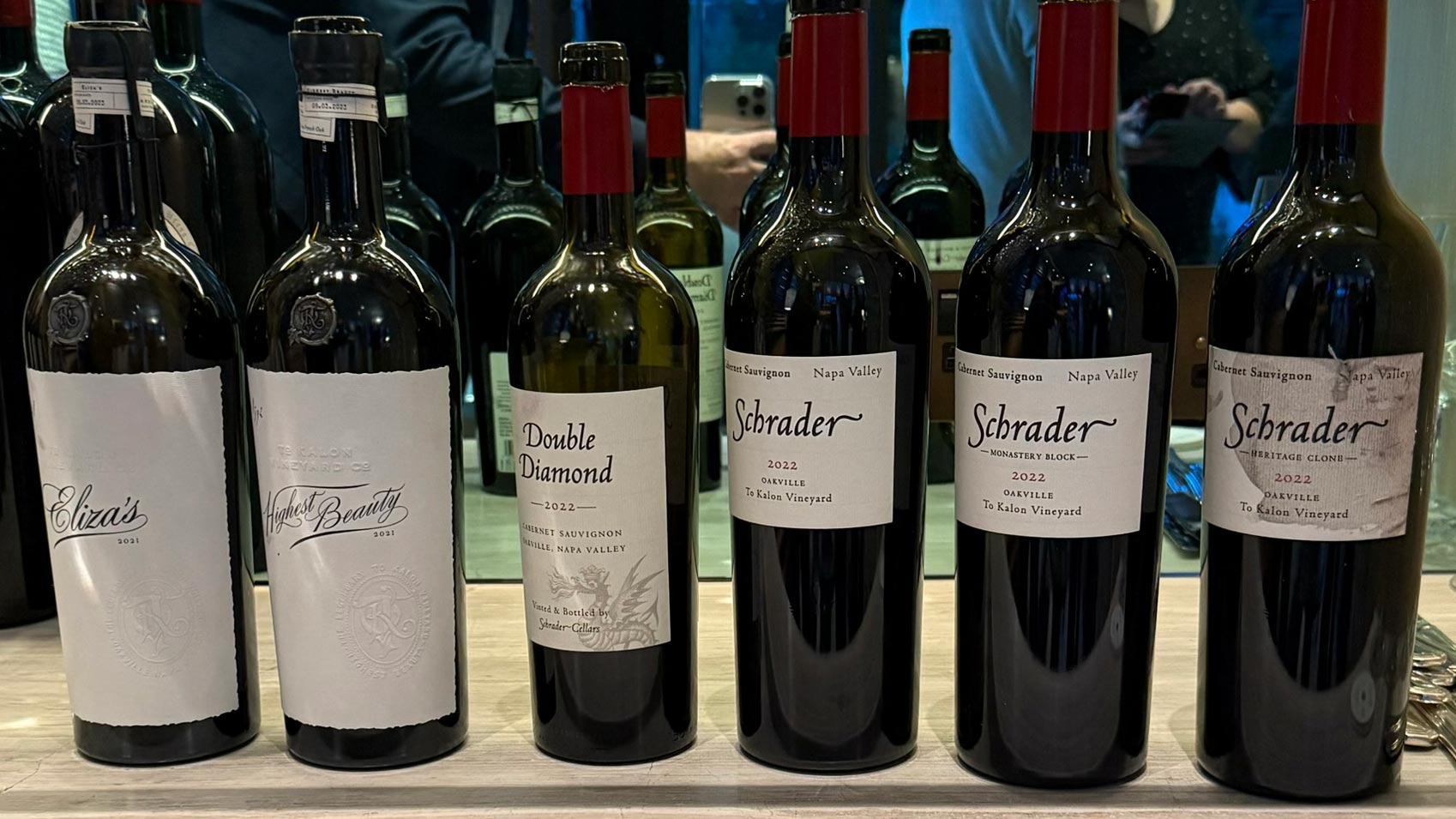
The wine industry loves to talk about terroir.
But in boardrooms, warehouses and shipping terminals, the real conversation is changing.
Artificial intelligence is quietly transforming the global wine trade. As someone who has spent more than two decades exploring the world of wine and engaging a growing WineGuide101 audience of enthusiasts and industry observers, I’ve been watching this shift move from curiosity to commercial reality. Not in a science-fiction way. Not with robots replacing winemakers. But in the unglamorous, high-stakes areas that actually determine whether wine businesses make money or lose it.
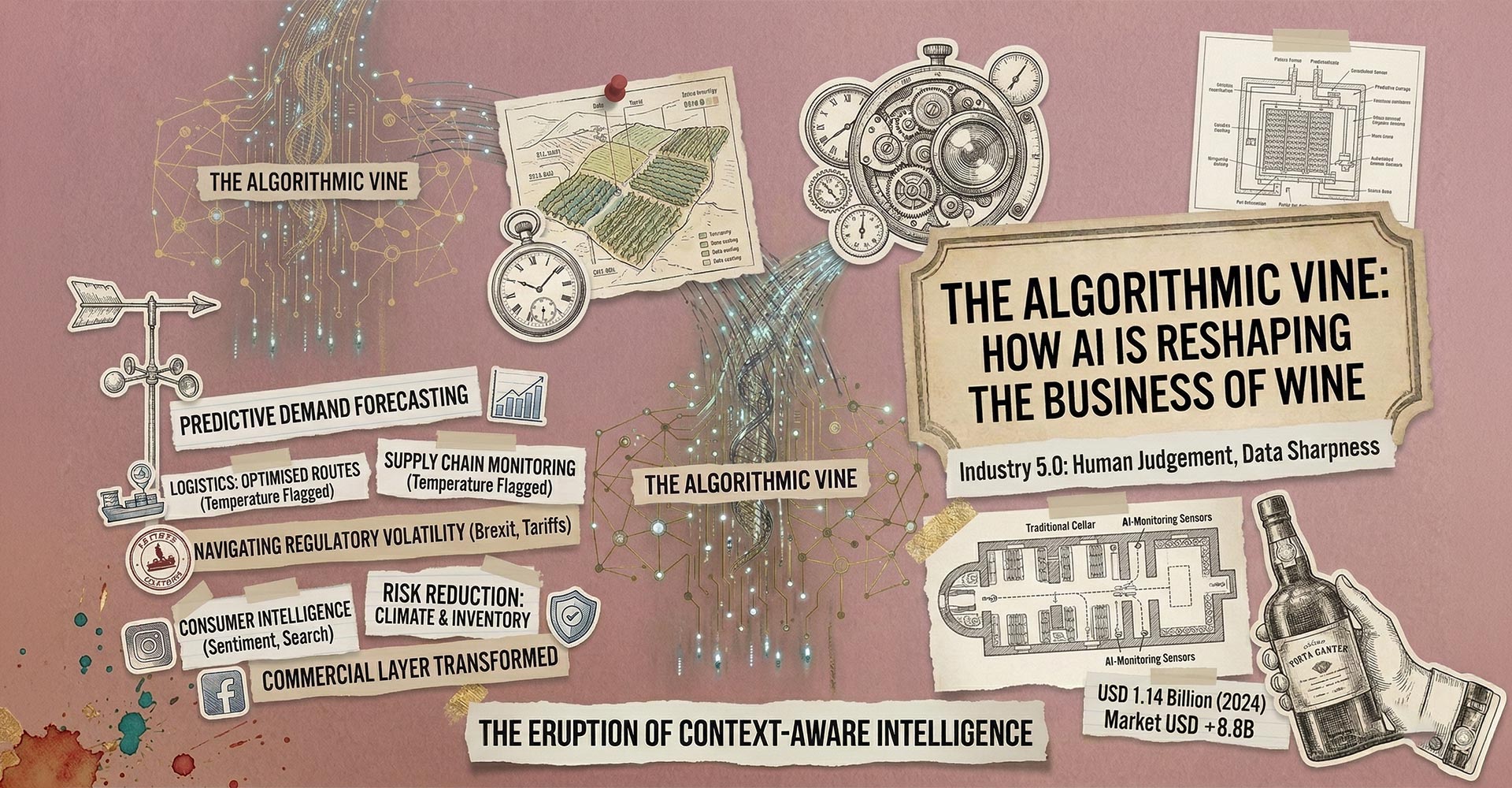
We’re moving into what many call Industry 5.0. A model where human judgement still leads, but data sharpens every decision. And in a sector facing climate instability, tariff swings, compliance headaches and unpredictable consumer behaviour, that shift isn’t optional. It’s survival.
Let’s talk about what’s really happening.
From Gut Feel to Data-Led Demand
Historically, wine trading relied on relationships and instinct.
Importers backed producers they trusted. Merchants stocked what had worked before. Forecasting was often educated guesswork dressed up as confidence.
Now AI models are analysing:
- Historical sales patterns
- Regional purchasing behaviour
- Price sensitivity trends
- Macroeconomic signals
- Seasonal buying cycles
Algorithms can predict which SKUs will move, which price points will stall, and where inventory risk is building.
For a merchant holding millions in bonded stock, better forecasting isn’t interesting. It’s transformational.
Overstocking premium Burgundy ties up capital. Understocking a fast-moving Rioja loses margin. AI reduces those blind spots.
Logistics: The Hidden Margin Killer
Industry data highlights just how critical logistics is to wine profitability. Supply chain analyses in the beverage sector suggest that logistics, distribution and handling can represent a significant share of the final retail price of wine, often estimated around 20–30% depending on market structure and distance to market. Temperature excursions during transport are widely recognised by wine logistics specialists as one of the leading causes of spoilage and quality degradation in premium shipments.
Wine is fragile, regulated and heavy. A nightmare combination for logistics.
Delays at customs, temperature fluctuations in transit, compliance errors in paperwork, and shifting duty structures can wipe out margin overnight.
AI-driven systems are now being deployed to:
- Optimise shipping routes based on live trade conditions
- Predict customs bottlenecks
- Automate compliance documentation
- Monitor temperature deviations in real time
For storage providers and fine wine warehouses, sensor networks and automated alerts reduce spoilage risk. A temperature spike isn’t discovered weeks later. It’s flagged instantly.
That protection preserves both product quality and reputation.
And in the premium sector, reputation is everything.
Navigating Regulatory Volatility
Recent trade events highlight how exposed the wine industry is to regulatory change. The 2019 US–EU tariff dispute temporarily imposed 25% duties on many European wines entering the United States, disrupting pricing and supply chains for importers. Brexit introduced new customs procedures and administrative requirements for wine entering the UK, increasing compliance complexity for merchants and distributors. More recently, the UK’s alcohol duty reforms have altered taxation structures based on alcohol by volume, forcing importers and retailers to reassess pricing strategies.
Global wine trade is exposed to geopolitics in ways most consumers never see.
Tariff disputes. Brexit adjustments. US–EU trade tensions. Labelling regulations. Sustainability compliance. Carbon reporting.
AI platforms can model regulatory impact before contracts are signed. Businesses can simulate how duty changes affect landed cost, margin and retail price.
Instead of reacting to policy shifts, companies can scenario-plan with real numbers.
That’s a serious competitive advantage.
Consumer Intelligence: Understanding the Modern Drinker
The modern wine buyer is different.
Younger consumers are more price-aware, more health-conscious and more digitally influenced. Premiumisation continues, but so does moderation. Subscription models are rising. Direct-to-consumer channels are growing.
AI tools analyse:
- Social sentiment
- Search behaviour
- Purchase frequency
- Demographic trends
This helps merchants refine pricing strategies, marketing messages and product positioning.
In short, it replaces assumption with insight.
And in a crowded marketplace, insight wins.
Supply Still Matters. But the Commercial Layer Is Changing Faster
Yes, AI is also appearing in vineyards with predictive viticulture and smart agriculture. That foundation supports quality.
But the bigger transformation is commercial.
Wine businesses are becoming more data-literate. Importers are using predictive modelling. Storage providers are automating risk management. Retailers are refining margin structures through machine learning.
The human element hasn’t disappeared.
Buyers still taste. Producers still craft. Merchants still build relationships.
What’s changed is the precision around the decisions that sit behind those relationships.
The Real Shift: Risk Reduction
At its core, AI in wine business is about reducing uncertainty.
- Climate risk
- Inventory risk
- Regulatory risk
- Consumer risk
- Spoilage risk
The wine trade has always carried volatility. What’s new is the ability to quantify and manage it more intelligently.
That doesn’t remove romance from wine.
It protects it.
Because if the commercial backbone collapses, there’s no story to tell.
Final Thought
The future of wine business isn’t algorithm versus artisan.
It’s instinct supported by intelligence.
The smartest wine companies won’t be the ones replacing people with machines. They’ll be the ones using AI quietly, strategically and commercially to make better calls.
And if you’re a wine business exploring how AI could improve forecasting, operations, marketing or decision-making, I’d love to talk. Through my agency, we help organisations develop practical AI strategies and implement tools that create real commercial advantage. email [email protected]
The vines may be ancient.
The trade is becoming very modern.
Cheers to that.