Bagged wine used to suggest student kitchens, emergency camping supplies and a fairly relaxed attitude to quality. That reputation is changing. Premium producers are now putting serious wine into pouches, boxes and cans, driven by lower carbon emissions, better freshness and drinkers who care less about ceremonial glass and more about what is inside it.
Wine has always had a complicated relationship with packaging. We claim the liquid matters most, then happily judge it by bottle weight, punt depth, foil colour and whether the label looks as though it was designed by a minor member of the Italian aristocracy.
I’ve lost count of the number of times I’ve heard someone dismiss boxed or bagged wine before they’ve tasted it. It’s one of those wine prejudices that has survived long after the evidence began to change. Having spent decades studying, tasting and talking about wine, I’ve learned that the container matters, but nowhere near as much as what is inside it.
That said, we need to be sensible about the comparison. Nobody is suggesting that a pouch should replace a carefully cellared Super Tuscan or a bottle of Château Mouton Rothschild. This isn’t about putting every wine into a bag and declaring glass obsolete.
It’s about recognising that for fresh, everyday drinking, picnics, parties, outdoor events and a glass on a Tuesday evening, heavyweight glass is not always the only credible option.
For centuries, the 750ml bottle has been treated not merely as a container, but as a badge of seriousness. Wine in glass is proper wine. Wine in anything else has traditionally been viewed with the suspicion once reserved for screwcaps and people who put ice in rosé.
That distinction is becoming harder to defend.
Why is premium wine moving beyond glass bottles?
The simplest answer is weight.
Glass is heavy, fragile and expensive to transport. A standard bottle may weigh around 540g before a single drop of wine is added, which means producers routinely ship enormous quantities of packaging around the world alongside the actual product.
Alternative formats dramatically reduce that burden. Pouches and bag-in-box systems can generate a carbon footprint around 80% to 85% lower than glass. Empty flexible bladders also travel flat, allowing one truck carrying 5-litre bag-in-box components to replace more than seven trucks carrying empty 75cl bottles.
That matters commercially as well as environmentally. Lower freight weight reduces transport costs, cuts emissions and makes storage more efficient. In an industry where margins are squeezed at almost every stage between vineyard and consumer, shipping less air and glass isn’t a philosophical exercise. It’s arithmetic.
The wider market is moving in the same direction. Wine consumption has been shifting from volume towards value, with many younger drinkers consuming less frequently but showing greater interest in quality, sustainability and authenticity.
They may not feel sentimental about heavy bottles. They may simply want a good wine in a format that suits how they live.
Does bagged wine stay fresh for longer?
Once opened, it often does.
A conventional bottle begins deteriorating as soon as wine is poured because air enters the empty space. Oxygen can be useful during winemaking and disastrous afterwards, rather like advice from a consultant.
With a pouch or bag-in-box, the inner bladder collapses as the wine is dispensed. Very little air enters, so the wine can remain fresh and aromatic for four to six weeks.
That makes the format particularly useful for people who want one glass with dinner rather than feeling morally obliged to finish the bottle before Wednesday.
The trade-off comes before opening. Glass is effectively impermeable, whereas plastic films and closures allow tiny amounts of oxygen to pass through over time. Premium pouches therefore use multilayer materials, typically combining polyethylene or nylon for strength with EVOH or metallised polyester as an oxygen barrier.
These are fresh-pack products rather than cellar material. Nobody should buy a bagnum with the intention of laying it down until their niece graduates.
Bottom Line: Bagged and boxed wine is excellent for near-term drinking and extended freshness after opening. It isn’t designed for ageing, collecting or being discussed solemnly beside a dusty cellar wall.
Are wine cans as good as pouches and boxes?
Cans have obvious advantages. They’re light, portable, quick to chill and suitable for beaches, pools, festivals, boats and other places where glass is banned or merely antisocial.
They are also impermeable to oxygen and light. The difficulty is what happens inside the can.
Wine is acidic and usually contains sulphur dioxide for protection. Aluminium cans therefore require an internal polymer lining to prevent the liquid touching the metal. If that lining is damaged, unsuitable or too thin, corrosion can trigger the formation of hydrogen sulphide, producing the unmistakable aroma of rotten eggs.
Research cited in the supplied material suggests that careful sulphur management and suitable internal linings are essential for reducing this risk.
This is not information most consumers will find printed beside the tasting note. It does, however, underline an important point: canned wine isn’t simply bottled wine poured into a smaller metal object. Producers must formulate, test and package it specifically for the format.
Which premium alternative wines are worth watching?
The interesting part of this category isn’t that inexpensive wine can be put in a box. We knew that already. The real shift is that thoughtful producers are placing estate-grown, single-vineyard and minimal-intervention wines into formats once associated with volume rather than provenance.
My Dear Friends, a Chicago and Oak Park-based brand highlighted in July 2026, packages characterful South African wines from Swartland in 1.5-litre bagnums.
Its Skin Contact White combines Chenin Blanc and Semillon, while its Red Table Wine brings together Cinsault, Mourvèdre, Syrah and Touriga Nacional from dry-farmed bush vines.
Txakoli Pilpil from Señorio de Astobiza offers Hondarrabi Zuri in a pouch, while Le Grappin packages Bourgogne Aligoté in the same lightweight format, proving Burgundy can survive outside glass without summoning an emergency committee.
Boxed wine is moving upmarket too. Tablas Creek’s Alouette Grenache comes from regenerative organic and biodynamic vineyards in Paso Robles. Really Good Boxed Wine offers single-vineyard Napa Valley Pinot Gris in a 3-litre format, while Laylo’s Luberon Rosé combines Provençal style with packaging designed to look presentable on a table rather than hidden behind the barbecue.
The category also suits premium non-alcoholic wine. Products such as Bolle, Oddbird and Saint Viviana show that moderation needn’t taste like fizzy grape cordial wearing a dinner jacket.
What should buyers look for?
First, check the date. Pouches and boxes should generally be consumed within six to 12 months of filling. A dusty box that has spent two summers beside a shop window is not a bargain, however enthusiastic the discount sticker.
Second, look for producers who explain their packaging. High-barrier films and reliable tap systems suggest someone has thought seriously about oxygen management.
Third, treat cans with the same discrimination you would bottles. Reputable producers will understand sulphur levels, liner compatibility and shelf-life testing. A sulphurous or cooked-vegetable smell that develops after opening may indicate packaging interaction rather than an adventurous winemaking philosophy.
Finally, distinguish de-alcoholised wine from flavoured grape drinks. The best non-alcoholic wines retain fermentation character, acidity, texture and dryness. The weaker examples compensate with sweetness, flavourings and the vague hope that nobody asks too many questions.
When does alternative packaging make most sense?
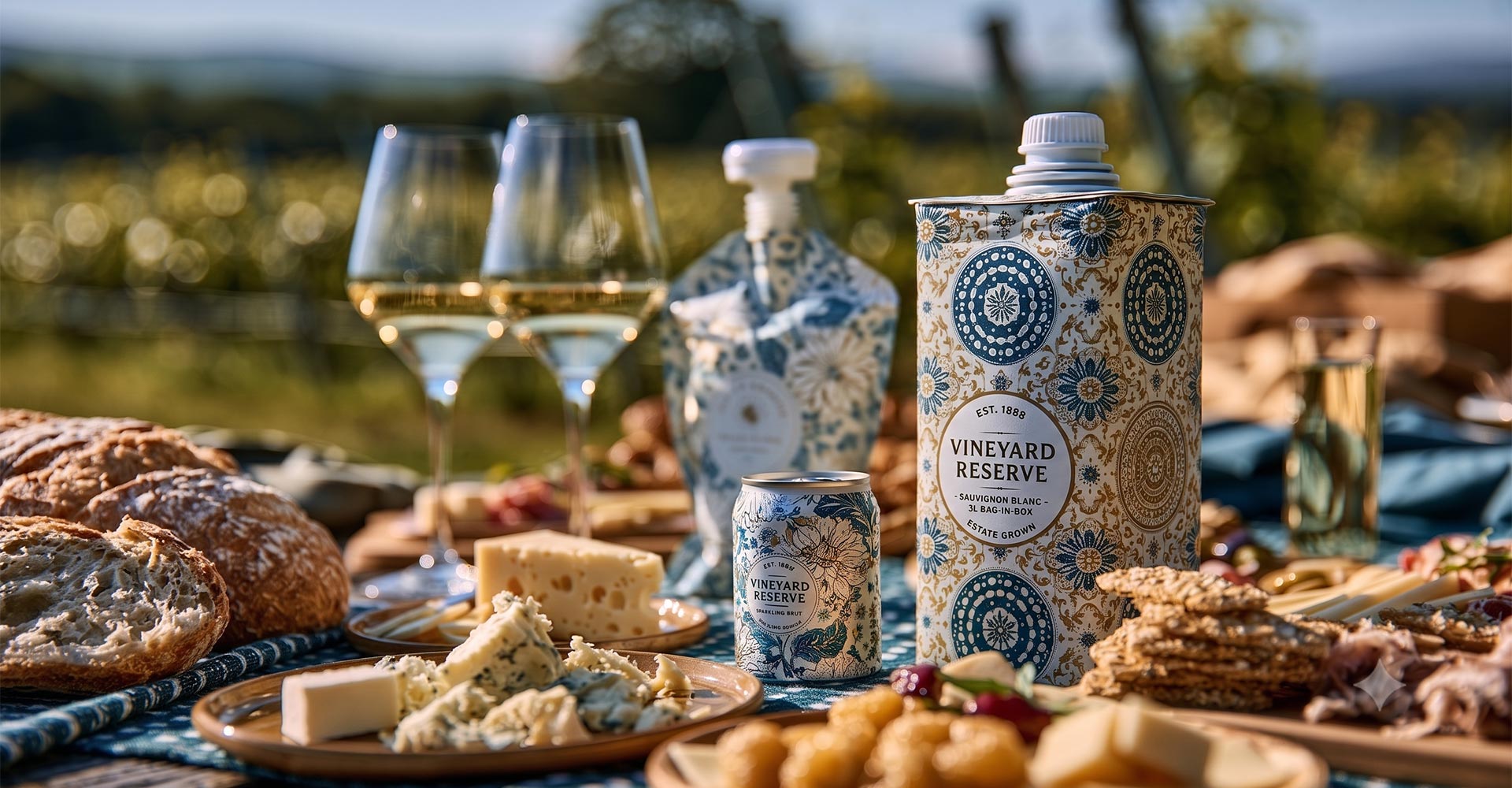
Bagnums are ideal for picnics, hiking and outdoor gatherings because they weigh less, don’t break and collapse when empty. Cans work brilliantly around pools, beaches, boats and festivals, where portability and single serves matter.
For parties, a 3-litre box offers four bottles’ worth without four corks, four empties and one guest opening the expensive bottle you were saving.
For everyday drinking, a box or pouch allows one glass at a time, free from the emotional blackmail of an open Burgundy.
Restaurants and wine bars can benefit too. Premium boxes reduce oxidation and wastage in by-the-glass programmes, allowing operators to list more adventurous wines without gambling on selling the entire bottle that evening.
Bottom Line: The best format depends on the occasion. Glass still makes sense for ageing, gifting and formal service. Pouches, boxes and cans often make more sense for freshness, portability, portion control and busy hospitality environments.
What does alternative packaging mean for the wine trade?
The opportunity is significant, but producers can’t simply put good wine into a pouch and expect consumers to forget decades of cheap boxed plonk.
Design matters enormously. A box or bagnum provides more visual space than a label, which is either a branding opportunity or an invitation to create something resembling industrial cleaning fluid.
Premium materials, typography, illustration and clear provenance signals help communicate that the packaging has changed, not the standards.
Retailers also need to explain shelf life and storage. Opened pouches and boxes should generally be refrigerated, including reds, then brought back towards serving temperature.
Contract packers are making the category more accessible too. Automated filling, nitrogen sparging and tighter oxygen control allow smaller producers to use flexible formats without filling bags by hand in a shed and hoping for the best.
For retailers, restaurants and distributors, the commercial story is compelling: lower freight costs, less breakage, longer opened life and formats suited to outdoor occasions, moderation and non-alcoholic drinking.
Is alternative packaging always better?
No, and pretending otherwise would be as unhelpful as dismissing it entirely.
If you’re buying Barolo, Bordeaux or a Super Tuscan to age for fifteen years, glass remains the appropriate format. The same applies to fine wines intended for collecting, gifting, formal service or long-term development.
Pouches, boxes and cans solve a different set of problems: transport weight, carbon emissions, portability, freshness after opening and portion control.
They also have limitations. Packaging quality varies, unopened shelf life is shorter, oxygen management matters and badly produced canned wine can develop serious faults. A lightweight container doesn’t magically improve mediocre wine, any more than an embossed bottle turns industrial plonk into Grand Cru.
The point isn’t that alternative packaging is always superior. It’s that in many everyday situations, it may be more practical, more sustainable and more appropriate than glass.
So, is bagged wine finally respectable?
Yes, although respectability is probably the least interesting thing about it.
I’ve been studying wine for decades, and I’ll admit that I still like a bottle. I enjoy the ritual, the label, the sound of the cork and the slightly unnecessary theatre of putting it on the table.
But I also accept that I’m not necessarily the target audience for every new wine format.
Younger drinkers, occasional drinkers and people moderating their consumption may have no emotional attachment to 750ml of glass. They may simply want good wine, in the right quantity, at the right price, without needing to finish the bottle before it fades.
The wine trade ignores that audience at its peril, particularly if its defence of glass amounts to little more than “this is how we’ve always done it”.
Glass will remain essential for wines intended to age, for formal service and for occasions where ritual is part of the pleasure. But wine doesn’t become more authentic simply because its container is heavy enough to require physiotherapy.
Bagnums, boxes and cans won’t replace bottles. They’ll replace bottles in the situations where bottles were never particularly sensible in the first place.
And once consumers discover that good wine can stay fresh for weeks, travel without breakage and arrive with a fraction of the carbon burden, the old prejudice may begin to look less like tradition and more like packaging nostalgia.