Why Is AI Becoming Important In The Wine Trade?
The wine trade has always had a curious relationship with technology.
We happily embraced temperature-controlled fermentation, precision viticulture and vineyard mapping systems capable of measuring almost everything except whether customers will actually buy the finished product. We can monitor vineyard health from space, analyse fermentation curves in real time and debate the merits of optical sorting machines with remarkable enthusiasm.
Yet mention artificial intelligence in a room full of wine professionals and the reaction can still range from genuine excitement to the sort of suspicion normally reserved for screwcaps in the 1980s.
Part of the problem is that AI arrives carrying more baggage than most technologies. Depending on which headline you read last, it is either about to transform every aspect of modern business or accidentally recommend glue as a pizza topping.
The truth, as usual, lies somewhere in the middle.
What is becoming increasingly clear, however, is that artificial intelligence is already changing the wine industry. Not necessarily where many expected, and certainly not in the dramatic fashion often portrayed by technology evangelists, but in ways that are commercially significant nonetheless.
Perhaps the most interesting development is that the biggest impact is not occurring in the vineyard.
It is happening much closer to the customer.
For decades, wine businesses have relied on a combination of expertise, intuition and experience to understand consumer behaviour. The best merchants seem to possess an almost supernatural ability to remember what their customers bought six months ago. Great sommeliers can often guide a hesitant diner towards the perfect bottle after only a brief conversation. Experienced wholesalers frequently develop an instinct for emerging trends long before the market catches up.
These skills remain invaluable.
The challenge is that they do not always scale.
A merchant with thirty years of experience can only have so many conversations in a day. A sommelier can only be at one table at a time. Even the most talented sales director occasionally discovers that instinct and reality are not always close companions.
Artificial intelligence is increasingly filling that gap.
How Is AI Changing The Way Consumers Buy Wine?
For an industry that can tell you the exact altitude of a vineyard parcel, the composition of its soils and which direction the slope faces, wine has occasionally been surprisingly relaxed about understanding the people who actually drink it.
That is beginning to change.
The modern wine consumer generates a remarkable amount of data. Every website visit, product search, abandoned basket, purchase decision and review creates a trail of information. Historically, much of this data sat unused. Businesses collected it but rarely extracted meaningful value from it.
Today, AI-powered systems can analyse purchasing patterns, browsing behaviour, spending habits and product preferences at a scale no human team could realistically achieve.
This is particularly valuable because consumers are often wonderfully inconsistent.
Many wine drinkers insist they enjoy discovering new wines. Sales data often reveals a slightly different story. Given complete freedom of choice, a remarkable number of consumers spend years conducting highly detailed research before ordering exactly the same Sauvignon Blanc they bought last week.
Equally, ask consumers why they chose a particular bottle and you quickly discover that decades of marketing investment can still be defeated by an attractive label, a reassuring shelf talker or a recommendation from somebody’s brother-in-law who once visited a vineyard in Tuscany.
Technology is helping businesses understand these behaviours rather than simply guessing at them.
How Are Wine Merchants Using AI To Increase Sales?
Bottom Line
AI recommendation systems help wine merchants personalise product suggestions, improve customer experience and increase sales. Research shows personalised recommendations can increase conversion rates by up to 30% and average order values by as much as 68%.
One of the fastest-growing applications is personalised recommendation technology. Rather than presenting every customer with the same selection of wines, AI systems can tailor recommendations based on previous purchases, behavioural patterns and stated preferences.
Some platforms have gone even further. Companies such as Tastry analyse the chemical composition of wines and compare those characteristics against consumer taste data, reportedly achieving over 80% accuracy when predicting whether a customer will enjoy a wine before they purchase it.
That represents a fascinating shift for an industry that has traditionally relied on expert opinion, tasting notes and educated guesswork.
Not because algorithms are replacing expertise.
Rather because they are beginning to support it.
The commercial implications are difficult to ignore. Studies suggest personalised recommendations can increase online conversion rates by up to 30% while boosting average order values by as much as 68%. In some cases, personalised recommendations account for almost a third of total e-commerce sales.
For wine retailers facing rising acquisition costs and increasing competition, those numbers tend to attract attention rather quickly.
Can AI Help Restaurants Sell More Wine?
Hospitality operators face a challenge that has existed for as long as restaurants have asked, “Do you prefer red or white?”
Most guests enjoy drinking wine.
Far fewer enjoy choosing it.
Hand somebody a forty-page wine list and you’ll witness a fascinating psychological experiment unfold in real time. Some become determined. Some become confused. Some immediately search for the second-cheapest bottle, a tradition so universal it probably deserves UNESCO protection.
The vast majority simply want reassurance.
AI-driven recommendation tools are increasingly providing it. Digital wine lists can now suggest wines based on menu choices, previous purchases and flavour preferences. Rather than confronting guests with a lengthy catalogue of unfamiliar labels, restaurants can offer more focused recommendations that improve confidence and, not coincidentally, increase wine sales.
Importantly, this does not diminish the role of the sommelier.
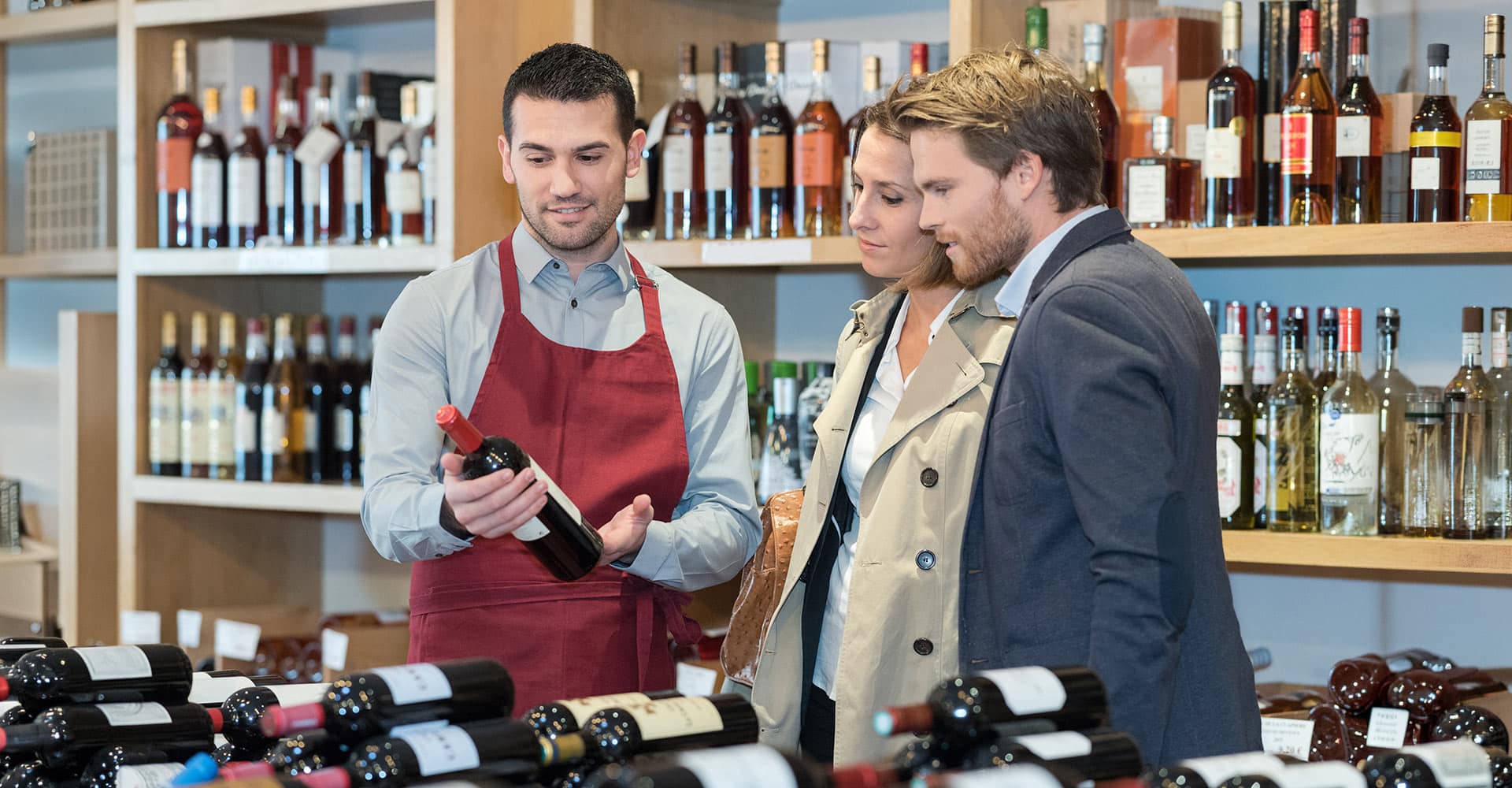
A great sommelier offers far more than product recommendations. They provide context, storytelling, personality and hospitality. They transform a transaction into an experience.
Technology cannot replicate that.
What it can do is extend some of that expertise beyond the limited number of guests a human can serve at any one time.
How Are Wine Wholesalers Using AI For Forecasting?
Bottom Line
AI forecasting helps wholesalers and distributors improve purchasing decisions, reduce overstocking, optimise inventory and protect margins through more accurate demand prediction.
Wholesale and distribution may ultimately prove even more fertile ground for AI adoption.
For years, forecasting within the wine trade has been a curious blend of historical data, market intelligence and optimism. Occasionally justified optimism. Occasionally not.
Every wholesaler has experienced the uncomfortable moment when a wine that looked destined for greatness suddenly develops all the commercial momentum of a garden shed.
At the time of purchase, it was described as “the next big thing”. Six months later it is still sitting in the warehouse, quietly challenging everyone’s assumptions about consumer demand and tying up working capital with impressive consistency.
Artificial intelligence is helping reduce some of those surprises. By analysing sales history, market conditions, seasonal trends and consumer behaviour, forecasting systems can provide a far more sophisticated view of future demand.
The goal is not perfection.
The wine trade will always have trends that appear from nowhere and disappear just as quickly. It remains one of the few industries capable of collectively deciding that orange wine, low-alcohol wine or a previously obscure grape variety is suddenly the answer to everything.
But better forecasting creates better decisions.
And better decisions create healthier margins.
What Do Wineries Need To Know About AI Discovery?
Wineries themselves are beginning to feel the effects of these changes.
Historically, producing exceptional wine was often enough. While quality remains the foundation of success, discovery is becoming increasingly dependent on data. Recommendation engines, search platforms and digital marketplaces all rely on information to understand where products belong and which consumers are most likely to appreciate them.
There is a certain irony in this.
The industry has spent generations perfecting how wine is made. It is only recently becoming equally interested in understanding how wine is found.
Detailed product descriptions, consistent data, compelling storytelling and clear positioning are becoming increasingly important commercial assets. The wineries that communicate effectively are likely to gain a significant advantage as AI-driven recommendation systems become more influential.
Will AI Replace Wine Experts?
Yet perhaps the most reassuring aspect of this technological shift is what it has not changed.
Wine remains profoundly human.
People do not buy wine solely because an algorithm suggests it. They buy wine because it reminds them of a holiday, a dinner, a celebration or a recommendation from someone they trust. They buy stories. They buy memories. They buy experiences.
Occasionally they buy a label featuring an attractive animal.
Artificial intelligence does not replace those emotional drivers.
What it does is reduce friction. It helps consumers navigate complexity. It helps merchants understand customers more effectively. It helps hospitality operators improve service. It helps wholesalers make more informed decisions.
Wine remains one of the few industries where a recommendation from a trusted merchant, a memorable holiday or an attractive label can still outperform an astonishing amount of data. AI may influence the decision-making process, but thankfully it hasn’t yet discovered how to recreate the feeling of opening a special bottle with friends.
The future of wine is unlikely to be defined by algorithms replacing expertise. Far more likely is a future in which technology quietly enhances the capabilities of the people already driving the industry forward.
For an industry that prides itself on balancing tradition with innovation, that feels like a rather sensible place to begin.