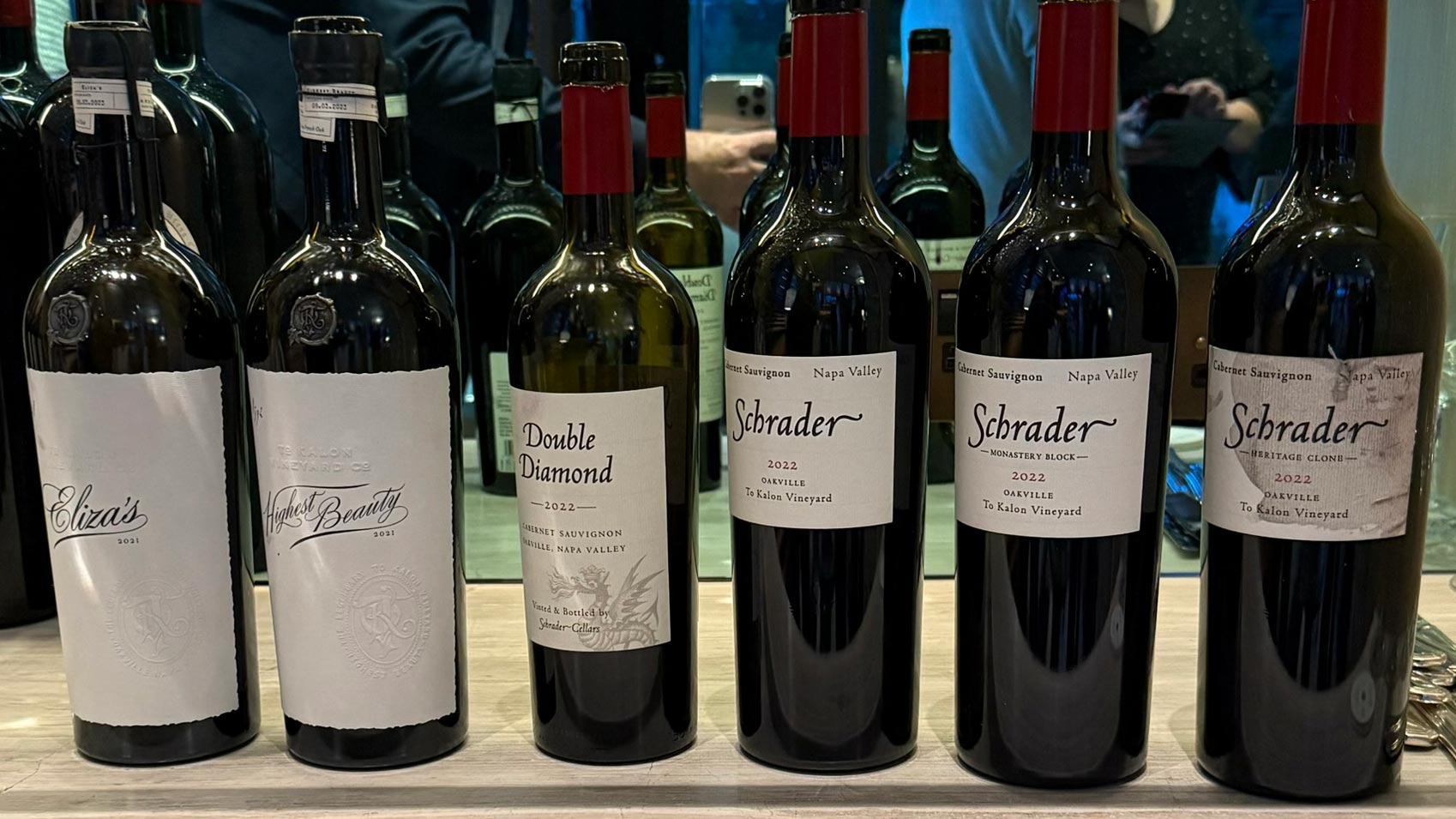
Most wine drinkers assume a bottle labelled “American” is, well, American. After drinking a fair amount of American wine this past week, I thought I’d look into it a bit more. The reality is more complicated, commercially driven and quietly controversial. A proposed California bill has highlighted how imported bulk wine, tax incentives and labelling rules combine to create one of the most misunderstood corners of the global wine trade.
The uncomfortable truth behind “American wine”
For an industry that can tell you the exact soil composition of a vineyard, wine has occasionally been surprisingly relaxed about telling you where the liquid actually comes from.
The debate around a proposed California Assembly Bill brought that contradiction into the open. On the surface, it looked like a fairly simple idea: if a wine says “American”, it should be made from American grapes.
Yet the proposal did not move forward.
Not quietly, but amid concerns from producers and trade groups about how such a change would affect production, labelling and supply chains.
What the proposed bill was trying to change
The bill aimed to require any wine labelled “American” or “United States” in California to be made from 100% US-grown grapes.
Under current federal regulations, a wine labelled “American” must contain at least 75% grapes grown in the United States, meaning up to 25% may originate overseas.
The proposal sought to remove that allowance within California, effectively tightening origin requirements beyond federal standards.
It passed the State Assembly but did not advance further in the legislative process.
Why the bill faced opposition
Trade bodies and large producers raised several concerns:
- Vintage variability: Winemakers often rely on blending flexibility to manage poor harvests, disease and climate variation
- Labelling implications: Changing origin rules could affect the ability to use certain grape variety or vintage labels
- Legal considerations: State-level restrictions on federally defined labelling terms could raise regulatory challenges
These concerns reflect the practical realities of large-scale wine production, where consistency and supply stability are key.
The real driver: economics, not romance
Behind the legislative debate sits a broader economic reality for US growers.
In recent years, parts of the US wine industry—particularly in California—have experienced oversupply, leading to unharvested grapes and vineyard removals.
At the same time, bulk wine imports have increased. Imported wine can often be purchased at lower cost than domestic grapes, making it attractive for large-volume production.
In 2025, California growers reportedly left more than 400,000 tons of grapes unharvested, while bulk wine imports reached around 45 million gallons, highlighting the imbalance between domestic supply and global sourcing.
This creates a tension between supporting domestic growers and maintaining competitive pricing in the market.
Why imported bulk wine is so attractive
Imported bulk wine is typically less expensive than domestic fruit. When blended into large-volume wines, it can reduce production costs without significantly altering the final product profile.
For producers operating in competitive retail segments, this cost efficiency can be a major advantage.
The tax mechanism most people have never heard of
The US Duty Drawback system allows companies to reclaim certain duties and taxes paid on imported goods if they export similar goods.
In simplified terms:
- A producer imports bulk wine and pays duties and excise tax
- They export a comparable volume of domestically produced wine
- They may reclaim a large portion of the duties paid
The law uses the term “commercially interchangeable”, which in practice provides considerable flexibility for qualifying wines.
While not designed specifically for wine, this system can influence the economics of importing and exporting within the industry.
The label problem: what consumers think vs what’s true
Most consumers assume:
- Country on label = origin of grapes
In reality:
- Country on label = minimum sourcing threshold
That distinction is where confusion arises.
Wine labelling regulations are clear, but they are not always intuitive for consumers.
How to actually read a wine label properly
If you want to understand where your wine comes from, the front label is only the starting point.
Here is what matters:
Broad appellations: lowest transparency
- “American” / “United States”
- Minimum 75% US grapes
- Up to 25% imported wine allowed
This is the broadest category and offers the least precision.
State-level designations: stricter rules
- California
- 100% of grapes must come from California
- Oregon
- 100% of grapes must come from Oregon
These provide greater confidence in origin.
Regional and vineyard designations
- County (e.g. Sonoma County)
- Minimum 75% from that county
- AVA (e.g. Napa Valley)
- Minimum 85% from that area
- Single vineyard
- Typically at least 95% from that site
- Estate bottled
- 100% of the grapes are grown on land owned or controlled by the winery within the same AVA, and the wine is produced and bottled there
At this level, the wine is far more traceable.
The back label is where the truth lives
If the front label is marketing, the back label provides more detail about production.
Look for these phrases:
- “Produced and bottled by”
- Indicates the named winery carried out the primary production of the wine, rather than simply bottling finished bulk wine
- “Bottled by” or “Packed by”
- Indicates the company bottled the wine but may not have produced or fermented it
- “Vinted by” or “Cellared by”
- Indicates finishing or blending, not fermentation
- “Imported by”
- Required for foreign wines
Understanding these terms can help clarify who actually made the wine.
The commercial reality the industry doesn’t always say out loud
The wine industry often emphasises provenance and authenticity, yet large parts of the market rely on blending and cost optimisation.
Both approaches coexist.
Many consumers value consistency and affordability, which large-scale production is designed to deliver.
What this means for growers, producers and consumers
For growers, oversupply and competition from imported wine can put pressure on pricing and contracts.
For producers, blending flexibility and global sourcing can help manage risk and maintain consistent supply.
For consumers, it creates a choice:
- Buy based on price and brand familiarity
- Or prioritise provenance and transparency
Neither approach is inherently wrong, but they reflect different priorities.
Bottom Line
If you care about origin, don’t rely on “American” as a guarantee.
Look for specific regions, estate bottling and clear production statements.
If you don’t, that’s fine too. Just understand what you’re buying.