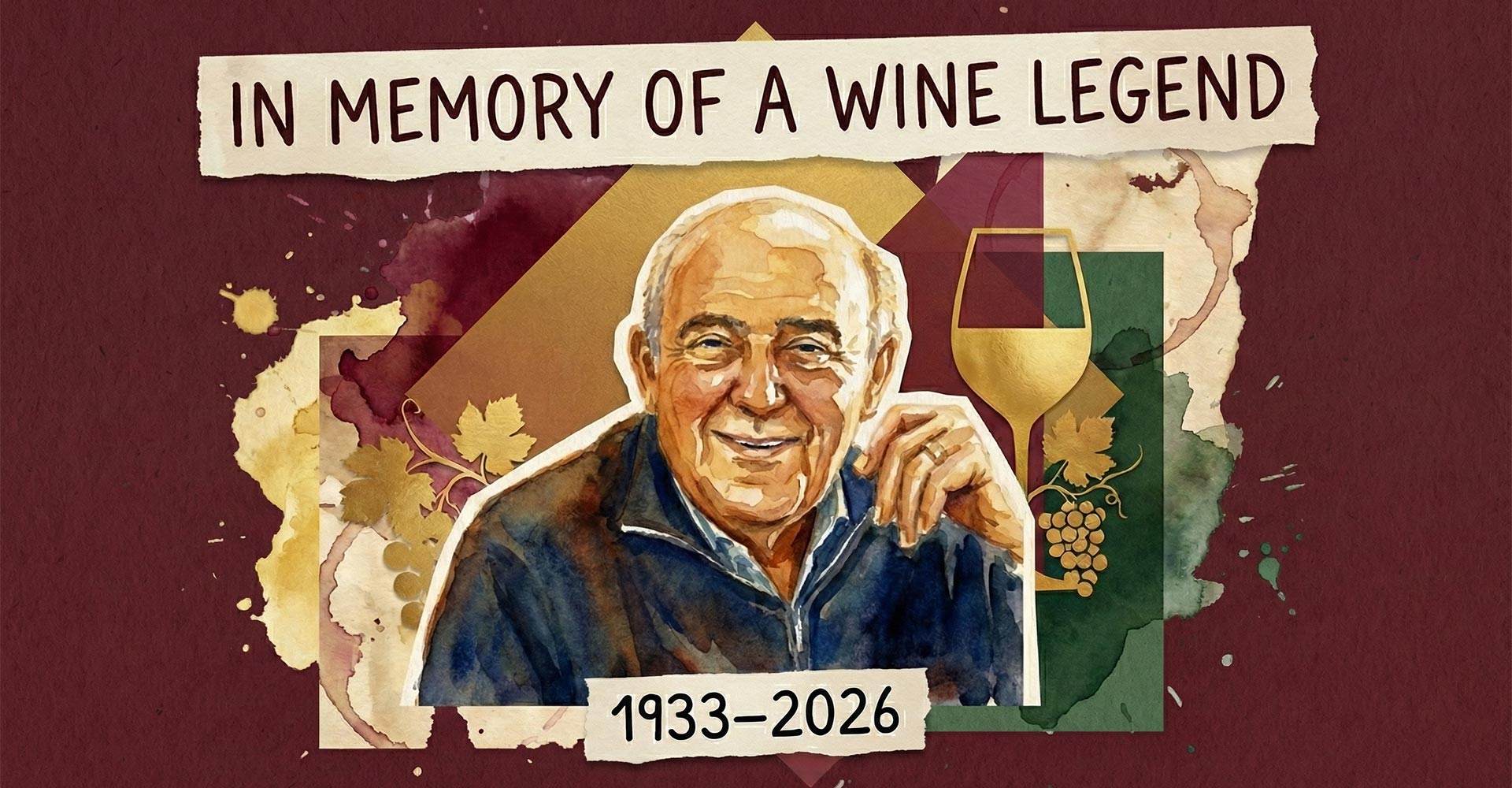
Raise a glass, folks. We’ve just lost a legend. I didn’t recognise the name when I saw it in the news, but something about it made me dig deeper. And I’m glad I did.
Arnaldo Caprai, the godfather of Montefalco and the man who brought Sagrantino back from the brink of extinction, passed away on 4 January 2026 at the grand old age of 92. If you’re thinking, “Who?” you’re not alone. I hadn’t heard of him either, and I run a wine blog. But that’s the thing about true legends—they’re usually too busy changing the world to bother shouting about it.
Caprai wasn’t born with a corkscrew in his hand. He started out flogging linen door-to-door in 1950s Italy, back when a bedsheet was considered an heirloom, not an afterthought. That relentless attention to detail, the obsession with quality, and his knack for spotting value in the overlooked? He later poured all of it into a grape no one cared about.
Sagrantino. Ever heard of it? Back in the 70s, hardly anyone had. A rustic, tannic grape grown in Umbria, mostly used to make sweet, sacramental wine that could double as paint stripper. The vineyards were dying out, the sharecroppers had gone, and Montefalco was slipping into agricultural obscurity. Enter Caprai, stage left.
In 1971, he bought a plot called Val di Maggio. Everyone thought he was nuts. He saw potential. And not the airy-fairy kind—the industrial, scalable, research-backed kind. By the late 80s, he was working with the University of Milan to tame the grape’s fierce tannins. Out went the guesswork. In came clonal selection, green harvesting, and French oak barrels.
Caprai treated viticulture like a science, not a superstition. And it paid off. Big time.
By 1993, his winery released “25 Anni,” a blockbuster red so dense and structured it made Barolo look like Ribena. Critics swooned. Awards followed. And Sagrantino—once a relic of the past—was suddenly Italy’s new cult hero.
But Caprai wasn’t just chasing points. He created jobs, revived a region, and even roped in asylum seekers to help with the harvest—turning Montefalco into a poster child for sustainable agriculture. This wasn’t wine as ego trip. This was wine as transformation.
The man knew his tannins. And his textiles. He built Maglital, the fashion empire behind Cruciani bracelets (remember those?). He curated a world-class textile museum. He saw heritage not as something to mourn, but to modernise. Whether it was lace or grapes, he believed in preserving the past while innovating the future.
His sons carried the torch—Marco with wine, Luca with fashion—but make no mistake: Arnaldo was the architect.
So if you ever find yourself sipping a bold Montefalco Sagrantino with silky tannins and a story to tell, raise your glass to the man who saved the grape, the land, and the legacy. Arnaldo Caprai didn’t just make great wine. He made history.