There are wine tastings.
Then there are Antinori wine tastings.
The difference is a bit like comparing a Vespa (lovely, I know) to a Ferrari. Both technically get you somewhere, but one does it while making your heart beat slightly faster and your wallet quietly nervous.
A recent visit to Cantinetta Antinori in Knightsbridge (my favourite London Italian Restaurant) reminded me why the Antinori family remains one of the most influential names in Italian wine. Twenty-six generations in, they’re still producing wines that manage to feel deeply traditional and impressively modern at the same time. Not an easy balancing act in a world where some wineries think adding black labels and moody fonts counts as innovation.
Hosted at the elegant London restaurant, the tasting explored wines from key Antinori estates across Tuscany, Umbria, Puglia and Piedmont, guided by Silvia Pampaloni DipWSET. The tasting moved from coastal whites through structured southern reds before finishing with classic Piedmontese and Tuscan expressions.
Why Antinori Matters in Italian Wine
Few wine families have shaped modern Italian wine quite like Antinori. The family played a central role in elevating Super Tuscans, modernising Italian viticulture, and bringing international attention to indigenous varieties across regions including Tuscany, Umbria and Puglia.
What makes Antinori particularly impressive is their ability to maintain consistency across dramatically different terroirs and wine styles. Having attended numerous Italian producer tastings over the years, that consistency is often where even prestigious wineries struggle.
Instead, Antinori continues balancing innovation with restraint. International expertise never overwhelms regional identity, and technical precision never strips the wines of personality.
The Antinori Legacy: 638 Years and Still Not Boring
The Antinori family has been making wine since 1385.
That’s before:
- Shakespeare
- The printing press
- Bordeaux classification systems
- Instagram sommeliers swirling aggressively at the camera
Their philosophy, “Te duce proficio” or “With you as my guide, I make progress,” perfectly sums up the brand. They respect history but refuse to get trapped in it.
And frankly, thank goodness for that. Wine already has enough people insisting things were better “back in the day” while simultaneously using Coravin systems and electric SUVs.
Cantinetta Antinori: Elegant Without Trying Too Hard
Cantinetta Antinori has that rare quality many restaurants aim for but few achieve. It feels luxurious without becoming intimidating.
The room quietly whispers: “You’re about to drink something special.”
Not: “You’re wearing the wrong shoes.”
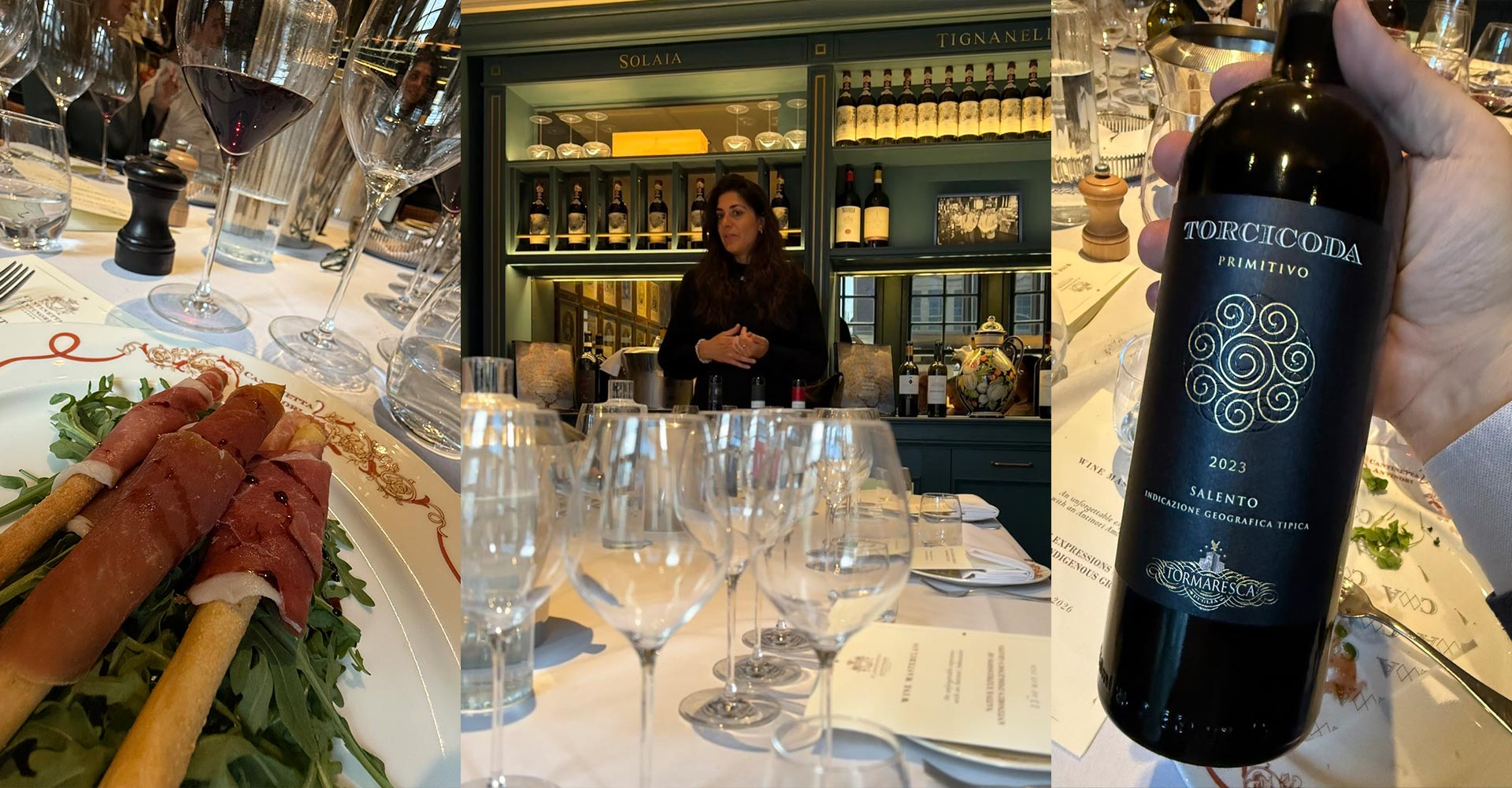
Surrounded by iconic bottles like Solaia and Tignanello, the tasting felt less like a formal masterclass and more like being welcomed into a family story that just happens to include some of Italy’s most celebrated wines.
And yes, the setting is dangerously photogenic. Every angle practically begs to become an Instagram post accompanied by the words “minerality” and “elevated experience”.
Roycello Fiano 2022: Salty, Fresh, and Criminally Easy to Drink
The Roycello Fiano del Salento was one of the early highlights.
This isn’t your average “safe” Italian white that disappears from memory before the bread basket arrives. The coastal influence gives it real personality.
Think:
- White peach
- Citrus zest
- Jasmine
- Fresh almond
- A lovely saline edge
There’s freshness, energy, and enough acidity to keep you going back for another sip “purely for research purposes”.
The maritime influence from the Adriatic and Ionian seas really shines through. Fermented in temperature-controlled stainless steel and aged on fine lees, the wine keeps remarkable freshness and clarity. It’s the sort of wine that makes seafood taste cleverer than it actually is.
Torcicoda Primitivo 2022: Puglia Wearing a Velvet Jacket
Then came the Torcicoda.
This is Primitivo with polish. Rich without becoming jammy. Powerful without shouting about it.
Black cherry, plum, liquorice, cocoa and spice all arrive in waves, supported by silky tannins and impressive balance. Aged in French and Hungarian oak barriques, the wine gains extra layers of sweet spice and texture without losing its southern Italian warmth. It’s the wine equivalent of someone walking into a room wearing a tailored Italian coat and immediately improving the atmosphere.
There’s a reason this wine helped change international perceptions of Puglian reds. Antinori didn’t just polish Primitivo. They gave it a passport upgrade.
San Giovanni della Sala 2023: Umbrian Precision
One of the more fascinating wines was San Giovanni della Sala from Castello della Sala in Umbria.
A blend of Grechetto, Procanico, Pinot Blanc and Viognier, it somehow manages to feel both textured and laser-focused.
The nose offered:
- Lemon zest
- Green apple
- White peach
- Floral notes
- A mineral backbone that kept everything beautifully tense
It’s one of those wines sommeliers love because it works with food, works on its own, and makes them sound intelligent when describing it.
Guado al Tasso Vermentino 2024: Mediterranean in a Glass
Vermentino can occasionally be forgettable. This wasn’t.
The Guado al Tasso Vermentino absolutely captured the Tuscan coast:
- Citrus peel
- Elderflower
- White peach
- Mediterranean herbs
- Saline freshness
There’s brightness and purity here that feels effortless. Which, in wine, usually means an enormous amount of effort happened behind the scenes.
Dolcetto d’Alba 2023: The Understated Charmer
Dolcetto rarely gets the attention it deserves because it lacks the dramatic PR campaign of Barolo.
But this Prunotto Dolcetto reminded everyone at the table why Piedmont locals drink the stuff constantly.
Fresh cherries, blackberries, violets and that classic almond finish make it dangerously drinkable. The sort of wine you casually order a second bottle of before realising lunch has become dinner.
Not that anyone complained.
Rosso di Montalcino 2023: Brunello’s More Relaxed Sibling
The Pian delle Vigne Rosso di Montalcino delivered classic Sangiovese character with elegance rather than brute force.
Bright cherry fruit, blood orange, violets and silky tannins gave it freshness and charm without losing structure.
If Brunello is the serious older sibling discussing investment portfolios, Rosso di Montalcino is the one suggesting another bottle and a second plate of pasta.
Usually the more fun sibling too.
Silvia Pampaloni: The Human Side of Great Wine
A huge part of the experience came from Silvia Pampaloni DipWSET, whose passion and knowledge brought the wines to life without ever drifting into scripted corporate theatre.
That’s rarer than people think.
Silvia combines deep technical expertise with warmth and storytelling, making complex wine discussions feel accessible rather than intimidating. You leave learning something rather than feeling tested.
Which is exactly how wine should be.
Final Thoughts: Why Antinori Still Matters
What struck me most wasn’t just the quality of the wines. It was the consistency of vision.
Across Tuscany, Umbria, Puglia and Piedmont, the Antinori philosophy remains remarkably clear:
- Respect terroir
- Elevate indigenous grapes
- Embrace innovation carefully
- Never lose drinkability in pursuit of prestige
In a wine world increasingly obsessed with trends, algorithms, influencers and labels that look like Scandinavian skincare products, Antinori continues doing something refreshingly radical.
They focus on the wine.
And after another memorable tasting at Cantinetta Antinori, that focus still tastes pretty extraordinary.
Wine Highlights from the Tasting
- Roycello Fiano del Salento 2022 – My favourite White of the evening
- Torcicoda Primitivo del Salento 2022
- San Giovanni della Sala 2023
- Guado al Tasso Vermentino 2024
- Prunotto Dolcetto d’Alba 2023
- Pian delle Vigne Rosso di Montalcino 2023 – My favourite Red of the evening