The Day Bordeaux Became Personal
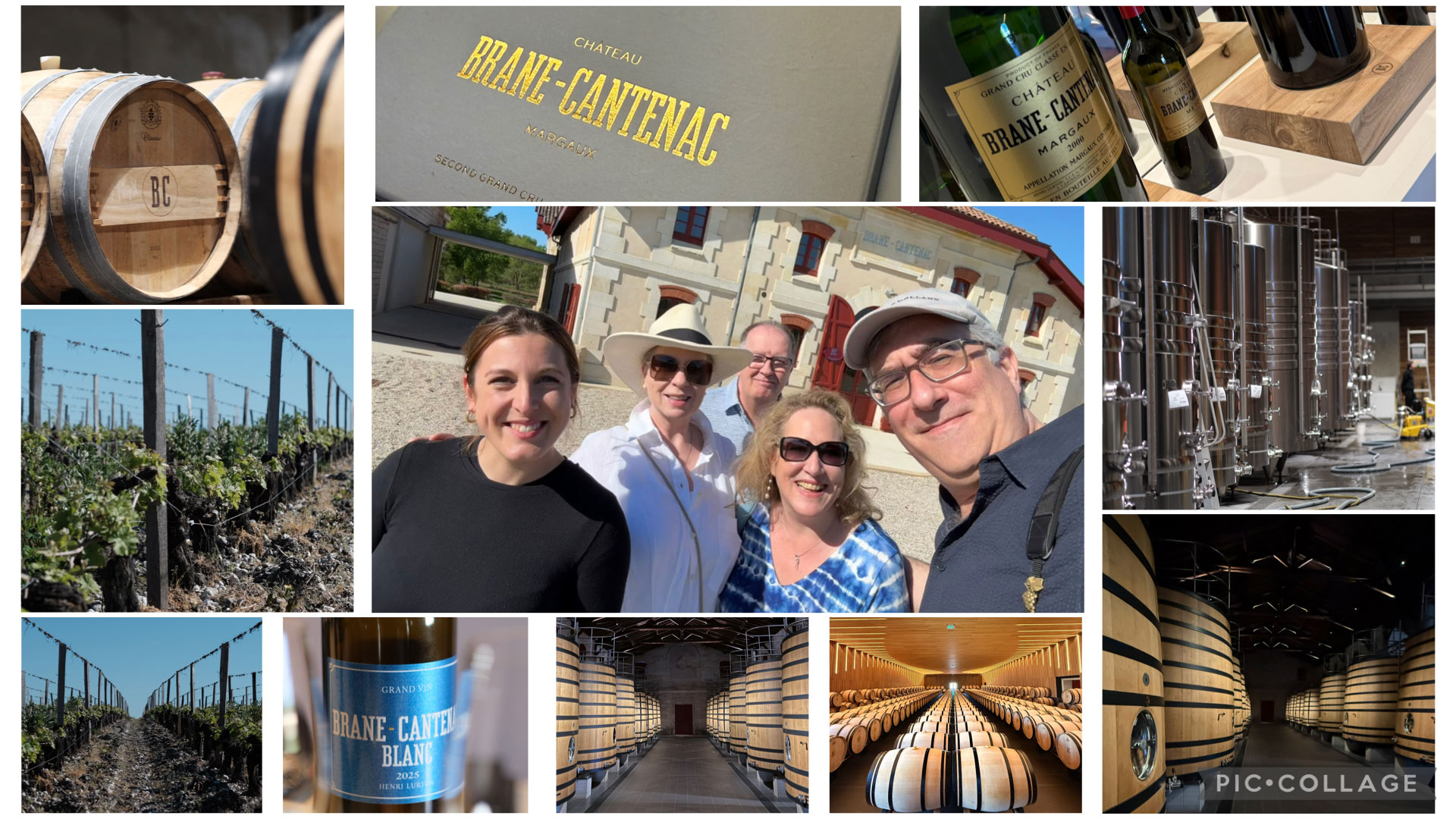
There are winery visits, and then there are moments where wine stops being a product and becomes something far more human. My visit to Château Brane-Cantenac in Margaux was firmly in that second category.
It’s also worth saying upfront. Brane-Cantenac has been a favourite of mine for years. Not just for what’s in the bottle, but how they present themselves. Their Instagram, their label, the way they communicate. It’s elegant, modern, and still unmistakably Bordeaux. No small feat.
This isn’t just any winery. It’s a Second Growth (Deuxième Cru Classé, 1855) estate that consistently outperforms expectations. What stood out wasn’t just the pedigree. It was the mindset. This is a place that thinks in decades, not quarters. A family-owned estate with a clear identity and the discipline to protect it.
Meeting Audrey Ricordi: The Mind Behind the Wine
Our guide, Audrey Ricordi, sits at the intersection of viticulture, oenology, and technical decision-making. A background that includes Château d’Issan shows in how she explains things. Clear, precise, and refreshingly honest.
Blending, she said, is like working with a palette. Each parcel, each variety, even tiny experimental plots add nuance. The job is to deliver a wine that is unmistakably Brane-Cantenac every year, even when the vintage has other ideas.
The Winery at Scale: Precision Across 200,000+ Bottles
Brane-Cantenac produces around 200,000 to 250,000 bottles a year.
That matters. This isn’t a boutique micro-cuvée. It’s consistency at scale, which makes the precision of blending and parcel selection even more impressive.
What Makes Château Brane-Cantenac’s Winery Unique?
Château Brane-Cantenac is a Second Growth Bordeaux winery in Margaux known for Cabernet Sauvignon-led blends, deep gravel terroir, and precise parcel-level winemaking. Producing around 200,000–250,000 bottles annually, it combines traditional techniques with modern tools like AI-driven vineyard monitoring to maintain consistency and quality across vintages.
Terroir: The Detail That Explains Everything
The estate covers 72 hectares, split into:
- 69 hectares of red varieties
- 3 hectares of white (a small but intentional programme)
The defining feature here is gravel. But not all gravel is equal.
- The deeper the gravel, the better the drainage
- Beneath that sits clay at around 12–13 metres, holding water
- Older vines can reach it. Younger ones can’t
In hot, dry years, that difference is everything.
The average vine age is around 50 years, and instead of replanting entire blocks, vines are replaced individually. Slower, more complex, but it preserves root systems and resilience.
It’s not romantic. It’s just smart.
What Grapes Are Used at Château Brane-Cantenac?
Château Brane-Cantenac wines are built on Cabernet Sauvignon (around 65–70%) and Merlot (20–30%), supported by smaller amounts of Cabernet Franc and Petit Verdot. Experimental varieties like Carmenère, Malbec, and Castets are used in small percentages to add complexity and refine the final blend.
Grape Composition: The Real Backbone
The blend is classic Margaux, but it’s worth stating clearly:
- Cabernet Sauvignon: ~65–70%
- Merlot: ~20–30%
- Smaller amounts of:
- Cabernet Franc
- Petit Verdot
And then the interesting bit.
Small experimental plots of Carmenère, Malbec, and Castets. Sometimes just 1% in a blend, but enough to shift texture, tannin, or aromatics.
As Audrey put it, these are the spices, not the base.
(Note: see summary above for a quick breakdown of grape composition.)
Parcel-Level Winemaking: About 20 Pieces of a Puzzle
The vineyard is divided into around 20 parcels, each vinified separately.
This allows the team to treat each plot according to its soil, exposure, and performance in that vintage. It’s detailed work, but it’s what gives flexibility at blending.
Does Château Brane-Cantenac Use AI in Winemaking?
Yes. Château Brane-Cantenac uses AI to support vineyard and winery decisions, including spore analysis to predict mildew risk and optical sorting systems to assess grape quality. The technology enhances precision but does not replace the judgement of the winemaking team.
Technology in the Winery: AI, but Grounded
AI is used, but sensibly.
- Spore capture systems help predict mildew risk
- Data guides intervention timing
- Optical sorting with AI evaluates grapes beyond colour and shape
It’s not replacing judgement. It’s supporting it.
(See summary above for how AI is used in practice.)
Not Organic, but Not Careless Either
Brane-Cantenac is not organic, and they’re open about why.
Bordeaux’s oceanic climate means humidity and mildew pressure. Going fully organic here can be risky at scale.
Instead, they operate under high-level environmental certification (HVE) and focus on:
- Cover crops to manage nitrogen, carbon, and water
- Soil-first thinking rather than input-heavy farming
It’s pragmatic sustainability, not marketing theatre.
Inside the Winery: A Toolkit, Not a Formula
The process is deliberately varied.
- Hand harvesting
- Destemming
- AI-assisted optical sorting
Then decisions split depending on the wine:
- Gravity handling for top wines
- Pump systems where appropriate
Fermentation:
- Stainless steel for control
- Wood vats for texture and integration
Extraction methods include:
- Air injection systems for rapid cap disruption
- Rack-and-return for more controlled extraction
Everything is adjusted by tasting, not just protocol.
Press Wine: The 12% Detail That Matters
One of the more interesting insights was the use of press wine.
- Roughly 12% of the final blend can come from press wine
This isn’t filler. It adds structure, described as the “spine” of the wine. Subtle, but important.
How Are Brane-Cantenac Wines Aged?
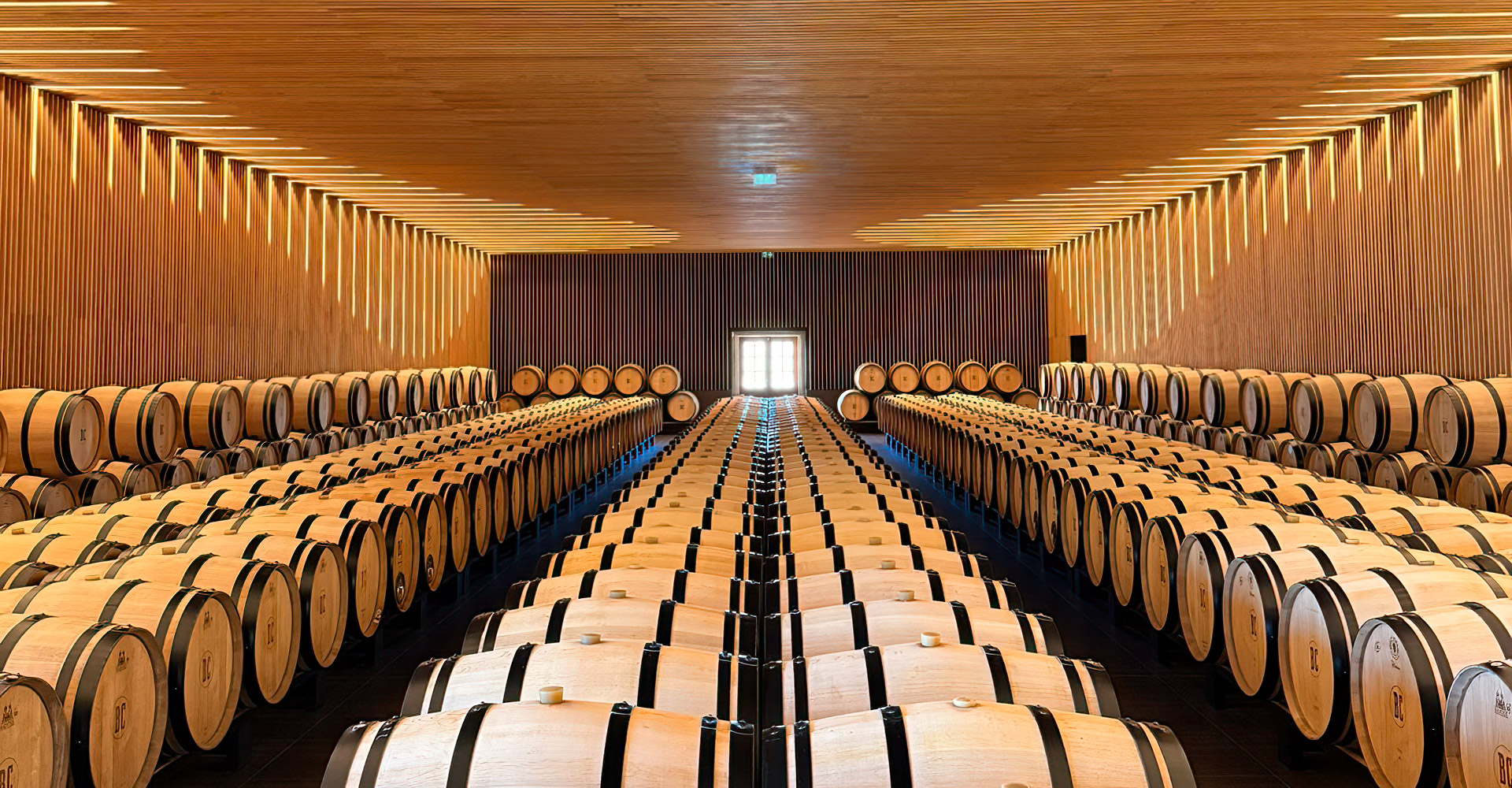
Brane-Cantenac wines are typically aged for around 12 months in French oak barrels, with new oak levels varying by wine and vintage. The Grand Vin uses up to around 80% new oak, while Baron de Brane uses closer to 15%. Around 7–8% of wine is lost during ageing through evaporation, known as the angel’s share.
Barrel Ageing at Brane-Cantenac Winery
Ageing varies by wine, but key points include:
- Around 12 months ageing for Baron de Brane and Margaux de Brane
- ~15% new oak for Baron
- Grand Vin historically closer to 100% new oak, now more like ~80% depending on economics and vintage
Barrels come from different French forests, with varying toast levels.
And then there’s reality.
- 7–8% evaporation (“angel’s share”) during ageing
That’s not just romance. It’s cost.
(See summary above for a quick ageing overview.)
The Wines: Not Hierarchy, Just Expression
The estate produces:
- Château Brane-Cantenac (Grand Vin, Second Growth)
- Baron de Brane (second wine)
- Margaux de Brane
Important distinction: Baron de Brane is not “second growth”, it’s the second wine.
These wines aren’t simply ranked. They express different parcels, soils, and intentions.
We tasted all three, and I have to admit, I was genuinely surprised by Margaux de Brane. It showed beautifully. Fresh, expressive, and incredibly good value for what it delivers.
We also tasted the Brane-Canternac Blanc, which was a reminder that Bordeaux Blanc, when done well, is seriously elegant. Clean, balanced, and quietly confident rather than trying too hard to impress.
That said, no real surprise where I landed.
The Grand Vin is still the one. Precise, layered, and just quietly confident. The kind of wine you don’t question, you just make a note to buy more of.
- Margaux de Brane: lighter, more immediate, more approachable
- Baron de Brane: more structure and depth
- Grand Vin: precision, ageing potential, full expression of the estate
White Wine: Small, Intentional, and Evolving
Only 3 hectares are dedicated to white grapes (Sauvignon Blanc and Sémillon).
This is part of a broader Bordeaux push (Médoc Blanc), combining market demand with genuine terroir exploration.
The result is fresh, citrus-led wines with a softer, rounded edge from Sémillon.
Vintage Reality: Where Skill Shows
One of the best insights of the visit:
- 2022: exceptional, but easier
- 2025: powerful, structured
- 2024: more difficult, more technical
And the takeaway?
The hardest vintages are often the most satisfying for the winemaker.
Because that’s where skill actually shows.
Final Thoughts: Why This Winery Still Sets the Benchmark
Château Brane-Cantenac isn’t trying to be trendy.
It’s quietly evolving. Blending tradition with technology. Making decisions that prioritise long-term quality over short-term optics.
In a world full of noise, that clarity is rare.
And that’s exactly why it works.