Europe’s 2026 wine vintage is already being shaped by exceptional heat, weeks before many grapes reach the cellar. Sugar is racing ahead, acidity is slipping and tannins are not always keeping pace. That doesn’t automatically make 2026 a poor vintage, but it does mean the best wines are likely to come from cooler sites, deeper roots and producers who know exactly when to intervene.
The wine world loves declaring a vintage before the grapes have been picked. A few hot weeks, one dramatic photograph of a scorched vineyard and someone is already awarding 97 points to a barrel that doesn’t yet exist.
Europe’s 2026 growing season deserves a more measured look. June was, according to the supplied Copernicus data, Western Europe’s hottest on record. Average land temperatures reached 20.74°C, some 3.05°C above the 1991–2020 baseline. Local peaks included 41.7°C in Germany, 42.7°C in Bilbao and 44°C in southern France.
Those figures matter, but they don’t tell us what every bottle will taste like. Heat doesn’t fall neatly along appellation boundaries, and vines are inconveniently resistant to spreadsheet logic. Soil, altitude, root depth and picking decisions can create very different outcomes within the same region.
What the heat has done is make the route to a balanced wine considerably narrower.
How is the 2026 European heat affecting grapes?
The short answer is that sugar, acidity and tannin development are becoming disconnected.
Once temperatures rise above roughly 35°C, vines can close their stomata to reduce water loss. Photosynthesis slows or stops, but the sugar reading in the berry may continue to climb as water evaporates and the fruit dehydrates. The grapes appear riper by sugar level, even when their skins and seeds haven’t achieved full phenolic maturity.
Heat also accelerates the loss of malic acid, the fresh, apple-like acid that gives many wines lift. Rising potassium can push the must’s pH higher too. The result can be generous potential alcohol but less natural freshness.
For reds, that creates an awkward choice. Pick early and retain acidity, but risk green, bitter or astringent tannins. Wait for the tannins to ripen and the wine may arrive at 15% alcohol with the structural poise of a sun lounger.
Whites face their own problem. Citrus, green apple and floral freshness can move towards peach, apricot, tropical fruit and honey. Those flavours aren’t inherently inferior, but without acidity they can feel broad and heavy. Sparkling wine producers have perhaps the toughest assignment, because their base wines need naturally high acidity and relatively low potential alcohol before a second fermentation adds more.
Bottom Line: Heat can make grapes look ready on a refractometer before they are truly ready in flavour, tannin and structure. In 2026, the harvest date may be the most important decision a producer makes.
Why heat and drought are not the same problem
Heat stress and water stress often arrive together, but they affect vines differently. Heat changes metabolism and can shut down the canopy. A shortage of water affects berry growth, yield and the vine’s ability to keep transpiring.
Moderate water stress after veraison can benefit red grapes by limiting leafy growth and producing smaller berries. Severe drought can halt berry development, reduce yields and, with intense sunlight, cause browning and sunburn.
This distinction helps explain why old vines and deep-rooted vineyards can outperform nearby younger plantings. A mature vine with access to moisture deep in the soil has options. A shallow-rooted vine in a stripped, exposed canopy has approximately the same summer strategy as a tourist in Seville without a hat.
What are growers doing to protect the 2026 vintage?
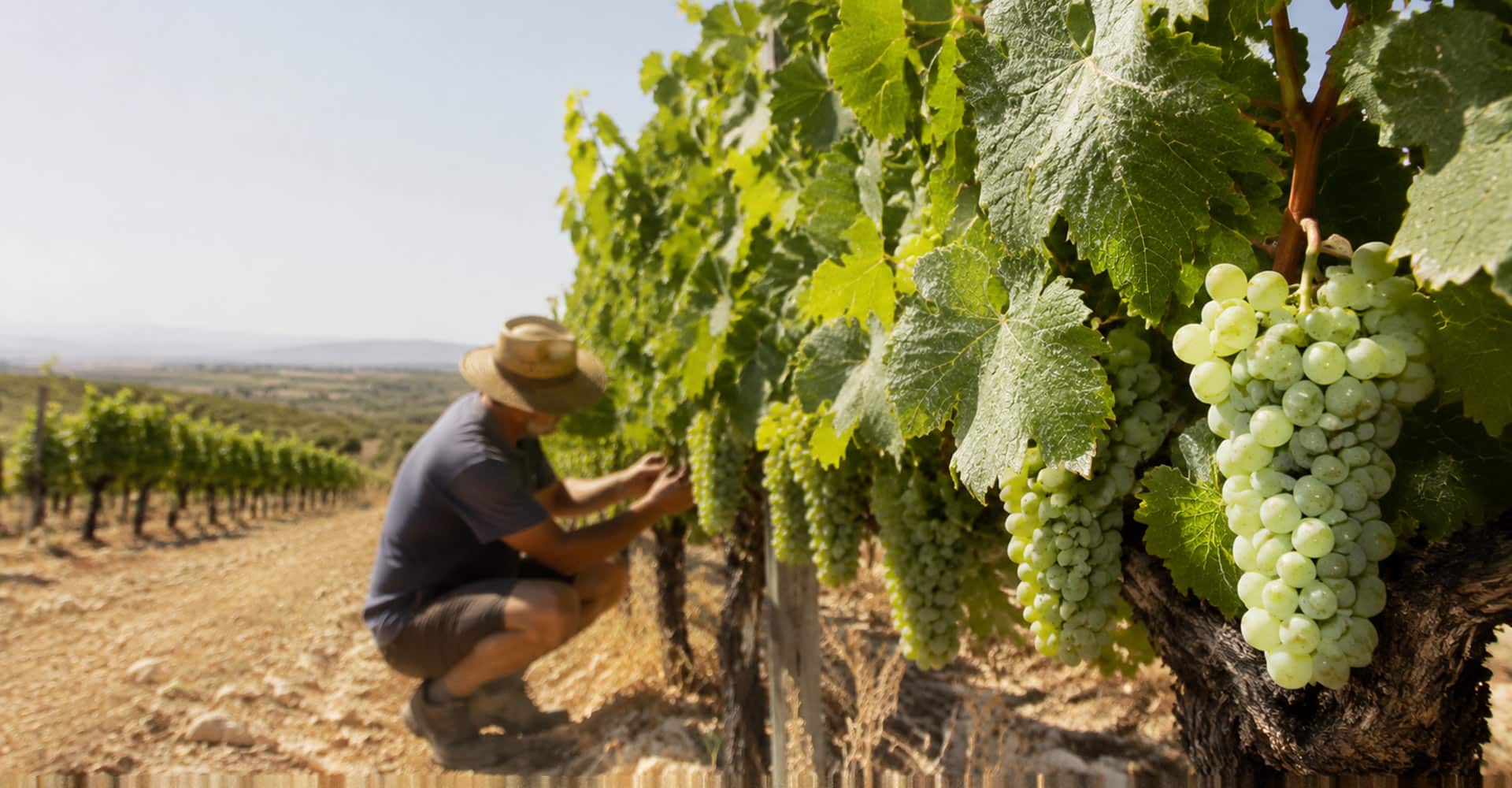
The immediate response begins with shade. Growers who once removed leaves to expose bunches are keeping more foliage around the fruit zone. Higher canopies provide mutual shading, while cover crops can improve water infiltration and reduce the heat reflected from bare soil.
Some vineyards are using kaolin clay, a reflective white particle film sprayed onto leaves and bunches. The supplied research indicates it can reduce leaf temperatures by around 4°C to 6°C, helping vines maintain photosynthetic activity while protecting fruit from sunburn. It’s practical rather than glamorous, and it can leave the vineyard looking as though it has been dusted by an enthusiastic baker, but the temperature difference can be significant.
Shade netting offers another physical barrier, blocking a proportion of direct solar radiation. It brings higher installation costs and can complicate machinery use, so it is more accessible to some producers than others.
Longer term, growers are reconsidering what they plant beneath and above the soil. Deep-rooting, drought-tolerant rootstocks such as 1103 Paulsen, 110 Richter and 140 Ruggeri are gaining attention in warmer sites. Late-ripening or naturally high-acid grapes are also becoming more valuable. Familia Torres has revived varieties including Moneu and Forcada in Catalonia, while Assyrtiko and Touriga Nacional offer established examples of grapes accustomed to heat.
These aren’t overnight fixes. Replanting takes years, appellation rules can restrict varieties and consumers don’t instantly fall in love with a grape they can’t pronounce. Wine has spent decades selling heritage as permanence; climate change is turning adaptation into part of that heritage.
How can winemakers restore balance in the cellar?
The first tool is timing. Night harvesting, often between 10pm and 6am, allows fruit to arrive at the winery closer to 15°C to 18°C rather than above 35°C. Cooler grapes are less vulnerable to oxidation and unwanted microbial activity, and the winery uses less energy chilling them before fermentation.
If natural acidity is too low, winemakers can add tartaric acid to the must. Some can use Lachancea thermotolerans, a non-Saccharomyces yeast that converts a proportion of sugar into lactic acid. The research suggests this can reduce pH by approximately 0.2 to 0.5 units while slightly lowering final alcohol.
Where alcohol remains excessive, spinning cone columns or reverse osmosis can remove some ethanol while retaining much of the wine’s character. Purists may reach for the smelling salts, but a balanced wine is usually more persuasive than one that is technically untouched and practically exhausting.
The commercial catch is obvious. Shade systems, specialist sprays, optical sorting, refrigeration and membrane technology cost money. Hot vintages can therefore widen the gap between well-funded estates and growers working with tighter margins, even when both occupy the same famous postcode.
Which European wine regions could fare best in 2026?
The likely winners are cooler microclimates, high-altitude vineyards, old vines and sites with deep soils or strong night-time temperature drops.
In Bordeaux, deeply rooted Cabernet Sauvignon on Left Bank gravel may have an advantage over shallower-rooted Merlot where clay soils have dried severely. In the Loire, Sauvignon Blanc and Chenin Blanc face pressure from rapid acid loss. Champagne growers have an especially tight window because sparkling base wines depend on acidity and low sugar.
Across Rioja, Ribera del Duero and Priorat, old Tempranillo and Garnacha vines in deep soils may retain better balance than young, exposed vineyards. Portugal’s heat-tolerant grapes may help, although dry Douro and Alentejo sites could still lose yield.
High-altitude parts of Piedmont and Chianti Classico could benefit from cooler nights. Germany and Austria may produce rich, aromatic wines where soil moisture held up. Southern England could gain from extra warmth, although the final result still depends on what August and harvest bring.
No region earns a blanket verdict. In a year like this, the distance between two vineyards may matter more than the distance between two countries.
What should wine buyers look for in the 2026 vintage?
When the wines are released, start with producer detail rather than vintage hype:
- Check the declared alcohol. A high figure isn’t automatically bad, but it needs enough acidity, fruit and tannin to support it.
- Look for altitude, coastal influence, old vines, deep soils and meaningful differences between day and night temperatures.
- Read vintage notes for picking dates, night harvesting, canopy choices and sorting decisions.
- Be cautious with styles that depend heavily on sharp natural acidity, particularly sparkling wines and traditionally cool-climate whites.
- Judge producers individually. Technical capability and vineyard decisions will matter enormously.
Bottom Line: Don’t buy or dismiss 2026 by country, region or headline. Buy by site, producer and balance.
The 2026 vintage is a test of judgement, not fate
The 2026 European wine vintage is not doomed, nor is it a guaranteed blockbuster. It is a growing season that has exposed how quickly extreme heat can alter the relationship between sugar, acid, aroma and tannin.
It has also shown the value of preparation. Shade, deeper roots, resilient varieties, cooler harvests and careful cellar work can protect quality, although each brings cost, compromise or regulatory friction.
The most interesting 2026 wines may not be the biggest or ripest. They may be the bottles that still feel alive, fresh and unmistakably of their place, made by producers who resisted both the heat and the temptation to confuse power with quality. As ever, the vintage chart will try to fit the answer into one tidy number. The vineyard is unlikely to cooperate.