Why Viña VIK Is One of the Most Innovative Wineries in the World
Most wineries talk about terroir.
Viña VIK appears to have looked at terroir, nodded politely, then wandered off into the Chilean wilderness to build what can only be described as a vinous ecosystem worthy of a Netflix sci-fi documentary.
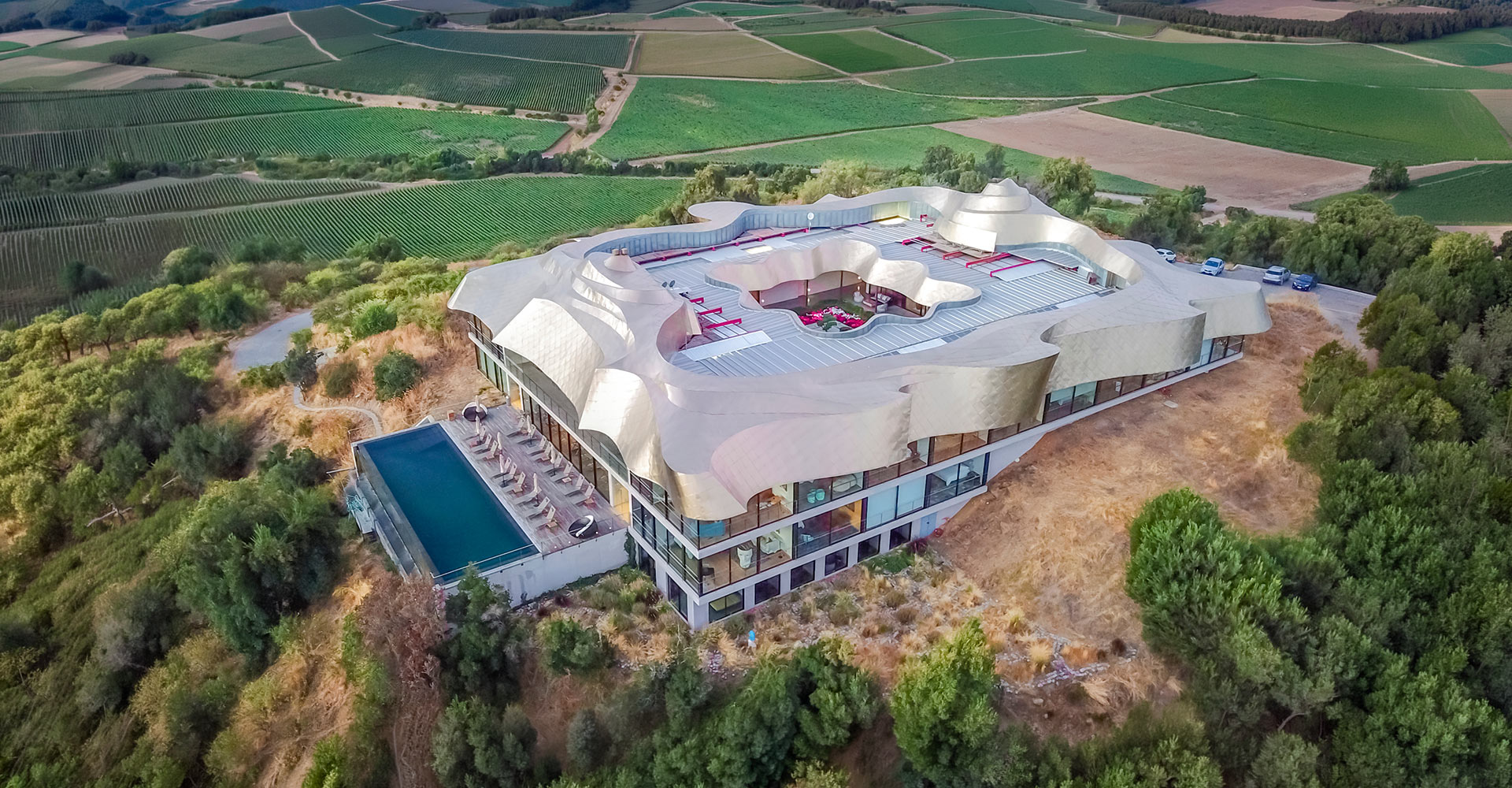
Nestled in Chile’s Millahue Valley, Viña VIK has become one of the wine world’s most talked-about estates, not just because the wines are exceptional, but because the winery has quietly rewritten the rulebook on sustainable luxury winemaking.
And frankly, when someone starts talking about fermenting wine with yeasts collected from wild flowers while burying amphorae on electromagnetic fault lines under oak trees, you either run a mile or pour another glass and lean in.
Personally, I chose the second option.
I originally came across Viña VIK after the estate was repeatedly listed among the best vineyards in the world to visit. Initially, it was the architecture, landscape, and ambition of the project that caught my attention.
Then I started reading about the wines.
And things became considerably more interesting.
I first encountered VIK during a tasting focused on high-end South American wines, and what immediately stood out wasn’t power or extraction, but precision. The wines carried an unusual tension and freshness that felt more Burgundy than blockbuster Napa. That’s not something you expect when somebody starts discussing flower yeasts and electromagnetic fault lines.
The Big Idea Behind Viña VIK
Founded in 2004 by Alexander and Carrie VIK after a two-year scientific hunt for the perfect vineyard site in South America, the estate spans more than 4,300 hectares in Chile’s Millahue Valley.
Only around 10% of the land is planted with vines.
Most wineries would have bulldozed every available inch into production. VIK instead preserved the surrounding wilderness because the forests, flowers, microbes, geology, and climate are all considered part of the wine itself.
This philosophy evolved into what Chief Winemaker Cristián Vallejo calls “circular winemaking”. A system where the vineyard, forest, microbiology, and winery all feed into each other.
Which sounds wonderfully poetic until you realise there’s a frightening amount of science backing it up.
What Is Barroir?
Barroir combines the words “barrel” and “terroir”.
Instead of using traditional oak barrels toasted elsewhere, VIK uses fallen oak branches from its own 300-year-old forests to toast the French oak barrels used for ageing the wine.
No trees are cut down.
The forest essentially seasons the barrels.
The theory is that the smoke compounds released from the estate’s woodland become part of the wine’s aromatic fingerprint.
The result is remarkably subtle. You’re not getting lumberyard vanilla bombs here. Instead, the wines develop savoury depth, polished tannins, cedar spice, forest floor character, and extraordinary integration.
It’s less “look at my expensive oak” and more “everything tastes strangely harmonious and I can’t stop drinking it”.
Which is generally the better outcome.
What Is Fleuroir?
Yes, They’re Fermenting Wine With Flower Yeasts
Fleuroir combines “fleur” and “terroir”.
Working alongside Universidad Católica de Chile, Vallejo and his team identified native yeast strains living on wild flowers throughout the VIK estate.
The research isolated yeast strains from native flowers growing across the estate’s protected wilderness areas.
The flowers are harvested, naturally dehydrated using solar energy, then reintroduced during fermentation months later.
The result is a unique fermentation ecosystem that produces highly layered aromatic profiles and additional complexity.
And before anyone dismisses this as winemaking theatre, the wines suggest otherwise.
There’s remarkable freshness and aromatic precision across the range. Floral lift, tension, and texture seem amplified without becoming artificial or overworked.
Even more impressively, some of these native yeasts are used in the vineyard itself to help naturally combat disease pressure, reducing the need for chemical treatments.
At this point the vineyard is behaving less like agriculture and more like a self-regulating organism.
StoneVIK. The Point Where Winemaking Gets Slightly Mystical
Then there’s StoneVIK.
This is where things move from “innovative” to “someone definitely said this idea out loud at midnight”.
StoneVIK combines Barroir, Fleuroir, and amphora ageing in clay vessels buried high in the forest at around 1,000 metres altitude.
The site sits on a geological fault line with underground water systems believed to create electromagnetic energy.
The amphorae are arranged in a sacred mandala formation and the wines age according to lunar cycles before bottling on the summer solstice.
Now, if you’re rolling your eyes slightly, I understand.
But here’s the inconvenient detail.
The wines are outstanding.
Critics including James Suckling have awarded perfect scores to VIK vintages, praising the wines for their precision, vibrancy, texture, and tannin quality.
So either there’s genuinely something happening here, or this is the most elaborate placebo effect in wine history.
Either way, I’m intrigued.
Why Critics Have Taken Viña VIK Seriously
Viña VIK isn’t attracting attention simply because the story is unusual.
The wines have received multiple 98-100 point scores, and the Cabernet Franc-led blends are increasingly viewed as some of South America’s most distinctive premium wines.
That’s partly because the wines manage something surprisingly difficult.
They feel luxurious without becoming heavy.
The 2021 VIK blend in particular shows extraordinary balance. Dense black fruit, graphite, violet, cedar, and dark spice sit alongside polished tannins and bright acidity. Despite the scale, the wine never feels exhausting.
And in an era where some luxury wines seem determined to bench-press your palate into submission, that restraint matters.
Why Viña VIK Matters Beyond The Hype
Luxury wine increasingly risks becoming formulaic.
More expensive oak. More extraction. More consultants. More bottles designed to impress people who use the word “unctuous” unironically.
VIK feels different.
The estate isn’t chasing standardisation. It’s chasing identity.
The winery operates using renewable energy, embraces circular production principles, reduces external inputs wherever possible, and treats biodiversity as a production asset rather than a marketing slogan.
And importantly, the wines still deliver pleasure.
Because no matter how fascinating the philosophy becomes, nobody wants a lecture in a glass.
Fortunately, VIK remembers that wine should still taste glorious.
Final Thoughts
Viña VIK sits at the intersection of science, sustainability, terroir, microbiology, and what I can only describe as slightly beautiful madness.
It would be easy to dismiss some of the concepts as overly romantic.
Until you taste the wines.
Then the conversation changes.
Because beneath the philosophy, the flower yeasts, the forest-toasted barrels, and the amphorae buried in sacred formations, there’s one inconvenient truth.
The wines are seriously good.
And perhaps that’s the real lesson here.
The future of fine wine may not belong to industrial precision or endless manipulation.
It might belong to wineries willing to understand their land so deeply that the forest, flowers, microbes, and geology all become part of the final bottle.
Which sounds wonderfully romantic.
Until you realise it also tastes fantastic.