Blouge wine combines red and white grapes to create something bright, juicy and gloriously difficult to file under a familiar heading. Part chillable red, part rosé alternative and part natural-wine mischief, it brings together fresh acidity, soft tannins and vivid fruit. The name may be new, but the winemaking idea behind it is much older.
Wine is very good at pretending every category has existed for centuries, usually with a monk, a map and an inconveniently steep vineyard somewhere in the origin story. Blouge is more honest. It is a loose, producer-led name for wines made from both red and white grapes, often designed to be light, aromatic, low in tannin and served chilled.
The word combines blanc and rouge, which sounds faintly like something invented during a long lunch in Paris. Yet red and white grapes have been grown, picked and fermented together for generations. The name is new; the method is not.
What exactly is blouge wine?
Blouge is a red-white hybrid made by fermenting red and white grapes together, macerating them together, or blending the finished wines. It generally occupies the space between pale rosé, light red and skin-contact white wine.
Unlike rosé, which is normally made only from red grapes with limited skin contact, blouge actively includes white grapes. Unlike orange wine, which is made from white grapes fermented on their skins, it also contains red varieties.
The result can range from translucent ruby to electric magenta, with cranberry, redcurrant, sour cherry, blood orange, flowers and spice. Tannins are usually soft and the overall effect is brisk rather than brooding.
Bottom Line: Blouge is best understood as a chilled red-white wine style, not a legally defined category. The common thread is the use of both red and white grapes to create freshness, perfume and light structure.
Is blouge actually new?
The label is new. The method is ancient.
Before vineyards were organised into neat varietal blocks, many European sites were mixed plantings. Red and white varieties grew together, ripened at slightly different speeds and were often harvested into the same baskets.
These field blends gave growers practical insurance. If one variety struggled, another might perform better, while fermenting them together helped balance colour, acidity, sugar and structure.
Traditional examples still exist. In parts of Spain, clarete wines combine red and white grapes. Portugal has palhete, another pale, energetic style made from mixed varieties. In Côte-Rôtie, Syrah may be co-fermented with Viognier, using the white grape to add perfume and influence texture.
Modern producers have not invented red-white co-fermentation. They have simply given it a catchy name, put it in a lighter bottle and made sure the label looks good beside a plate of anchovies.
How does co-fermentation change the wine?
Co-fermentation means fermenting red and white grapes together from the start. This can create a more integrated wine than mixing a finished red and white shortly before bottling.
Red grape skins provide anthocyanins, the pigments responsible for red and purple colour. White grapes contribute acidity, aromatic compounds and colourless phenolics. During fermentation these components can interact through copigmentation, helping to create the vivid fuchsia or luminous ruby colours associated with some blouge wines.
White grapes can lift the perfume with citrus, stone fruit or floral notes, while red varieties contribute berries, spice and gentle grip.
Acidity is another reason for using white grapes. In warm regions, red fruit can build sugar rapidly while losing freshness. Earlier-picked white grapes can lower the overall sugar level, retain acidity and help keep the finished alcohol around 10.5% to 12.5%.
For winemakers facing hotter summers, it is a practical way to keep wines energetic rather than warm, soft and faintly exhausted.
Why is blouge becoming popular now?
Blouge fits several changes already reshaping wine drinking.
People are showing more interest in lighter reds, moderate alcohol and wines that can be chilled. The old rule that white goes in the fridge and red sits beside the radiator has finally begun to loosen its grip.
Natural and low-intervention producers have made experimentation part of their appeal, with co-ferments and mixed vineyards valuing freshness over polish for its own sake.
This is where the French expression glou-glou appears. It describes a wine so easy to drink that the sound of it leaving the bottle becomes part of the sales pitch. Wine spent centuries teaching us to sip thoughtfully, then discovered there was money in making something people wanted a second glass of.
Commercially, blouge gives merchants and restaurants a distinctive story suited to summer lists. “Red and white grapes fermented together, serve it chilled” is refreshingly straightforward in a category that can make ordering feel like an entrance exam.
Where is blouge being made?
Blouge is not tied to one country or grape combination.
In Alsace, Pinot Gris and Pinot Noir are natural partners for colourful co-macerated wines. Bobo Wines Blouge No. 2 combines mostly Pinot Gris with Pinot Noir and produces the kind of fuchsia colour that makes conventional rosé look underdressed.
In California, producers draw on old field blends and Italian varieties. Ruth Lewandowski’s Feints brings together Arneis with Dolcetto, Barbera and Nebbiolo. Martha Stoumen’s Post Flirtation Red sits in the same broad world of low-alcohol, chillable, fruit-led reds.
Portugal’s palhete tradition offers another route. Folias de Baco’s Uivo Renegado uses an old-vine field blend of red and white indigenous grapes, giving savoury, herbal and citrus-edged character.
Elsewhere, producers combine Blaufränkisch with Grüner Veltliner and Riesling, Pinot Noir with Pinot Gris, or Cabernet Franc with Sauvignon Blanc. There is no fixed recipe, which is exciting for drinkers and mildly inconvenient for anyone trying to build a tidy supermarket shelf.
What does blouge taste like?
Most blouge wines are light to medium-bodied, high in acidity and low in obvious tannin. Expect tart red fruit rather than jam, citrus rather than oak, and floral or herbal notes rather than vanilla and toast.
Common flavours include cranberry, sour cherry, pomegranate, blood orange, strawberry, rhubarb, rose petals, citrus peel and peppery spice.
The texture is often described as crunchy. Nobody has yet produced a wine that genuinely needs chewing, although natural wine likes to keep its options open. Here, it means brisk acidity, bright fruit and a slight tannic snap.
The best examples feel vivid and refreshing, not thin. The white grapes provide lift, while the red grapes give enough fruit and grip to stop the wine behaving like rosé in a darker shirt.
Should blouge wine be chilled?
Yes. Most blouge wines show best at around 10°C to 14°C.
Too warm, and the alcohol becomes more obvious while the wine loses shape. Too cold, and the aromas retreat. Chill the bottle in the fridge, then take it out 15 to 20 minutes before serving.
Because blouge usually has low tannin, cooling it does not make it aggressively bitter in the way it can with a powerful red. Instead, the lower temperature sharpens the acidity and gives the fruit a cleaner, juicier feel.
Bottom Line: Serve blouge cooler than a conventional red but slightly warmer than a crisp white. Think lightly chilled, not Arctic.
What food goes with blouge?
Blouge is unusually useful at the table because it combines white-wine freshness with red-wine flexibility.
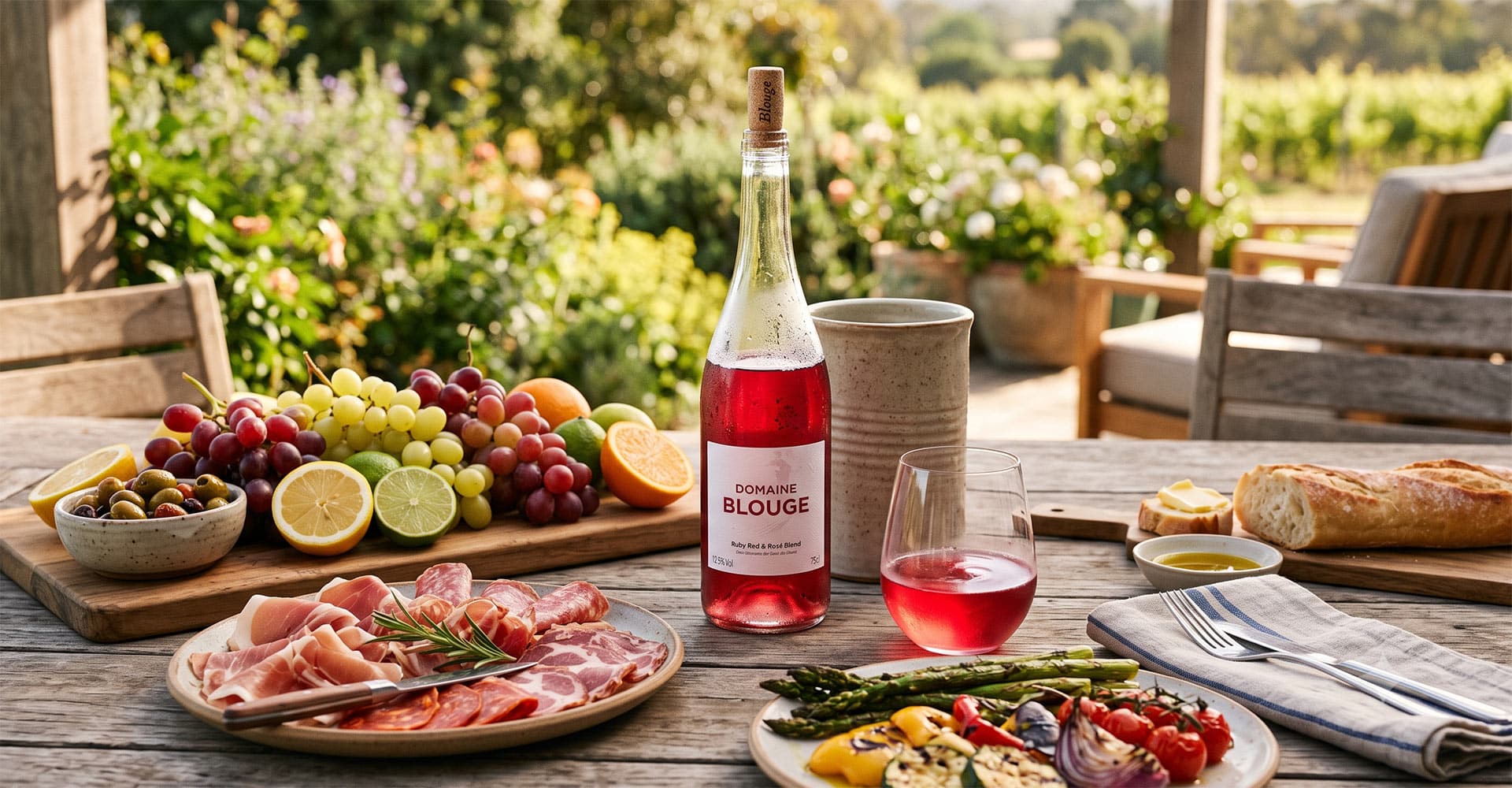
Its acidity cuts through fat, making it a strong match for charcuterie, pork, barbecue chicken, grilled halloumi and creamy cheeses. Low tannin and moderate alcohol also make it friendlier with chilli and spice than many reds.
Try it with Thai salads, Vietnamese dishes, tacos, spicy ceviche, tomato-based pasta or wood-fired pizza. It also loves picnic food, olives and salty snacks, the sort of things people actually eat while opening a second bottle.
For restaurants, it is a clever by-the-glass option. The challenge is explaining it without making the guest feel they have joined a chemistry seminar.
How do you find blouge on a label?
The word “blouge” may not appear at all. Look for clues such as red and white co-ferment, carbonic co-ferment, field blend, clarete, palhete, chillable red or serve chilled. A grape list combining red and white varieties is another useful sign.
Many examples sit between 10.5% and 12.5% ABV, although there are exceptions. The research behind this article identifies several benchmark bottles around or below US$40, including Feints, Post Flirtation Red, Bobo Wines Blouge No. 2, Uivo Renegado and Spolu.
Ask an independent merchant for a light red-white co-ferment or chilled field blend. You may get a blank look, but this is how all good wine discoveries begin.
Is blouge a passing trend?
The name may evolve, but the style has strong reasons to stay.
Blouge helps producers retain acidity and control alcohol as climates warm. It meets demand for lighter, fresher and more flexible wines. It also gives the trade a distinctive story without asking drinkers to memorise an appellation map.
Most importantly, it is enjoyable. Wine trends survive when they solve a real problem and taste good, not when they merely photograph well. Blouge does both.
It may never become a formal category with strict rules, and that is probably part of its charm. For now, it is a colourful reminder that red and white wine were never quite as separate as the supermarket aisle suggested.
The next time someone insists wine must be red, white or rosé, pour them a chilled glass of blouge and enjoy watching the filing system collapse.