From French Oak to Mizunara: The Barrel Revolution Happening Behind Your Glass
There’s a moment in every wine tasting when someone swirls dramatically, takes a deep sniff and says something like, “Ah yes… hints of vanilla, cedar and toasted spice.”
Half the table nods knowingly.
The other half silently wonders if they’re smelling wine or an expensive candle from Liberty.
But here’s the thing. Those flavours often aren’t coming from the grape at all. They’re coming from the barrel.
And if I’m honest, barrels are something I’ve probably underestimated for years.
Like a lot of wine drinkers, and frankly quite a few people in the trade, I mostly simplified barrel conversations down to a few broad categories: large or small, French or American, toasted or not.
That was about the extent of it.
I knew oak mattered, obviously. Anyone who’s tasted heavily oaked Rioja next to a steely Chablis that’s barely seen wood understands that immediately. But I hadn’t fully appreciated just how forensic modern winemaking has become when it comes to cooperage.
Because today’s winemakers aren’t simply choosing a barrel.
They’re choosing forest origin, grain tightness, seasoning time, toast profile, stave treatment, oxygen transfer and increasingly obscure oak species that sound more like boutique whisky collector jargon than wine production.
And the deeper you go into the subject, the more fascinating it becomes.
Oak ageing has quietly evolved into one of the most important flavour tools in modern winemaking. While French oak once ruled the cellar with the authority of a stern Bordeaux headmaster, producers are now experimenting with everything from American oak to Japanese Mizunara and Mongolian oak.
It’s part chemistry, part craftsmanship, part obsession.
Which, frankly, describes most of the wine world.
Why Oak Barrels Matter So Much
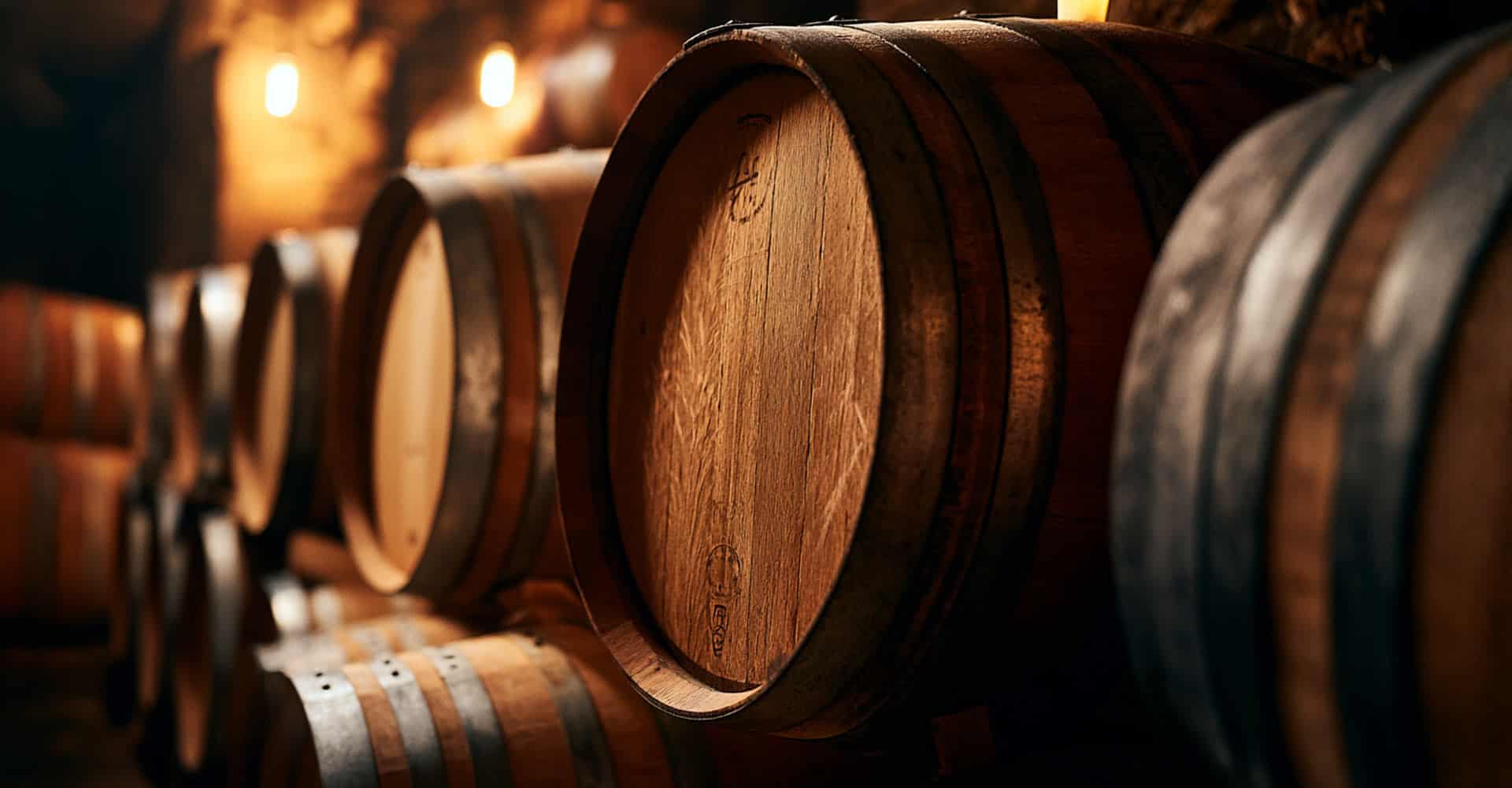
An oak barrel isn’t simply a container. It’s more like a carefully controlled flavour laboratory made from trees and fire.
As wine matures inside the barrel, tiny amounts of oxygen slowly pass through the wood while aromatic compounds are extracted into the wine itself. The process softens tannins, stabilises colour and gradually builds texture and complexity.
In practical terms, it transforms wines that taste sharp, awkward or aggressively youthful into something calmer, rounder and considerably more charming.
The oak itself contributes flavours and aromas ranging from vanilla and toasted nuts to cedar, coffee, coconut, smoke and spice. But more importantly, it changes the shape and feel of the wine.
That creamy texture in a rich Chardonnay is often oak at work.
That silky, polished edge in an aged Rioja? Oak again.
That faint whiff of cigar box, cedar chest or coffee bean that makes collectors go misty-eyed and start talking about “secondary development”? Also oak.
The barrel is effectively seasoning the wine in the same way a chef layers flavour into a sauce.
Just with more chemistry and fewer television appearances.
French Oak vs American Oak
For decades, the conversation around oak ageing has largely revolved around two heavyweights: French oak and American oak.
Both shape wine beautifully. They simply do it in very different ways.
French Oak: Elegant, Structured and Slightly Expensive
French oak has long been the preferred choice for many premium producers, particularly in Burgundy and Bordeaux.
Its grain is tighter, its extraction more restrained and its influence generally more subtle. Rather than dominating a wine with sweetness, French oak tends to build structure, texture and savoury complexity.
You’ll often find notes of cedar, spice, fine tannin and a kind of polished elegance that feels seamlessly woven into the wine rather than painted on top of it.
There’s also a practical reason French oak became associated with luxury. It’s incredibly inefficient to produce.
The wood must be carefully split along the grain to prevent leakage, meaning huge portions of the tree are lost during cooperage. Add years of seasoning, forest management and artisanal craftsmanship and suddenly a single barrel costs enough to make junior accountants sweat lightly during budget meetings.
Then there’s American oak.
American oak doesn’t really do restraint.
It’s bolder, sweeter and more immediately expressive, delivering generous flavours of vanilla, coconut, caramel and warm baking spice. The texture often feels creamier and richer, which explains why American oak became deeply associated with Rioja, Bourbon and fuller-bodied New World reds.
If French oak is a beautifully tailored cashmere overcoat, American oak is a leather jacket with a loud opinion about barbecue. Which is precisely why some drinkers gravitate towards taut, savoury Burgundy while others want a Rioja that arrives with warmth, spice and the vinous equivalent of a bear hug.
Both work.
It simply depends what sort of evening you’re planning.
The Rise of Alternative Oak
This is where the story becomes genuinely interesting.
Winemakers today aren’t simply choosing between French and American oak anymore. Increasingly, they’re exploring less conventional woods in search of distinctive textures and more unusual aromatic profiles.
Importantly, the real shift isn’t about geography or manufacturing politics.
It’s about flavour.
And the wine world, bless it, will happily travel halfway across the planet in pursuit of a slightly more interesting aroma.
Mizunara Oak: The Unicorn of Barrel Ageing
Mizunara oak from Japan has achieved near-mythical status in whisky circles and is now fascinating certain adventurous winemakers too.
The wood is notoriously difficult to work with. It leaks easily, grows painfully slowly and often requires more than two centuries before harvesting.
Which means from a commercial perspective it makes almost no sense whatsoever.
Naturally, collectors and luxury producers became obsessed with it.
What makes Mizunara remarkable is its intensely exotic aromatic profile. Wines and spirits aged in it can develop notes of sandalwood, incense, coconut and sweet oriental spice unlike anything produced by traditional European oak.
Handled carefully, it can be mesmerising.
Handled badly, your Pinot Noir starts smelling like the lobby of an expensive wellness retreat in Kyoto. Yet when producers get the balance right, Mizunara can deliver a level of aromatic complexity and texture that conventional oak simply can’t replicate, which is precisely why ambitious wineries continue experimenting with it despite the obvious risks.
Mongolian Oak: The Quiet Emerging Star
Mongolian oak is less famous but arguably more intriguing for modern wine styles.
Compared with French oak, it tends to produce softer, more floral and fruit-driven characteristics with less aggressive spice and smoke. Chemical analysis of the wood shows elevated levels of compounds associated with vanilla, almond blossom and smoother aromatic integration.
In plain English, it tends to flatter elegant wines rather than overpower them.
That matters because many producers are moving away from the heavily oaked blockbuster styles that dominated the early 2000s. Modern drinkers increasingly want freshness, texture and precision rather than wines that taste like they’ve spent eighteen months trapped inside a branch of IKEA.
For Chardonnay and refined reds in particular, alternative oak species are opening entirely new stylistic possibilities.
Toasting Levels: Where Chemistry Becomes Flavour
After coopers build a barrel, the inside is heated over fire.
This process is called toasting.
And this is where the real magic happens.
Toasting Levels and Why They Matter
After coopers build a barrel, the inside is heated over fire. This process, known as toasting, dramatically changes the flavour compounds released into the wine.
Lighter toasts tend to produce fresher spice notes like cinnamon, clove and nutmeg, often suiting more delicate wines.
Medium toast is where many premium Chardonnay producers sit comfortably, delivering balanced flavours of vanilla, coffee and warm toffee without overwhelming the fruit.
Push the toast further and the barrel begins producing deeper flavours such as coconut, toasted nuts, smoke and darker spice, which work beautifully with richer reds and many spirits.
At the heaviest levels, the inside of the barrel becomes heavily charred, creating smoky, leathery and charcoal-like characteristics more commonly associated with Bourbon production than fine white Burgundy.
Like almost everything in wine, balance matters.
Why Barrel Heads Matter Too
Most wine drinkers never think about barrel heads.
Honestly, most winemakers probably wish fewer people asked about them during cellar tours.
But whether the barrel heads are toasted changes extraction significantly.
Toast the barrel heads and the wine generally becomes softer, rounder and more vanilla-driven.
Leave them untoasted and the barrel preserves more structural tannin and freshness, something many producers value for elegant, age-worthy wines like Pinot Noir and fine Bordeaux blends.
It’s effectively the difference between seasoning a dish carefully… or accidentally tipping half the spice rack into it.
Why This Matters for Wine Lovers
The modern barrel world is becoming far more experimental and nuanced than most consumers probably realise.
Today’s winemakers aren’t simply deciding whether a wine should “see oak.” They’re making dozens of highly specific decisions about how that oak behaves and what kind of texture or aromatic fingerprint they want the finished wine to carry.
Forest origin matters. Grain tightness matters. Toast level matters. Even small decisions around seasoning time or barrel construction can dramatically alter the final wine.
A Chardonnay aged in heavily toasted American oak may become rich, broad and creamy, layered with vanilla and tropical warmth.
The same grape aged in lightly toasted French oak with untoasted heads may feel taut, mineral and quietly precise.
Neither is objectively better.
That’s partly what makes wine endlessly fascinating and occasionally exhausting.
Every stylistic decision sits somewhere on a spectrum between elegance, power, freshness and texture.
Some producers chase tension and restraint.
Others want opulence, spice and sheer sensory theatre.
And consumers, thankfully, get to choose what they love rather than pretending there’s a universally correct answer.
Which is fortunate.
Otherwise large sections of Instagram wine culture might quietly lose their sense of purpose and half the internet would have to stop describing supermarket Primitivo as “life-changing.”
Final Thoughts
The deeper you look into barrels, the more you realise oak ageing sits somewhere between craftsmanship, chemistry and quiet madness.
What initially seems simple quickly becomes astonishingly technical.
Tiny differences in grain density, seasoning time or toast level can completely reshape the way a wine feels and evolves.
And increasingly, producers are moving beyond the traditional French versus American oak conversation into far more experimental territory with woods like Mizunara and Mongolian oak bringing entirely new aromatic dimensions into play.
Personally, I never gave barrels this much thought before researching the subject properly.
Like many people, I viewed them largely as broad stylistic categories.
French or American.
Large or small.
Toasted or not.
Simple.
But modern cooperage has become remarkably sophisticated. The barrel itself is now part of the winemaker’s toolkit in the same way a chef carefully selects ingredients, cooking temperatures and seasoning.
Some experiments will undoubtedly produce extraordinary wines.
Others may occasionally taste like someone accidentally fermented Pinot Noir inside a Scandinavian furniture showroom.
That’s part of the charm.
Wine only evolves because curious people keep pushing boundaries, testing ideas and occasionally making gloriously strange decisions.
Thankfully.
Otherwise we’d all still be drinking rough medieval red wine from clay pots and pretending to enjoy it.