AI Changing Wine For Consumers
The integration of artificial intelligence technologies to transform wine discovery, selection, marketing, and investment.
- Enables conversational, context-aware wine recommendations based on detailed, structured data.
- Shifts marketing from traditional SEO to Generative Engine Optimisation prioritizing clarity and factual depth.
- Uses machine learning to synthesize vineyard, climate, production, and consumer data for personalized insights.
- Introduces predictive models for transparent fine wine investment analysis and risk assessment.
When AI Became Your Sommelier
There was a time when choosing wine meant squinting at a back label, trying to decipher the word “unctuous”, and nodding confidently at a merchant called Nigel.
Not anymore.
The global wine industry, long wrapped in heritage, romance, and a healthy dose of mystery, is quietly being re-engineered by artificial intelligence. And this isn’t just a shiny add-on or a Silicon Valley gimmick. It represents a structural shift in how we discover, choose, manage, authenticate, and even invest in wine.
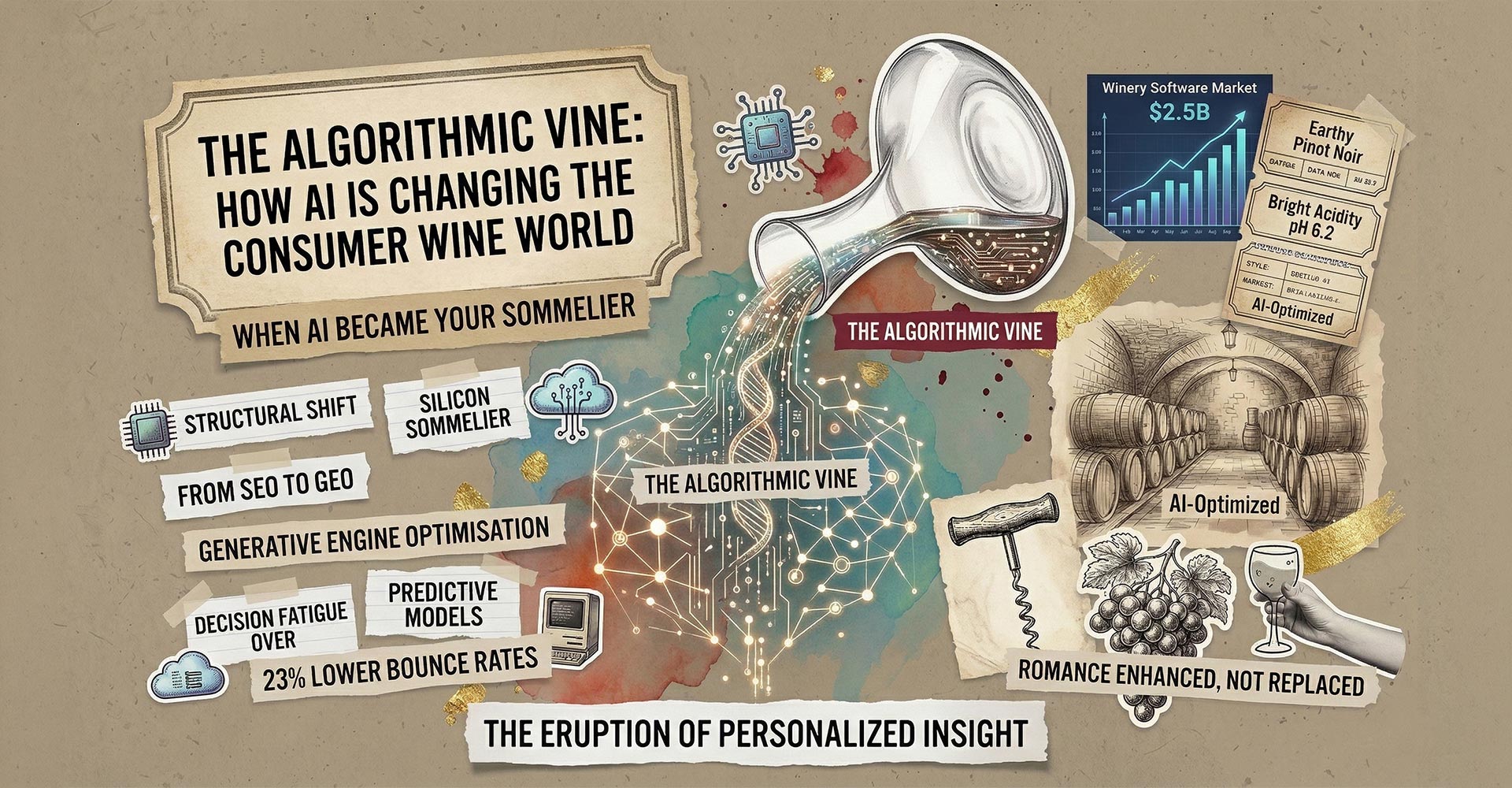
By 2025, AI in the wine world isn’t experimental. It’s mainstream. The winery software market is projected to reach $2.5 billion by 2033, growing at a punchy 22.7% annually. Translation? This isn’t a trend. It’s a movement.
Welcome to the era of the Silicon Sommelier.
A world where AI is reshaping how we discover wine, buy it online, and even invest in the finest bottles.
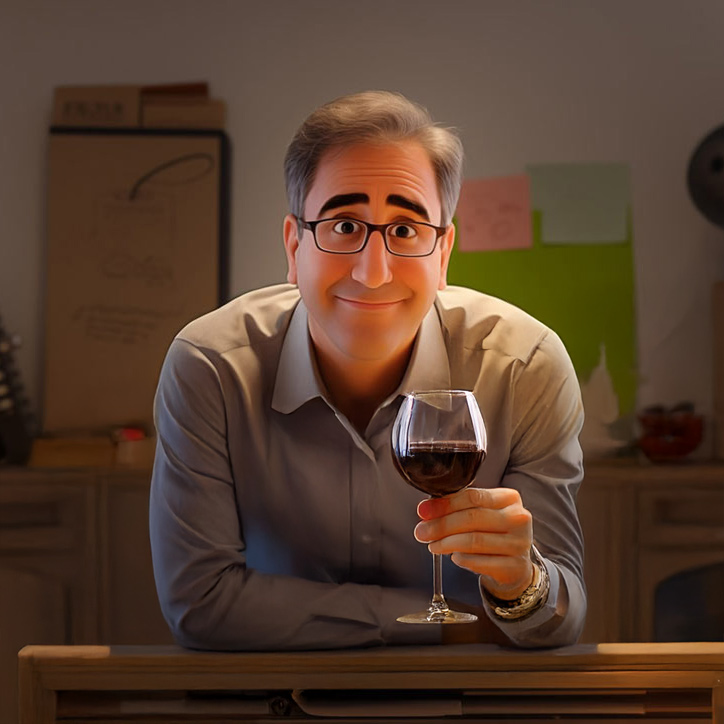
As someone who spends much of his time speaking to boards, CEOs, and business schools about artificial intelligence, I’m often asked which industries AI will transform next. Wine might not be the obvious answer. Yet it’s quietly becoming one of the most fascinating examples of how technology can reshape a traditional sector without stripping away its soul.
The End of “I’ll Just Google It”
Cast your mind back a decade.
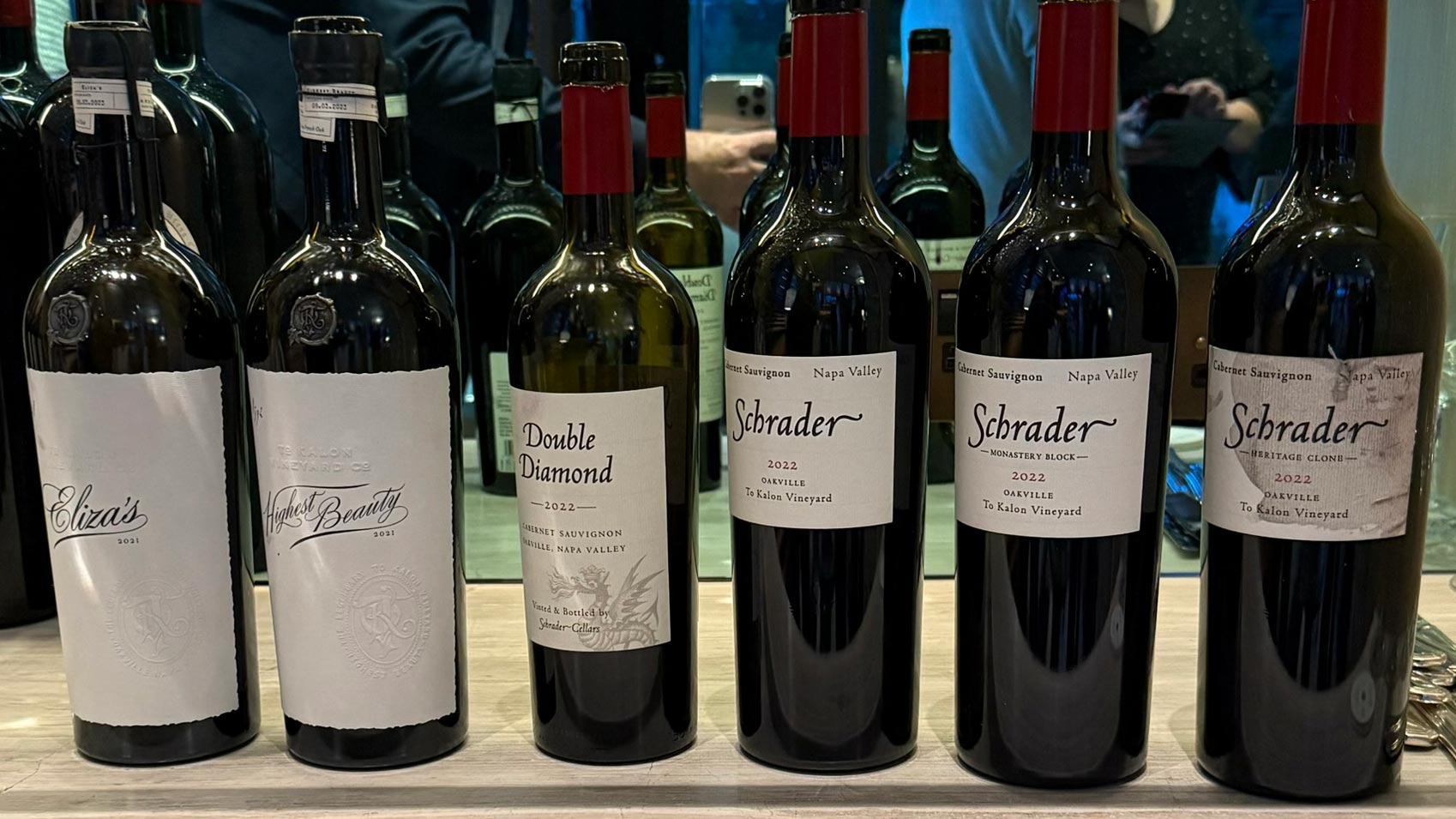
You’d type “best Napa Cabernet” into Google. Then you’d click five websites. Read three conflicting reviews. Watch a YouTube video. Forget what you were originally looking for. Eventually, you’d pour a glass of whatever happened to be closest.
Search was fragmented, manual, and frankly exhausting.
Today, it’s conversational.
Instead of keywords, you can simply ask:
“Find me a medium-bodied, earthy Pinot Noir from a cool-climate region under £50 that pairs well with mushroom risotto and can be delivered tomorrow.”
That’s no longer a search. It’s a conversation.
AI platforms powered by natural language processing now understand context. They connect terroir to climate, climate to flavour, flavour to food, and food to your postcode. ChatGPT alone commands roughly 79% market share in this space, and AI-driven traffic in the wine sector is growing dramatically faster than traditional organic search.
Consumers don’t want links anymore.
They want answers.
And increasingly, they want them instantly.
In many of my AI workshops and talks, I demonstrate this shift live. Ask a traditional search engine about wine and you receive a list of links. Ask an AI assistant and you receive synthesis. For consumers, that difference fundamentally changes the discovery experience.
From SEO to GEO: The Rise of Generative Engine Optimisation
In my work advising businesses on AI and digital strategy, one of the most significant shifts I discuss is the move from traditional SEO to what many now call Generative Engine Optimisation (GEO).
AI doesn’t rank information the same way search engines do. It prioritises clarity, structured data, and factual depth.
For wineries and retailers, that changes everything.
Vague descriptors like “beautifully structured with elegant complexity” don’t carry much weight in an AI-driven environment. Instead, AI systems prefer precision.
Rather than poetic descriptions, they respond better to structured details such as:
- Medium-bodied Pinot Noir
- Bright acidity, pH 6.2
- Notes of cherry and forest floor
- 13.2% alcohol
- Aged 10 months in neutral French oak
The more structured the information, the more confidently AI can match a wine to a consumer’s request.
This shift from SEO to GEO is quietly reshaping wine marketing. Structured, factual, layered content performs far better in AI-driven discovery systems.
The engagement metrics already reflect this change.
By early 2025, AI-driven traffic to winery websites showed:
- 23% lower bounce rates
- 41% longer session times
That isn’t casual browsing.
That’s purchase intent.
Decision Fatigue Is Over
Anyone who has scrolled endlessly through an online wine shop knows the feeling.
Thousands of bottles. Endless filters. And somehow you still end up buying the same Rioja you always buy.
This is where autonomous commerce agents are beginning to change the experience.
These aren’t simple chatbots. They are context-aware assistants that understand what you’ve browsed, what you’ve purchased before, what you’re asking, and what is actually available in stock.
Platforms such as Sommelier.bot integrate with live inventories and have been trained on hundreds of thousands of wines. They can automatically enrich merchant listings with dozens of detailed parameters, enabling a much deeper level of recommendation.
In plain English, they guide you the way a knowledgeable independent wine merchant would.
Just without quietly judging your fondness for supermarket Malbec.
The Great Data Literacy Gap
Having spent more than two decades exploring wine and sharing discoveries through WineGuide101, I’ve always been fascinated by how subjective the wine conversation can be. Two critics can taste the same bottle and describe completely different experiences.
AI doesn’t remove that subjectivity. But it can bring structure to it.
For years, the wine world has suffered from a kind of data literacy gap.
Critical information existed, but it was fragmented.
Microclimates, fermentation variables, oak regimes, and individual taste preferences were rarely connected in a meaningful way. Much of the conversation remained filtered through subjective critics with wildly different palates.
AI is beginning to close that gap.
Machine learning models can now synthesise vineyard data, climate records, production variables, and consumer feedback at scale.
The result is something remarkably powerful: personalised recommendations based not only on what you previously bought, but on why you enjoyed it.
Not:
“People who bought this also bought that.”
But rather:
“You tend to prefer higher acidity, lower alcohol, and savoury profiles from cooler regions.”
That represents a completely different level of insight.
And Yes, Investment Is Changing Too
Fine wine has long been the playground of collectors, merchants, and institutional investors. Pricing was often opaque. Knowledge lived with insiders. Auctions carried an air of mystery.
AI is starting to introduce greater transparency.
Predictive models can analyse historical performance, critic scores, scarcity metrics, and macroeconomic indicators to help investors assess risk and opportunity.
It doesn’t replace judgement.
But it certainly sharpens it.
The romance of Bordeaux First Growth isn’t disappearing.
It’s simply being quantified.
So, Is This the End of Romance?
Over the next decade, we are likely to see AI assistants embedded directly into wine retail, restaurant wine lists, and ecommerce platforms, quietly acting as digital sommeliers that learn our tastes with every bottle we open.
But no, this is not the end of romance in wine.
AI doesn’t replace craftsmanship. It enhances accessibility.
It doesn’t remove storytelling. It personalises it.
Wine will always be emotional. It will always be sensory. And it will always be deeply human.
What’s changing is how we discover it.
The Algorithmic Vine isn’t about replacing the sommelier.
It’s about giving every consumer access to one.
From my perspective working at the intersection of AI, marketing, and digital strategy, wine offers a fascinating case study. Few industries combine tradition, storytelling, and science in quite the same way. Watching artificial intelligence weave itself into this ecosystem is both surprising and exciting.
And frankly, that’s something worth raising a glass to.
Cheers to taste and technology.