Wine collectors used to manage their bottles with notebooks, memory and the occasional optimistic spreadsheet. In 2026, the best wine cellar apps can track bottles, predict drinking windows, value collections, recommend food pairings and even build digital twins of your cellar. Useful, yes. Slightly alarming for those of us still pretending the overflow rack is temporary.
Wine Collectors Don’t Have a Storage Problem. They Have a Buying Problem.
Wine collecting begins innocently enough. A few bottles for dinner, a mixed case from a trusted merchant, perhaps something decent tucked away for a birthday. Then the wine fridge arrives. Then the second wine fridge. Then the phrase “I’ll just put this in storage” starts appearing with worrying confidence. At some point, what began as a hobby starts behaving like a small logistics business with better labels.
For an industry that can discuss soil composition, canopy management and vineyard altitude with forensic enthusiasm, wine has historically been oddly relaxed about the basics of knowing what we actually own. Plenty of collectors can remember the vintage conditions in the Northern Rhône in a given year, yet can’t remember whether the last bottle of Châteauneuf-du-Pape is in the kitchen fridge, the garage rack or buried behind six bottles of optimistic supermarket Malbec.
That is where wine cellar apps earn their keep. The best wine cellar apps in 2026 are no longer just digital lists. They combine inventory management, label scanning, drinking windows, AI recommendations, live market valuations, food pairings, cellar mapping and, in some cases, enough data to make your accountant nervous. They don’t replace the romance of wine collecting. They just reduce the number of times you find a bottle ten years after its finest hour.
What Is the Best Wine Cellar App in 2026?
The best wine cellar app in 2026 depends on what kind of collector you are. CellarTracker remains the best overall platform for serious cellar management because of its enormous community database, mature drinking-window data and detailed inventory tools. Vivino is the strongest everyday discovery app, especially for label scanning, research, tasting history and price context. InVintory is best for collectors who want a polished, luxury experience with visual cellar mapping. Sommo is ideal for wine lovers who want AI-powered pairing advice and tasting education, while Oeni is best for those tracking wine as both a pleasure and an asset. In practice, many serious wine collectors use several apps together rather than expecting one platform to do everything perfectly.
CellarTracker: Still the Benchmark for Serious Wine Collectors
CellarTracker is not the newest, flashiest or most glamorous wine app. It is, however, the one many serious collectors eventually end up using, usually after pretending their spreadsheet was “more than enough” for several years. The reason is simple. CellarTracker has depth, history and a vast global community feeding it tasting notes, drinking windows and real-world bottle experience.
This matters because wine is alive. A critic’s score tells you what a wine showed like at a particular moment. A global community tells you how thousands of bottles have actually evolved in kitchens, cellars, restaurants and slightly overexcited Saturday evenings around the world. If you want to know whether a 2010 Barolo is starting to soften or whether a mature Bordeaux still has the stamina for another decade, CellarTracker gives you a level of shared experience that few platforms can touch.
The interface has improved, but CellarTracker has never been about visual seduction. It is about accuracy, structure and usefulness. For collectors managing hundreds or thousands of bottles across racks, bins, wine fridges and storage accounts, that matters far more than having a dashboard that looks like it was designed by a Scandinavian lighting brand. Wine collecting is beautiful. Wine admin, less so.
Bottom Line
CellarTracker remains the best wine cellar app for serious collectors because it treats your collection as something that needs proper management, not just attractive presentation. It is particularly useful for ageing wines, recording tasting notes, managing bottle locations and understanding when wines are likely to be at their best.
Best for: serious collectors, large cellars, ageing wine, drinking windows and detailed inventory management.
Vivino: The App I Probably Open More Than Any Other
Vivino has done something genuinely impressive. It has made wine more accessible without completely removing the curiosity that makes wine interesting in the first place. With a quick label scan, it gives drinkers instant access to ratings, reviews, pricing, producer information and food pairing clues. For anyone standing in a supermarket aisle wondering whether a bottle is a bargain or simply wearing a convincing label, Vivino is often the first line of defence.
I have a real soft spot for Vivino because I use it constantly. I regularly sit around the top 200 users in the UK, and as a paid user I value far more than the headline score. The detail behind each wine is often excellent, from producer background and regional information to vintage comparisons, price history and community tasting notes. It is not perfect, but it is incredibly useful, especially when you want quick context without disappearing into three books, two merchant websites and a forum thread from 2011.
One of the most underrated features is data export. For most users, this probably sounds about as exciting as reading the small print on a wine club subscription. For someone who builds and trains custom GPTs, it is gold dust. Exporting my tasting history allows me to analyse what I actually drink, what I keep buying, which regions appear more often than I admit, and how my preferences shift over time. Sometimes the insights are genuinely useful. Sometimes they simply confirm that Bordeaux has been quietly staging a takeover of my personality.
Vivino’s interface is also a major part of its strength. It feels modern, easy to use and friendly, which matters in a category that can still intimidate people. Many wine lovers claim they don’t care about scores. Then they scan the bottle anyway. Vivino didn’t create that contradiction. It just gave it a very attractive interface.
WineGuide101 Verdict
Vivino is not the strongest platform for serious cellar management, but it is the wine app I would least want to be without in everyday life. It is excellent for discovery, research, scanning restaurant lists, checking prices and building a personal tasting archive. If CellarTracker is the cellar ledger, Vivino is the app you take everywhere.
Best for: wine discovery, label scanning, buying decisions, restaurant wine lists, personal tasting history and research.
InVintory: The Luxury Cellar App for People Who Like Seeing Where Everything Is
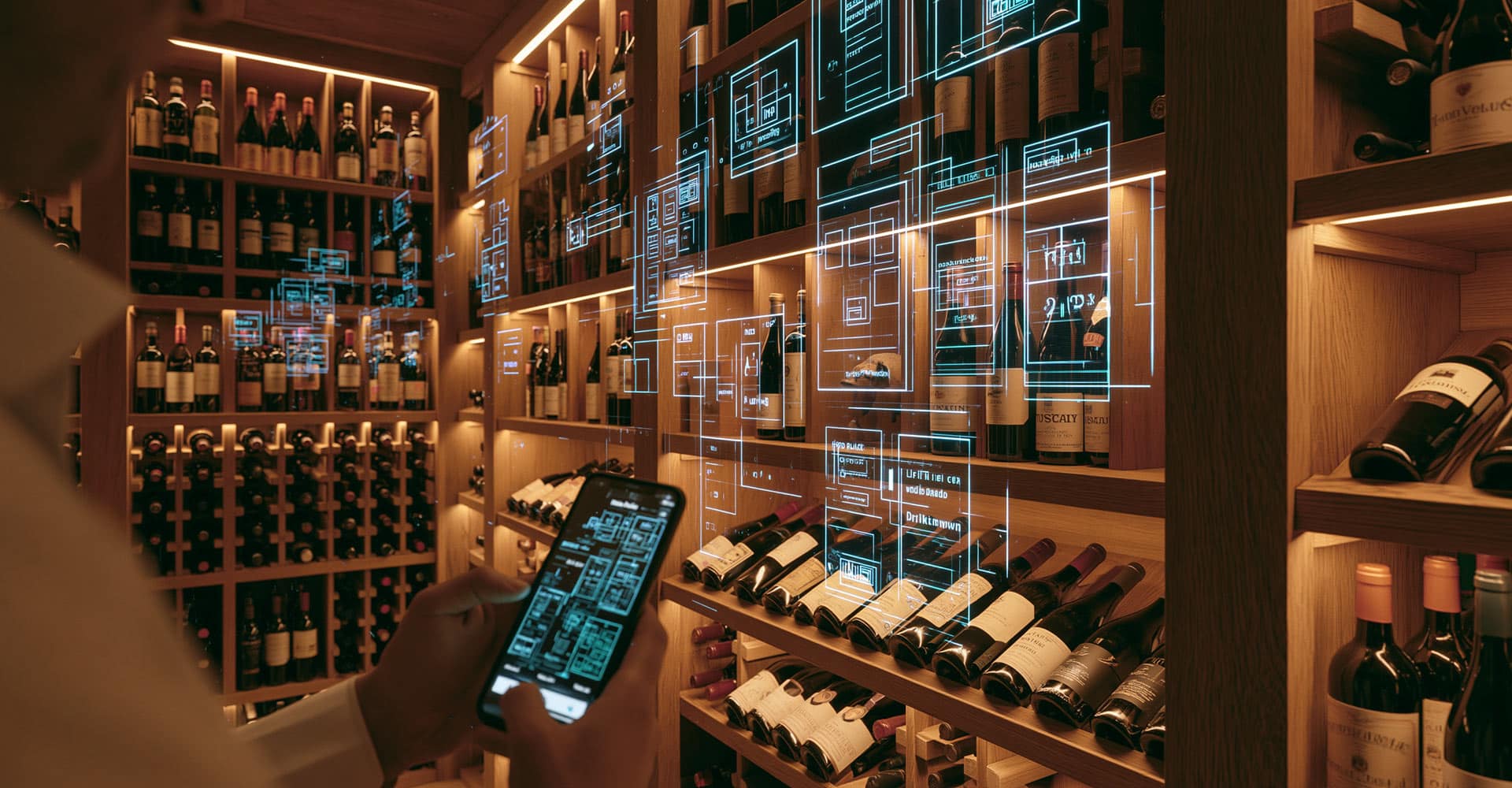
InVintory understands something important about collectors. We don’t just want to own wine. We want to see it, arrange it, admire it and occasionally pretend the layout was intentional. Its standout feature is VinLocate, which allows users to create a digital visual version of their cellar, mapping bottles into a true-to-life 3D space.
At first glance, this sounds like a luxury flourish. Then you remember the last time you spent fifteen minutes looking for a bottle you knew was “definitely on the left somewhere”. For collectors with large racks, multiple storage zones or serious home cellars, visual organisation is not just attractive. It saves time, reduces mistakes and makes the whole collection feel easier to manage.
InVintory also leans into the high-end collector experience with valuation tools, environmental monitoring and concierge-style support. That makes it especially appealing for people who think of their wine collection as part pleasure, part asset and part interior design statement. There is a point in wine collecting where a spreadsheet begins to feel faintly disrespectful to the bottles. InVintory is designed for that point.
Bottom Line
InVintory is the most visually polished cellar app in this list. It is ideal for collectors who value spatial organisation, elegant design and a premium user experience. It won’t replace the depth of CellarTracker for community tasting data, but it offers a more beautiful and intuitive way to understand where your bottles are.
Best for: luxury collectors, visual cellar mapping, premium home cellars, valuations and elegant organisation.
Sommo: The App That Helps You Actually Drink the Wine
Wine collectors are often brilliant at buying wine and surprisingly bad at drinking it. We save bottles for special occasions, then quietly redefine “special” until the bottle has outlived three phone contracts and possibly a kitchen renovation. Sommo tackles a question that too many cellar systems ignore: what should you actually open tonight?
Its AI-powered food pairing tools make it particularly interesting. Rather than simply cataloguing your bottles, Sommo can recommend wines from your own collection based on what you are eating. This is where wine technology becomes genuinely useful, because the best bottle in your cellar is not always the most expensive or famous. It is the one that suits the food, the mood and the people at the table.
Sommo also appeals to those who want to learn. With tasting note guidance, palate profiling and WSET-style education tools, it positions itself less as a cellar database and more as a personal wine coach. That is a smart move. Many wine lovers don’t just want to store bottles efficiently. They want to understand why they like what they like, which is often harder than it sounds after the second glass.
Bottom Line
Sommo is one of the most interesting wine apps for people who want to connect their cellar to real life. It is especially useful for food pairing, tasting development and wine education. For collectors who keep buying impressive bottles but rarely know when to open them, Sommo may be the gentle nudge required.
Best for: AI food pairing, wine education, tasting notes, palate development and choosing what to drink.
Oeni: For Collectors Who Know Wine Is a Pleasure, But Still Check the Numbers
Wine investment is a subject many collectors approach with theatrical modesty. “I only buy to drink,” they say, while quietly checking recent auction prices and wondering whether that case of Burgundy should now be treated with the respect normally reserved for jewellery and pension planning.
Oeni is built for this more financially aware collector. Its strength lies in valuation, maturity analysis and capital gains tracking. It helps users understand not only what they own, but what their bottles may be worth and where they sit in their drinking windows. That combination matters because the most valuable bottle is not always the one you should hold forever. Some wines are for drinking. Some are for selling. Some are for staring at while wondering whether you are the sort of person who now owns an asset class.
The fine wine market has had its ups and downs, which makes accurate tracking even more important. If your collection includes serious Bordeaux, Burgundy, Champagne, Tuscany or Rhône wines, understanding value movement and maturity can help you make better decisions. Not every bottle needs a spreadsheet personality, but once values climb, vague memory becomes an expensive strategy.
Bottom Line
Oeni is best suited to collectors who want to manage wine as both enjoyment and investment. It adds structure, valuation and financial context without pretending that wine is only about numbers. Used well, it can help you decide what to drink, what to hold and what might be worth moving on.
Best for: wine valuation, investment tracking, maturity analysis, European collectors and financially focused cellars.
Should You Use One Wine Cellar App or Several?
Answer Capsule
Most serious wine collectors should use more than one wine app. A single platform rarely handles discovery, inventory, food pairing, cellar mapping and valuation equally well. A practical setup might use CellarTracker as the main inventory and drinking-window database, Vivino for scanning and research, InVintory for visual cellar mapping, Sommo for food pairing and wine education, and Oeni for market valuation and financial tracking. This may sound excessive to normal people, but normal people rarely own six corkscrews and a “temporary” overflow rack in the hallway.
A multi-app approach works because wine collecting is not one activity. It is buying, storing, researching, drinking, learning, sharing and occasionally explaining why a case delivery has arrived despite “not ordering anything recently”. Each app solves a different problem. Trying to force one platform to do everything is usually where frustration begins.
Practical Buying Guide: Which Wine Cellar App Is Right for You?
Choose CellarTracker if your main problem is managing a serious collection. It is particularly strong if you age wines, rely on drinking windows, want detailed bottle locations and value community tasting notes.
Choose Vivino if you want the best everyday discovery tool. It is excellent for scanning bottles, checking prices, researching producers, reading community reviews and tracking your tasting history in a user-friendly way.
Choose InVintory if you care about how your cellar is organised visually. It is ideal for premium home cellars, collectors with complex storage and anyone who wants the digital experience to feel as refined as the physical one.
Choose Sommo if you want help deciding what to open. It is especially useful if you care about food pairing, tasting education, WSET-style learning and understanding your own palate.
Choose Oeni if valuation matters. It is best for collectors who want market insight, maturity analysis and a clearer view of wine as a financial asset.
The Future of Wine Cellars Is Already Here
For centuries, wine collecting relied on trust, memory, notebooks and the occasional scribbled label on a cardboard box. Now we have AI pairing engines, digital cellar twins, market valuation feeds and apps that can tell us what to drink with lamb before the oven has finished preheating. Progress is marvellous, if occasionally smug.
The interesting part is not that technology is entering wine. It is that wine is forcing technology to behave in a more human way. A good cellar app cannot simply count bottles. It has to understand ageing, occasion, taste, food, value, rarity and emotion. Wine is not a normal consumer product. Nobody keeps tins of beans for twenty years waiting for them to reach maturity, although given the current state of some kitchen cupboards, one should never rule it out.
The best apps respect that complexity. They help collectors open wines at better moments, avoid losing track of bottles, understand their own preferences and make more informed buying decisions. Used well, they don’t make wine less romantic. They make the romance more likely to happen at the right time.
Final Thoughts: Technology Should Serve the Bottle, Not Replace the Pleasure
The best wine cellar apps in 2026 are not really about technology. They are about timing. Wine is one of the few things we buy knowing that the best version of it may exist years in the future. That creates anticipation, and anticipation needs a little management if it is not going to turn into regret.
CellarTracker remains the serious collector’s benchmark. Vivino remains the everyday companion I personally use most often. InVintory brings visual elegance to cellar management. Sommo helps turn collections into better drinking experiences. Oeni adds financial discipline for collectors who want to understand value as well as flavour.
No app will make bad wine good. No algorithm can replace the pleasure of opening a bottle with the right people. But a good wine cellar app can help ensure the right bottle is opened at the right moment.
And frankly, anything that reduces the phrase “I’m sure it’s in here somewhere” deserves a place in the modern wine cellar.