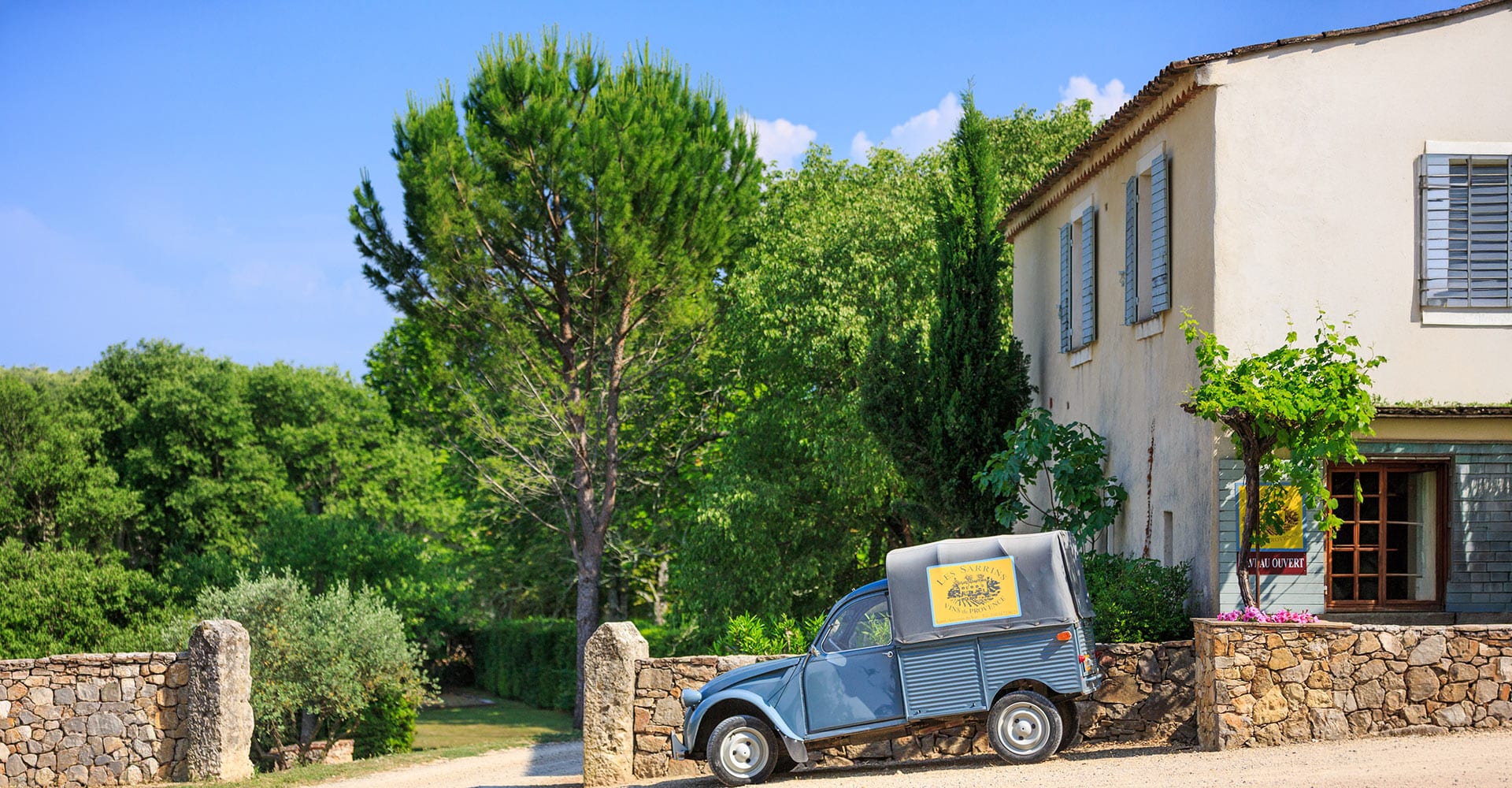
Château des Sarrins is not just another pretty Provence label in a pale bottle, behaving as if summer can be reduced to salmon pink and a linen shirt. This Haut Var estate, revived by the Paillard family of Champagne fame, brings altitude, organic farming, old vines and proper winemaking discipline to wines that feel more gastronomic than gluggable.
A Provence estate with a story, not just a sunhat
There are Provence rosés, and then there are Provence rosés that appear to have read the brief, questioned the brief, and quietly worked on it.
Château des Sarrins belongs in the latter camp. It has the pale colour, the Provençal charm and the useful ability to make lunch feel slightly more civilised than it probably is. But beneath that attractive surface is a more serious estate story: ancient local legend, hillside vineyards, organic farming, Champagne family discipline and a sense that wine should do something at the table beyond looking photogenic next to a prawn.
I was recently gifted two of the 2025 releases: the Grande Cuvée Rosé and the Blanc de Rolle. Both are wines worth talking about positively, not because they shout, but because they make a case for a more grown-up side of Provence. And frankly, in a world where rosé has often been marketed as a lifestyle accessory with liquid inside, that feels quietly refreshing.
Where is Château des Sarrins?
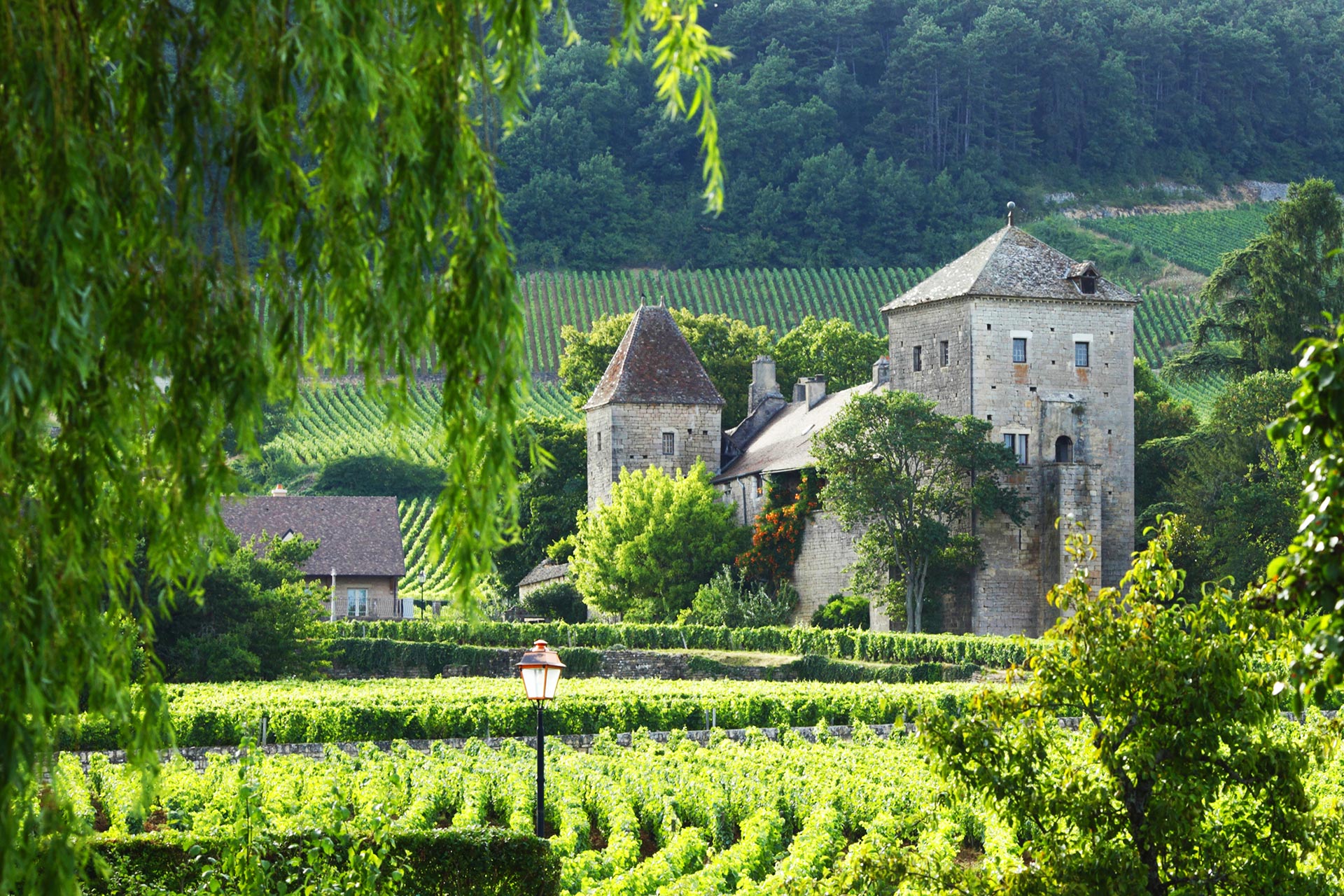
Château des Sarrins is in Saint Antonin du Var, in the Haut Var area of Provence, set between the foothills of the Alps and the Mediterranean. That matters, because location is not just a romantic line on the back label. It shapes the wine.
The estate sits at around 240 metres above sea level, surrounded by more than 100 hectares of pine woods, oak trees and olive groves. The vineyards themselves are planted in small clearings, almost like secret garden plots hidden in the landscape. Wine estates love to describe themselves as “special places”, but here the geography does some of the talking before the marketing department has even sharpened its pencil.
The name Sarrins comes from “Sarrasins”, linked to a local legend involving Saracens, a wounded chief, a tower and, depending on how much rosé has been poured, possibly golden armour. This is exactly the sort of Provençal backstory that makes you want to lean in. According to the legend, the chief took refuge in the tower on the estate, where he eventually died. The surrounding lands became associated with his followers, giving rise to the name “Sarrins”. Like many Provençal legends, it adds a touch of romance to the landscape while also reminding us that wine has never knowingly underused a good story.
Over time, the estate moved through olive growing, livestock, silkworms and vines before being revived in its modern form by the Paillard family in 1995.
The Champagne connection: why Paillard matters
The Paillard name is better known in Champagne, where Bruno Paillard built a respected house around precision, freshness and low-dosage clarity. That background is important because Château des Sarrins doesn’t feel like a vanity project in Provence. It feels like a serious wine family applying a cool-headed philosophy to a warm region.
The Paillards brought with them a Champagne way of thinking: separate parcels, careful selection, controlled pressing, freshness, balance and the idea that structure is not something only red wine is allowed to have.
That is where Château des Sarrins becomes more interesting than another “here’s a villa, here’s a rosé, here’s a lifestyle shot of a chair” estate. The wines are built with a sense of restraint. The rosé is not trying to be a scented mist. The white is not just a seafood placeholder. They have shape, texture and intent.
Wine marketing often talks about “precision” as if it were a decorative garnish. At Sarrins, you can see where it comes from: slow pneumatic pressing, limited juice yields, separate vinification, malolactic fermentation avoided for the whites and rosés, and an estate rhythm that values freshness as much as ripeness.
Organic viticulture in vineyard clearings
Château des Sarrins farms organically, and the estate presents this as a long-term philosophy rather than a badge slapped on the label because the market likes green things. The vines are worked without weed killers, with ploughing and certified natural fertilisers used to support the soils.
The vineyard landscape is particularly distinctive. Rather than one sweeping, Instagram-ready block of vines, the 27 hectares are divided across multiple small sites in woodland clearings. That creates a very different feel from the big, open, postcard version of Provence. It is more intimate, more fragmented and, from a winemaking perspective, more demanding.
The soils are mainly gravelly limestone with some clay, giving the wines a combination of freshness, mineral line and body. The climate is Mediterranean, but altitude changes the equation. The estate gets sunshine, but also cooler nights and a strong day-to-night temperature swing. In summer, that contrast helps preserve acidity while allowing the grapes to ripen.
This is the useful tension in the wines: warmth and freshness, roundness and line, charm and discipline. A bit like a dinner guest who brings great wine but also knows when to leave.
Grande Cuvée Rosé 2025: not just another pale pink whisper
The Château des Sarrins Grande Cuvée Rosé is made from classic Provençal varieties including Cinsault, Syrah, Grenache, Mourvèdre and a touch of Rolle. The estate describes it as pale, floral and fresh, with notes of white fruit, peach, sweet almond and violet, and enough persistence to be “more than a thirst quencher”.
That last phrase is the key.
The 2025 Grande Cuvée Rosé sits firmly in the more structured Provençal camp. Elegant and polished, it has more body than the ultra-light style many people associate with famous pale rosé brands. There is more mid-palate weight, more savoury character and more reason to pair it with food.
Sarrins feels distinctly gastronomic, with enough shape to work alongside grilled fish, prawns, summer vegetables, lighter chicken dishes and Mediterranean salads. The colour still does the Provence thing. The palate, however, has a more to say.
Blanc de Rolle 2025: Vermentino with texture and purpose
The Blanc de Rolle is made from 100% Rolle, the Provençal name for Vermentino. Often dismissed as simply a “fresh Mediterranean white”, the grape is treated more seriously here.
The estate notes that Rolle can ripen unevenly and may require multiple harvest passes. After gentle pressing, the wine is fermented and aged on fine lees, with malolactic fermentation avoided to preserve freshness.
The result is a white with citrus, white fruit, mineral lift, peach and almond notes, supported by a rounded texture that adds presence without heaviness. It feels genuinely useful at the table, pairing comfortably with grilled fish, shellfish, Mediterranean vegetables, goats’ cheese, mushrooms and herby chicken.
It also makes a convincing case for Rolle as a grape that deserves more attention beyond its usual supporting role.
Why these wines feel more gastronomic
The key to Château des Sarrins is not power but structure.
The estate’s approach delivers freshness without thinness. The rosé has enough body to avoid becoming merely decorative, while the Blanc de Rolle offers texture and depth beyond a simple fridge-door white. Both feel designed with food in mind.
That matters because Provence rosé has become one of wine’s great lifestyle categories, selling sunshine, terraces and effortless elegance. While commercially successful, it can sometimes overshadow the region’s diversity.
Château des Sarrins is a reminder that Provence is more than a colour chart. It is a serious wine region with altitude, varied soils, old vines and genuine stylistic range.
Bottom Line
Château des Sarrins is a strong example of Provence moving beyond “pale equals premium”. The 2025 Grande Cuvée Rosé and Blanc de Rolle both show freshness, body and food-friendly intent, making them far more interesting than wines designed only to look elegant in an ice bucket.
Final sip: Provence, but with its shoulders back
Château des Sarrins is not trying to reinvent Provence. It is doing something better: reminding us that Provence has more range than the market sometimes allows.
The Grande Cuvée Rosé 2025 gives you the elegance people want from the region, but with a firmer handshake. The Blanc de Rolle 2025 brings texture, freshness and a useful sense of purpose to a grape that deserves more space on the table. Neither wine needs to be oversold. They simply show that Provence can be charming without being flimsy.
And that, really, is the pleasure of Sarrins. It has the beauty of Provence, the discipline of a serious wine family and just enough substance to make you pause before dismissing rosé as merely the official beverage of outdoor cushions.
Sometimes the most interesting wines are not the ones that shout. They are the ones that quietly refuse to be underestimated.