Why Château Mouton Rothschild is unlike any other Bordeaux winery
Château Mouton Rothschild stands apart for its ruthless grape selection. It pairs that with an artistic legacy and precision winemaking few estates can match. Every decision is deliberate. Grapes are still tasted by hand before harvest, only the best make it into the Grand Vin, and each vintage is immortalised with original artwork. The result is a wine that isn’t just produced, it’s curated. On visiting, it becomes clear this isn’t a winery chasing perfection. It’s one that’s engineered around it.
A bucket list visit that lives up to the hype
Some wineries you visit for the wine. Others you visit because you feel like you should. And a few, very few, you visit because they’ve already earned their place before you even arrive.
Château Mouton Rothschild sits firmly in the third category. It’s one of those names that carries weight long before you arrive. And thankfully, it delivers.
From the moment we were welcomed by Arthur, the tone was set. Relaxed, knowledgeable, and quietly confident. No theatrics, no over-selling. Just clarity and pride in what happens here.
 What makes Château Mouton Rothschild unique?
 What makes Château Mouton Rothschild unique?
At its core, Mouton is about control and consistency without losing character.
- Grapes are selected by taste, not just data
- Only the best fruit is kept. The rest is downgraded or declassified
- Each plot is vinified separately before blending
- Every vintage gets its own original artwork label
- A private museum houses centuries of wine artefacts and art
It’s not one thing. It’s the accumulation of hundreds of small, disciplined decisions, from tasting grapes plot by plot to deciding which wines make the cut and which don’t.
It all starts with taste, not tech
In a world obsessed with data, Mouton keeps things refreshingly human.
Harvest decisions are still made by tasting grapes. Daily. Plot by plot.
Yes, there’s technology. Optical sorting machines, temperature-controlled vats, gravity-fed systems. But the final call still comes down to palate, not algorithm.
That balance runs through everything here. Modern where it helps, traditional where it matters.
Ruthless selection: why not all grapes make the cut
What surprised me most was how much wine doesn’t make it into Mouton.
The selection process is strict:
- Grapes are sorted optically and manually
- Each plot is fermented separately
- Wines are tasted and either selected, downgraded, or declassified
Anything that doesn’t meet the standard doesn’t disappear. It’s reassigned or declassified. Often still very good, just not Mouton.
That’s the difference. Not what they include, but what they leave out.
A masterclass in precision winemaking
The winery itself blends engineering with experience.
- 64 vats in total: 20 stainless steel, 44 wooden
- Gravity-fed system to protect fruit quality
- Fermentation in wood, blending in steel
- Temperature controlled between 24–28°C during fermentation
Each vat represents a single plot. Nothing is blended until after fermentation, allowing complete control over the final wine.
Traditional details that still matter
Even at this level, some processes remain stubbornly traditional.
One example is fining.
Mouton still uses egg whites to clarify the wine, separating it from sediment during ageing. It’s more expensive and more labour intensive than modern alternatives, but it’s part of the house style.
A small detail, but one that tells you everything about how they think, and ultimately why the wines show such consistency year after year.
The museum that steals the show
You expect great wine. You don’t expect a private museum that could rival a small national collection.
This, for me, was the standout moment.
Ancient artefacts, rare objects, historic pieces from across the world. And then the real highlight. The original artworks used for the labels.
Every year, a different artist designs the Mouton label. Not prints. The actual originals are displayed.
Standing there, looking at them, you realise something simple.
They’re not just making wine. They’re creating something that sits somewhere between luxury product and cultural asset.
The labels: as collectable as the wine
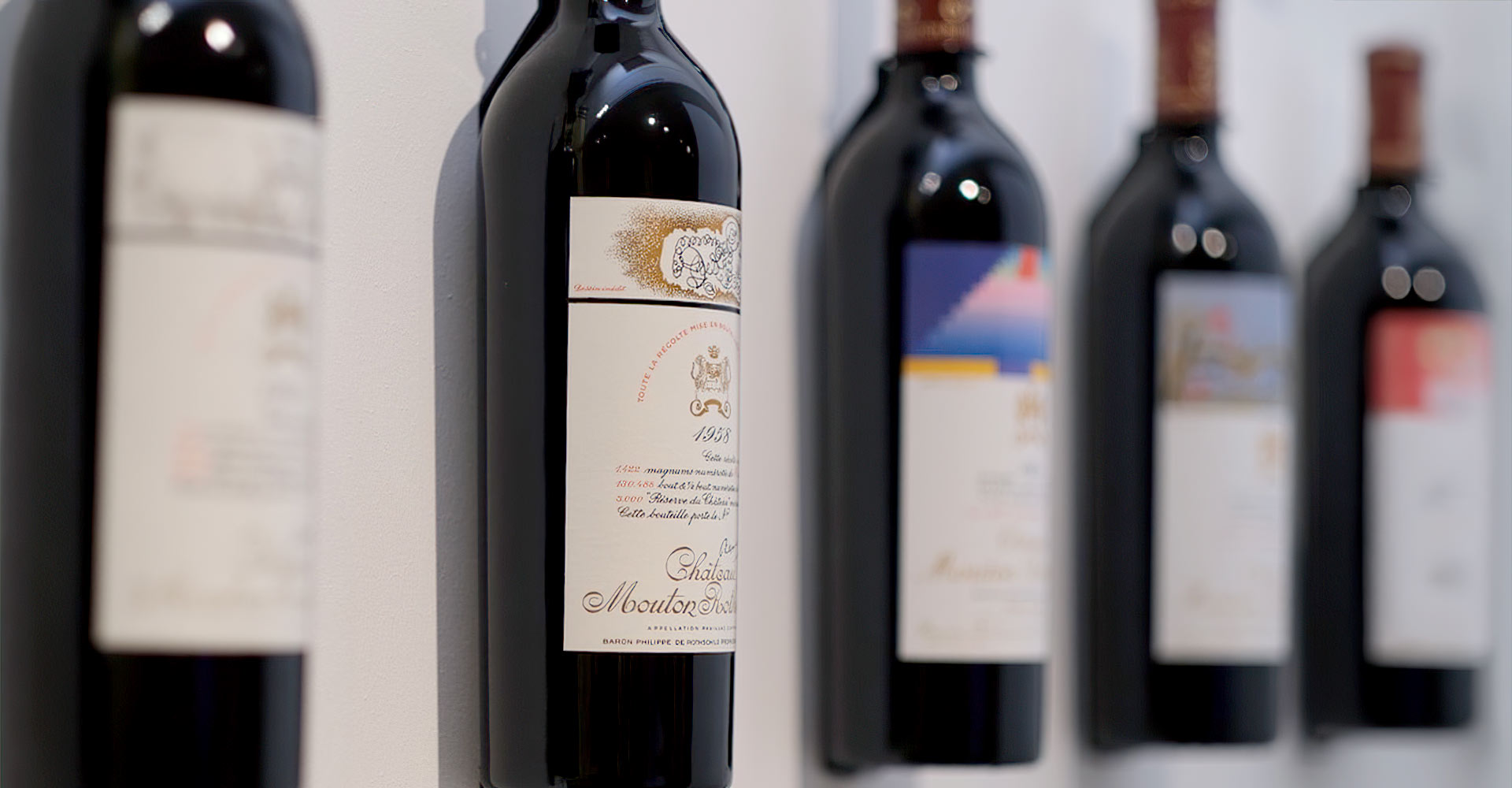
Mouton’s labels are iconic for a reason.
Each vintage is designed by a different artist, turning every bottle into a piece of history. Over the years, names like Picasso, Dalí, Warhol, and even King Charles have all contributed, which tells you everything about the level they’re operating at.
If you want a deeper dive into the labels themselves, I’ve covered them in more detail here: [link]
Not always without controversy.
In 1993, one label was rejected in the US due to nudity concerns. The estate had to create an alternative version specifically for that market.
Only in wine can compliance become part of the story.
The cellar: where time does the heavy lifting
Underground, the cellars feel more like a cathedral than storage.
- 18 months ageing for Mouton
- 100% new oak for the Grand Vin
- Barrels used for three years, then sold
- Humidity kept around 75–85%
Even evaporation has a name. The angel’s share.
Although at these prices, the angels are doing rather well.
A library of wine history
One of the most overlooked parts of the visit is the sheer scale of the archive.
- Around 120,000 bottles stored
- Historic vintages kept permanently
- Bottles dating back to the 1800s
- Private cellar used for family events and tastings
This isn’t storage. It’s a living archive.
Terroir, weather, and variation
Mouton sits in Pauillac, influenced by both the Gironde river and the Atlantic.
That brings:
- Cooler temperatures than Bordeaux (by 2–5°C)
- Strong wind influence
- Significant vintage variation
Which is why each vintage shows a slightly different expression.
And why the best years don’t just taste different, they stand apart.
Tasting the wines: what we actually drank
We tasted across three wines from the Rothschild portfolio:
- Château d’Armailhac 2019 – open, generous, and immediately approachable. Plenty of ripe fruit with a softer structure.
- Château Clerc Milon 2016 – more composed and classical. Tighter, with structure and balance that suggests it’ll age well.
- Château Mouton Rothschild 2011 – the headline act. More layered, more complex, and noticeably more complete.
All three were impressive, but the Mouton stood apart.
Balanced, structured, and elegant. The kind of wine that builds rather than shouts.
It had that extra layer. The one that makes you stop mid-conversation and pay attention. One of those moments where you pause, glass in hand, and quietly take stock of how far you’ve come to be standing there.
Final thoughts: more than a winery
Château Mouton Rothschild isn’t just producing wine.
It’s curating history, art, and craftsmanship in a way most brands simply can’t replicate.
Yes, the wines are exceptional. Quietly, unmistakably exceptional.
But what stays with you is the detail. The discipline. The obsession with getting it right and creating such an incredible legacy.
And if you ever get the chance to go, take it.