Introduction: A New Centre of Gravity in Wine
Imagine a hushed three‑Michelin‑star dining room: the sommelier glides over, bottle poised, smile perfected—and the label reads Oxfordshire, not Épernay. Once a novelty, now a statement. The rise of English fizz from “tastes like rain” to a regular guest at haute cuisine’s top tables is no accident. It’s geology, climate, and relentless ambition bubbling together into a new chapter for fine wine.
We’re not copying Champagne. We’re earning our place—one glass at a time.
The Chalk Line: Unearthing a Shared Terroir
Beneath southern England stretches the same chalk seam that forms Champagne’s revered vineyards—a geological handshake across the Channel. This free‑draining, water‑holding soil gives vines exactly what they need: dry roots, steady hydration, and that distinct mineral whisper in the glass. It’s the bedrock of English fizz’s success.
Modern producers quickly realised this was more than coincidence. In the late ’80s, Nyetimber planted the classic Champagne trio—Chardonnay, Pinot Noir, Pinot Meunier—and committed to the meticulous méthode traditionnelle. The aim wasn’t imitation but ambition: to prove English terroir could play at the top table.
Yet the English story predates even Dom Pérignon. Back in 1662, Christopher Merret recorded how to create bubbles deliberately—centuries before the French perfected it. Add in our tough coal‑fired glass bottles and you’ve got history fizzing with irony.
Today, the narrative flows seamlessly from soil to science to style. Same chalk, cooler climate, and a new confidence. The result? A sparkling identity that’s unmistakably English.
A Climate for Change: England’s Climatic Advantage
England’s vineyards have found themselves in a Goldilocks moment—not too hot, not too cold, but just right for ripening those classic Champagne grapes. Think of it as Mother Nature finally turning the thermostat up a notch. With southern England now enjoying the kind of weather Champagne saw decades ago, English fizz has hit its stride.
The comparison to Champagne is striking: as the French rush to pick grapes before acidity slips away, English growers are revelling in long, slow seasons that preserve that signature freshness. The science still matters—cool nights, chalky soils, and careful hands—but here it reads like poetry. The equations are gone, the sparkle remains.
The “Climatic Sweet Spot”
Warmer growing seasons since the 1970s nudged southern England into Champagne‑circa‑1975 territory. Suddenly, classic grapes ripen reliably. As Hundred Hills’ Stephen Duckett quips, “We only started Hundred Hills because of climate change.”
The Science of Ripeness and Acidity
Cool nights and long, steady seasons bring something magical: full flavour ripeness and electric natural acidity. That zingy backbone is the calling card of English sparkling—sleek structure now, brioche later.
Champagne’s Conundrum (and Our Caution)
Meanwhile, Champagne wrestles with higher sugars and falling acidity, pulling harvests earlier. England isn’t risk‑free—spring frost and soggy summers keep viticulturists humble—but smart site choice and fastidious farming are winning the day.
The Proof in the Bottle: From Punchline to Podium
English fizz stopped being a novelty the moment blind tastings and medals piled up. Production has surged; quality even more so. The watershed? In 2025, Nyetimber’s Blanc de Blancs 2016 Magnum became the first ever non‑Champagne to win the IWC Champion Sparkling Wine trophy. That’s not a polite clap from the back row—that’s centre stage.
French houses have noticed. Taittinger and Pommery buying English land is the vinous equivalent of a knowing nod.
Why Michelin Chefs Champion English Fizz
Hyper‑Localism with Bubbles
Top kitchens have embraced hyper‑local “ven food”: British ingredients, British stories, British sparkle. Pouring Sussex or Kent with Cornish turbot isn’t flag‑waving—it’s narrative coherence.
Beyond Patriotism: The Functional Edge
That racy acidity is a sommelier’s Swiss Army knife. It slices through beurre blanc, resets the palate after duck, and lifts delicate seafood without shouting over it. The result? Cleaner lines on the plate and in the glass.
A Case Study in Precision: Hundred Hills Wine
If the previous sections show the science and climate driving English fizz, Hundred Hills is where those ideas take root and thrive—a living, breathing example of England’s chalk, climate, and ambition distilled into a single estate.
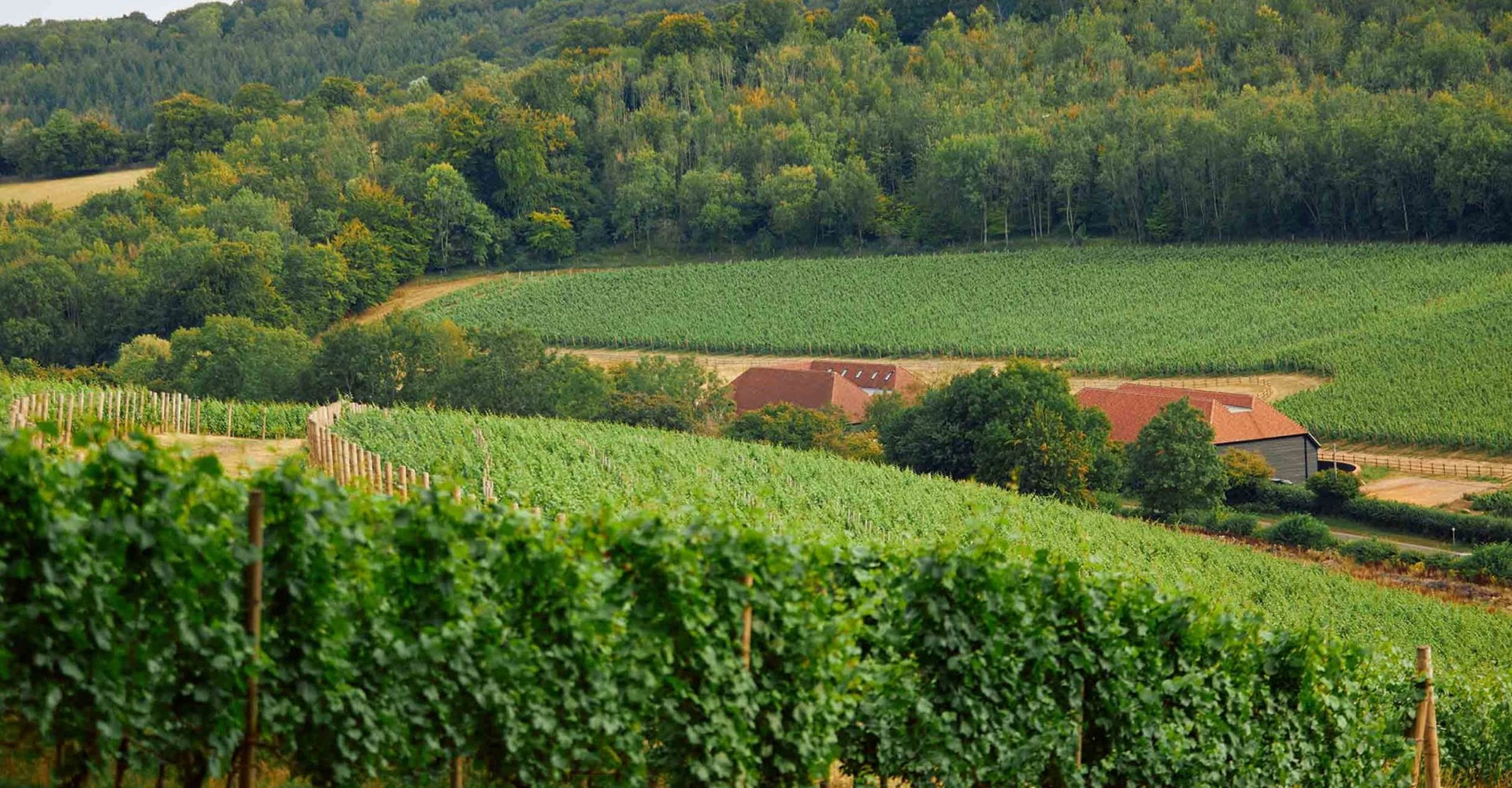
Stephen and Fiona Duckett hunted for three years, tested around 300 sites, sent soil samples to Champagne’s own labs, and finally settled on the steep, chalky slopes of the Stonor Valley in Oxfordshire—a decision that would reshape the story of English sparkling wine. Their mix of scientific precision and pure passion is infectious. Stephen describes winemaking as both data-driven and deeply human: “You have to listen to the land, but measure everything.”
Their philosophy is resolutely vineyard-first, a marriage of technology and terroir.
- Vintage‑only: no NV safety net—each year speaks for itself, capturing the quirks and glories of the season.
- Parcel‑by‑parcel: every slope, aspect, and micro‑climate is vinified separately, giving the team an intimate understanding of each vine’s voice.
- Sustainable by design: the estate avoids herbicides entirely, uses cover crops for soil health, and employs an energy‑efficient, naturally cooled winery.
- Burgundian mindset: clarity of place over house recipe—these are wines that tell the story of Stonor, not the cellar.
Stephen and Fiona’s vision is bigger than a brand; it’s about proving that England’s terroir can yield wines of genuine emotional and sensory precision. That belief now sees over forty Michelin‑starred restaurants pouring Hundred Hills, from The Fat Duck to Claridge’s. Chefs love its food‑friendliness; sommeliers love its nerve and narrative. Each cork popped is a quiet revolution in English winemaking—and if you spend five minutes with Stephen, you’ll believe every word.
Michelin Pairings with Hundred Hills
These pairings all feature wines from the Hundred Hills estate in Oxfordshire, illustrating how a single producer’s range can complement diverse Michelin‑starred dishes.
- Le Manoir aux Quat’Saisons (2★) – Duck, black cherry & almond → Rosé de Saignée 2021. Acidity trims richness; red fruit mirrors cherry.
- Alain Ducasse at The Dorchester (3★) – Orkney scallop & caviar → Blanc de Blancs 2019. Citrus brightness + saline poise = harmony.
- Umu (1★) – Langoustine two‑ways → Signature Rosé 2018. Wild strawberry meets sweet shellfish; bubbles refresh.
- Pied à Terre (1★) – Asparagus, crayfish & beurre blanc → Hillside No.3 2019. Zip meets cream; detail meets depth.
A cheeky experiment by Michel and Emily Roux swapping Champagne for Chapel Down had diners choosing the English pour more often than not. Palates don’t do patriotism—they do pleasure.
The Future and Identity of English Sparkling
The story of English fizz’s rise is far from over—it’s entering its next thrilling chapter. Production could top 30 million bottles within a decade, and with domestic shelves well stocked, global palates are the next frontier. The Nordics, Japan, and the US are developing a taste for English sparkle, proving that what began as a local passion has true international pull.
At the same time, still wines—especially Chardonnay—are quietly making waves, expanding the nation’s vinous repertoire. Together, they show an industry growing not just in size but in confidence.
Ultimately, this is more than a business story; it’s the evolution of identity. England’s chalky terroir and brisk climate have crafted a wine style the world is beginning to crave: precise, poised, and proudly its own. The fizz’s future and its present success are one and the same—bright, refreshing, and impossible to ignore.
Conclusion: An Identity Forged in Chalk and Acidity
In the blink of wine history, English sparkling has gone from punchline to podium. Same chalk as Champagne; cooler climate; our own tune. It’s not a substitute—it’s a star with a distinct voice: precision, brightness, and poise. The cellar doors of Sussex and Oxfordshire have opened onto the world’s finest tables, and the corks are only just popping.