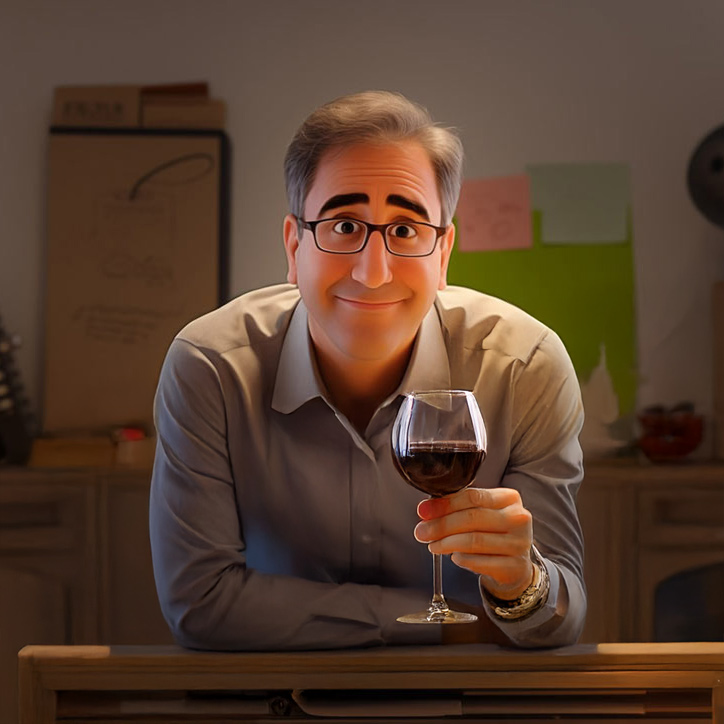
Damon’s Take: Why I Love Wine
I love wine because of how incredibly versatile the process is. Every bottle is a set of decisions. What the winemaker chose to do, what nature allowed, and what the year delivered. You’re not just tasting a grape. You’re tasting intent.
That’s what keeps it interesting. Even when I don’t love a wine, I still want to understand it. What happened in the vineyard that year? Why does it taste like this? What choices led here?
Every bottle is an experience. An adventure, really.
And then, occasionally, you get one just right.
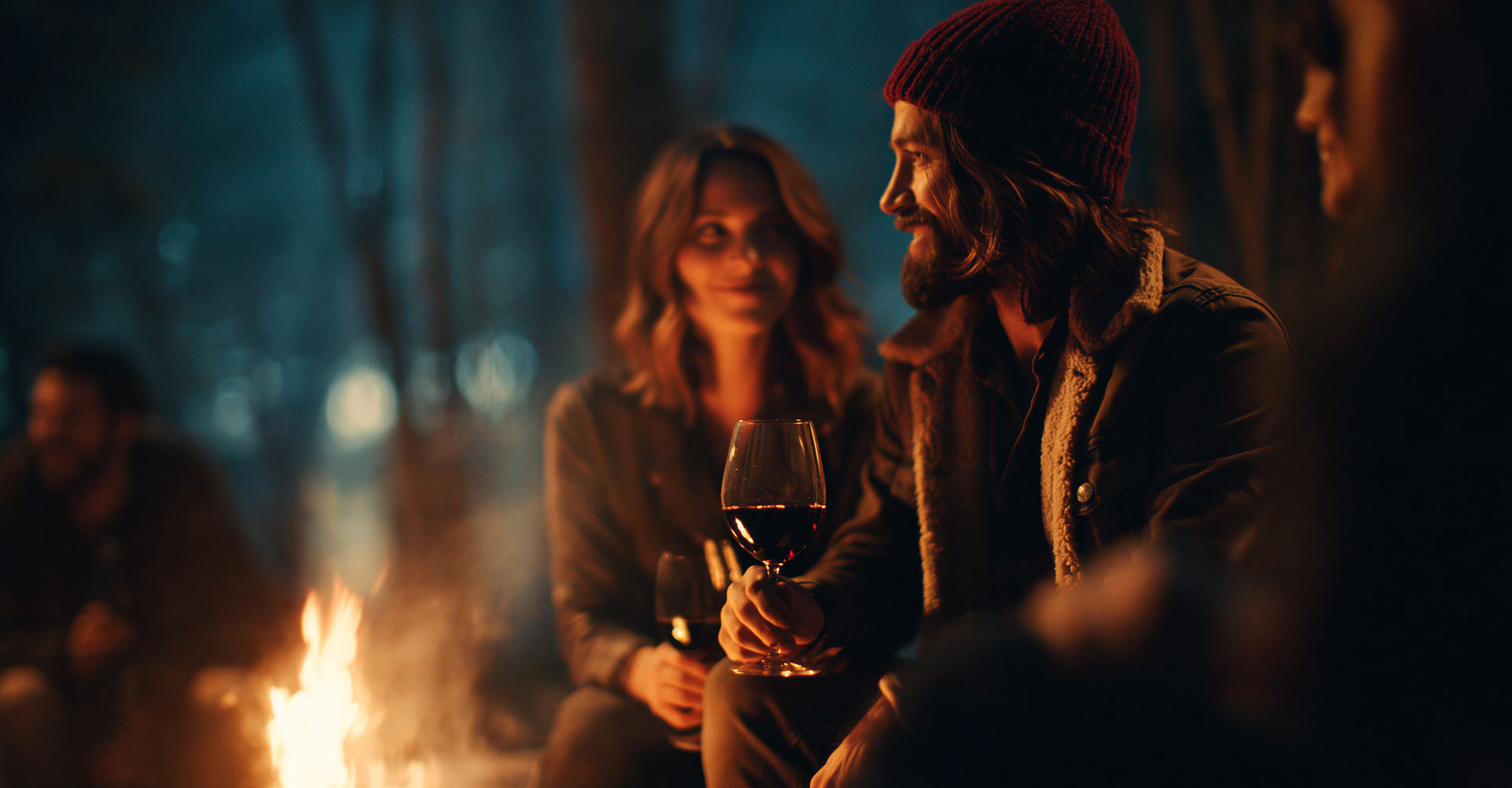
A wine that hits perfectly. It’s not just good. It’s memorable. It connects to where you are, who you’re with, and what’s going on in that moment. It leaves a mark.
I heard something recently that stuck with me.
A bottle that’s waited 20 or 30 years to be opened has lived through things. It’s either sat quietly while the world changed around it, or it’s passed through hands, waiting for its moment.
The people who made it are older now. Some are gone.
And all of that effort, time, and care is released in a single moment that you get to share.
That’s not just drinking. That’s experiencing something.
Why do people drink wine?
People don’t just drink wine for the taste. They drink it because it connects time, memory, people, and place in a way few things can. A glass of wine is part biology, part psychology, part storytelling. It stimulates the brain, softens social barriers, and invites reflection. At its best, wine isn’t about alcohol at all. It’s about being present, being human, and occasionally being a little less guarded while doing so.
Why You Can Trust This Perspective
This isn’t theory pulled from a textbook. It’s built on over two decades of hands-on wine exploration, WSET Level 2 (Merit), and a community of 32,000+ engaged wine followers on WineGuide101.
For example, I still remember opening a Penfolds Grange 707 2005 that had clearly softened over time. The tannins had eased, the fruit had evolved, and it told a completely different story than it would have years earlier. Not better or worse, just different. That moment reinforced something simple. Wine isn’t static. It’s a journey.
My focus has always been simple. Real experiences, honest observations, and a curiosity about what makes a wine worth remembering.
Wine Is Never Just a Drink
We like to pretend wine is simple. Open bottle. Pour. Drink. Repeat.
But the truth is a bit more interesting. Wine is what you might call a “social technology” that’s been quietly doing its job for about 9,000 years. It helps us connect, reflect, and occasionally say things we probably meant to say anyway.
And if you’ve ever paused mid-sip and thought, “This feels like more than just fermented grapes,” you’re not wrong.
The Quiet Weight of History in a Glass
Here’s where it gets slightly philosophical, but stay with me.
Every bottle of wine is a time capsule. Not in a marketing sense, but in a literal one. That vintage you’re drinking? It carries a specific year. The weather, the soil, the decisions, the chaos of that moment in time.
And here’s the part people don’t always say out loud. Many of the people who made that wine are no longer here.
That thought shifts things. Suddenly, it’s not just a drink. It’s a connection to people, effort, and moments that have passed. You’re not escaping reality. You’re engaging with it, just across time.
That’s what makes wine different from most drinks. It carries memory.
Wine, Mortality, and the Slightly Uncomfortable Truth
Wine has a habit of reminding you that time moves on whether you like it or not.
There’s a long tradition of this idea, often wrapped up in the phrase memento mori – remember that you will die. Cheerful, I know.
But in practice, it’s not about gloom. It’s about perspective.
A good bottle encourages you to slow down, notice things, and maybe appreciate the moment you’re in rather than rushing to the next one. Not a bad trade-off for something that pairs well with steak.
Wine as Muse: Poets, Philosophers, and Slightly Dramatic Thinkers
Writers have been trying to explain wine for centuries, usually with more enthusiasm than restraint.
- Pablo Neruda, the Chilean Nobel Prize-winning poet known for his sensual writing, saw wine as something alive and deeply human
- Charles Baudelaire, the 19th-century French poet with a darker, more philosophical edge, treated wine as if it had a soul (and possibly a plan)
- Li Bai, an 8th-century Chinese poet, famously wrote about drinking alone with the moon, which feels ambitious but oddly relatable
Strip away the poetry and the point is simple. Wine amplifies experience. It sharpens emotion, memory, and perspective. And in my experience, that’s exactly what keeps you coming back. Not just for the wine itself, but for how it makes moments feel more vivid, more memorable, and just a bit more alive.
Sometimes it makes things feel deeper than they are. Sometimes it reveals they already were.
The Brain on Wine: More Than Just a Buzz
There’s a practical side to all this as well.
Wine engages the brain in a way most drinks don’t. Tasting isn’t just “nice” or “not nice.” It’s a full sensory workout involving smell, memory, pattern recognition, and judgement.
In fact, the majority of what we call “taste” is actually smell. Which explains why swirling your glass makes you look slightly pretentious but is, annoyingly, the right thing to do.
This is why wine tasting can feel oddly satisfying. You’re not just drinking. You’re solving a puzzle.
The Appeal of Getting It Wrong (and Occasionally Right)
Blind tasting is where things get interesting.
Take away the label, the price, the reputation, and suddenly you’re left with just your senses. No safety net.
Sometimes you get it right and feel like a genius. More often, you don’t, and that’s the point.
Wine has a way of humbling you while still keeping you curious. It sharpens perception, but it also reminds you how easily expectation can influence what you think you’re tasting.
Wine as Social Glue (Without the Corporate Team-Building)
Let’s be honest. Humans are not always the easiest creatures to get along with.
We’re busy, guarded, and generally quite good at keeping conversations on the surface.
Wine changes that.
It acts as a quiet signal that says, “You can relax now.” It slows things down. It gives people permission to linger, talk, and actually connect.
There’s science behind this too. Shared drinking triggers endorphins, which help build trust and social bonds.
In simple terms, wine helps people get on better with each other. Not a bad skill set.
The Art of Slowing Down
In a world that rewards speed, wine does the opposite.
You don’t rush a good bottle. You notice it. You give it time. You pay attention.
Even the basics – see, swirl, sniff, sip – are essentially a built-in mindfulness exercise disguised as a drink.
It’s one of the few everyday rituals that encourages you to stop, rather than scroll.
A Word on the Less Romantic Side
It would be slightly irresponsible to pretend wine is all poetry and philosophy.
Like anything enjoyable, it can drift from occasional pleasure into habit. And habit, left unchecked, can become dependence.
The shift is usually subtle. A glass to unwind becomes the default. Then the expectation.
The key difference is intent.
- Mindful drinking adds to life
- Automatic drinking replaces parts of it
Worth keeping an eye on. That’s where things can shift. And, for the record, I fully endorse drinking responsibly.
So, Why Do We Really Drink Wine?
Because it does a few things at once, and it does them well.
- It connects us to time and place
- It engages the brain in a surprisingly complex way
- It makes social interaction easier
- It encourages us to slow down
- It occasionally makes us sound more interesting than we are
And perhaps most importantly, it gives us permission to be a bit more human. Less rushed, less guarded, and a little more present.
Final Thought
Wine isn’t just about what’s in the glass. It’s about what happens around it.
The conversation, the pause, the memory, the moment where things slow down just enough to notice them.
That’s why it’s lasted thousands of years.
Not because we needed another drink.
Because we needed what it creates.