Wine tourism is growing, but the future doesn’t look like coaches unloading crowds into enormous tasting rooms. In 2026, the strongest vineyard experiences are smaller, more personal and more closely connected to the people, land and culture behind the bottle. For travellers, that means better access and deeper understanding. For wineries, it increasingly means survival.
Wine travel used to be reasonably straightforward. You visited a château, admired several barrels, nodded thoughtfully at some soil and bought a bottle you could have purchased more cheaply at home.
That model isn’t disappearing, but it’s being overtaken by something more interesting.
Wine tourism in 2026 is becoming less about observing wine production from behind a velvet rope and more about entering the world surrounding it. Visitors want access to the vineyard, the winemaker, the farming decisions, the food, the landscape and, ideally, the slightly eccentric family history nobody has yet managed to remove from the official tour.
I’ve visited wineries where the tasting felt like processing passengers through airport security, and others where an hour disappeared discussing soils, pruning decisions and why one vineyard block behaves completely differently from the next. Those are the visits people remember, and increasingly they’re the ones wineries are investing in.
Having spent many years studying wine and visiting producers and wine regions, one thing has become increasingly obvious: the best cellar door experiences don’t just depend on how expensive the winery looks.
This is not simply another luxury travel trend. It reflects a structural change in how wineries make money and how consumers build relationships with wine.
Why is wine tourism becoming so important?
Wine tourism is growing while global wine consumption is under pressure.
The global wine tourism market was valued at approximately $46.5 billion in 2023. Depending on the research model used, it could reach between $57.4 billion and $64.6 billion during 2026, before rising beyond $100 billion early in the next decade.
Europe represented around 51% of global wine tourism revenue in 2023. France alone attracts more than 10 million wine tourists, including approximately 4.2 million international visitors. In the United States, wineries received around 74 million visits during 2023, generating $14.13 billion in tourism expenditure.
These figures sit in curious contrast to the wider wine market, where volumes are falling and younger consumers are drinking less frequently.
The explanation is that people may be drinking less wine, but they’re often willing to spend more on experiences that make wine meaningful.
What’s striking isn’t that wine tourism is growing. It’s where the value is being created. Visitors aren’t paying for tastings alone. They’re paying for access, education and authenticity, commodities that cannot be imported or discounted by supermarkets.
A tasting hosted by the person who farmed the grapes has an emotional value that a discounted supermarket bottle cannot reproduce. One is a product. The other becomes a story retold over dinner for the next five years, occasionally improving with age even when the wine itself didn’t.
Tourism now contributes an average of around 25% of winery revenue globally, increasing to approximately 32% for estates outside Europe. Hospitality is no longer simply an opportunity to sell a few bottles at the cellar door. It’s becoming a central part of the business model.
Bottom Line
The growth of wine tourism isn’t being driven by more people drinking more wine. It’s being driven by consumers spending more on access, learning, food, landscape and memorable experiences.
What do wine travellers want in 2026?
The modern wine traveller increasingly wants participation rather than presentation.
Traditional cellar tours often followed a familiar format: stainless-steel tanks, barrel room, tasting flight, gift shop. Perfectly pleasant, but sometimes as emotionally involving as a regional airport lounge.
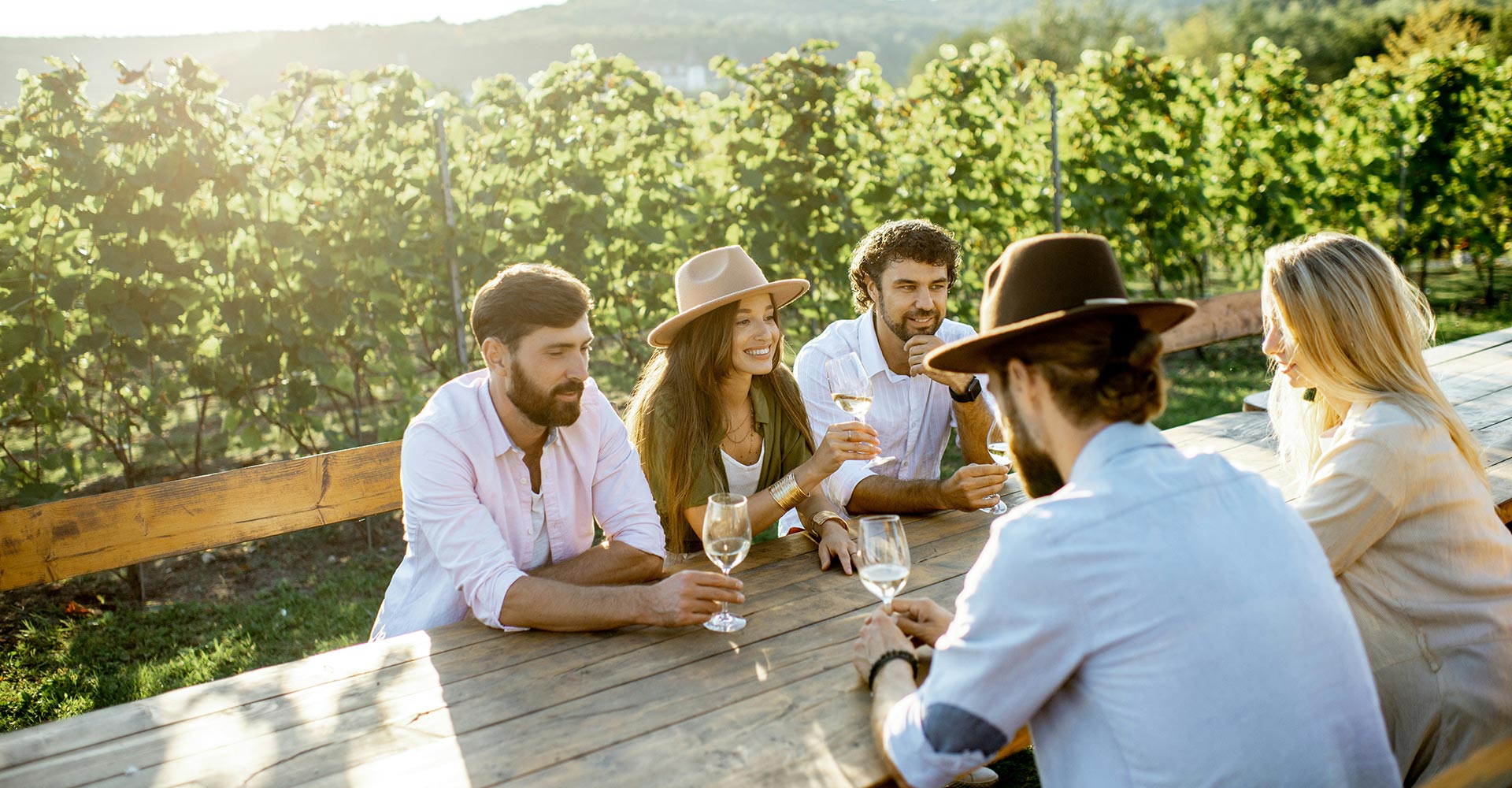
The experiences gaining traction are more focused and personal. They may involve walking through the vineyard with the grower, comparing wines from different parcels, blending a cuvée, eating with the winemaking family or learning how regenerative farming changes the health of the soil.
Smaller groups matter because they make genuine conversation possible. A winemaker can explain why one section of a vineyard behaves differently from another, rather than delivering the same polished speech for the fourth time that afternoon.
Visitors also increasingly want transparency. They’re asking about irrigation, chemical use, water availability, biodiversity, labour, organic certification and the carbon implications of packaging.
This doesn’t mean every visitor has suddenly become a soil scientist. Most people still want a good lunch and a photograph overlooking the vines. They simply want the beauty to be connected to something real.
How should you choose a wine region?
The best wine destination depends less on which region is considered the most prestigious and more on the type of experience you actually enjoy.
For collectors drawn to classical wines, heritage and deep cellars, Champagne and Bordeaux remain obvious choices. Champagne offers chalk soils, traditional-method sparkling wine and spectacular underground cellars, including those at houses such as Pommery and Ruinart.
Bordeaux provides grand architecture, structured Cabernet and Merlot blends and the opportunity to learn why two neighbouring vineyards can produce wines with very different prices, reputations and opinions of themselves.
For lovers of volcanic wines and indigenous grapes, Santorini, Etna and the Canary Islands offer something altogether more elemental. Santorini’s Assyrtiko vines are traditionally trained into low, basket-shaped kouloura to protect them from fierce winds. The resulting wines are known for high acidity, salinity and a distinctive mineral character.
Architecture enthusiasts may be happier in Argentina’s Uco Valley, where dramatic modern wineries sit beneath the Andes. Vineyards planted at altitudes of around 1,000 to 1,500 metres produce Malbec with intensity, freshness and structure. Estates such as Zuccardi have made winery design part of the experience without allowing the building to become more famous than what’s being poured inside it.
Margaret River offers a different type of elegance. Its maritime climate supports refined Cabernet Sauvignon blends, often associated with violet, cedar and fine tannins. Stellenbosch provides equally serious Cabernet-based wines alongside Cape Dutch architecture, mountain scenery and a strong culinary culture.
For travellers interested in regenerative farming and emerging regions, Sussex is becoming increasingly compelling. Its chalk, clay and cool maritime conditions support sparkling wine production, while estates such as Everflyht and Oxney Organic Estate place sustainability and farming practice at the heart of the visit.
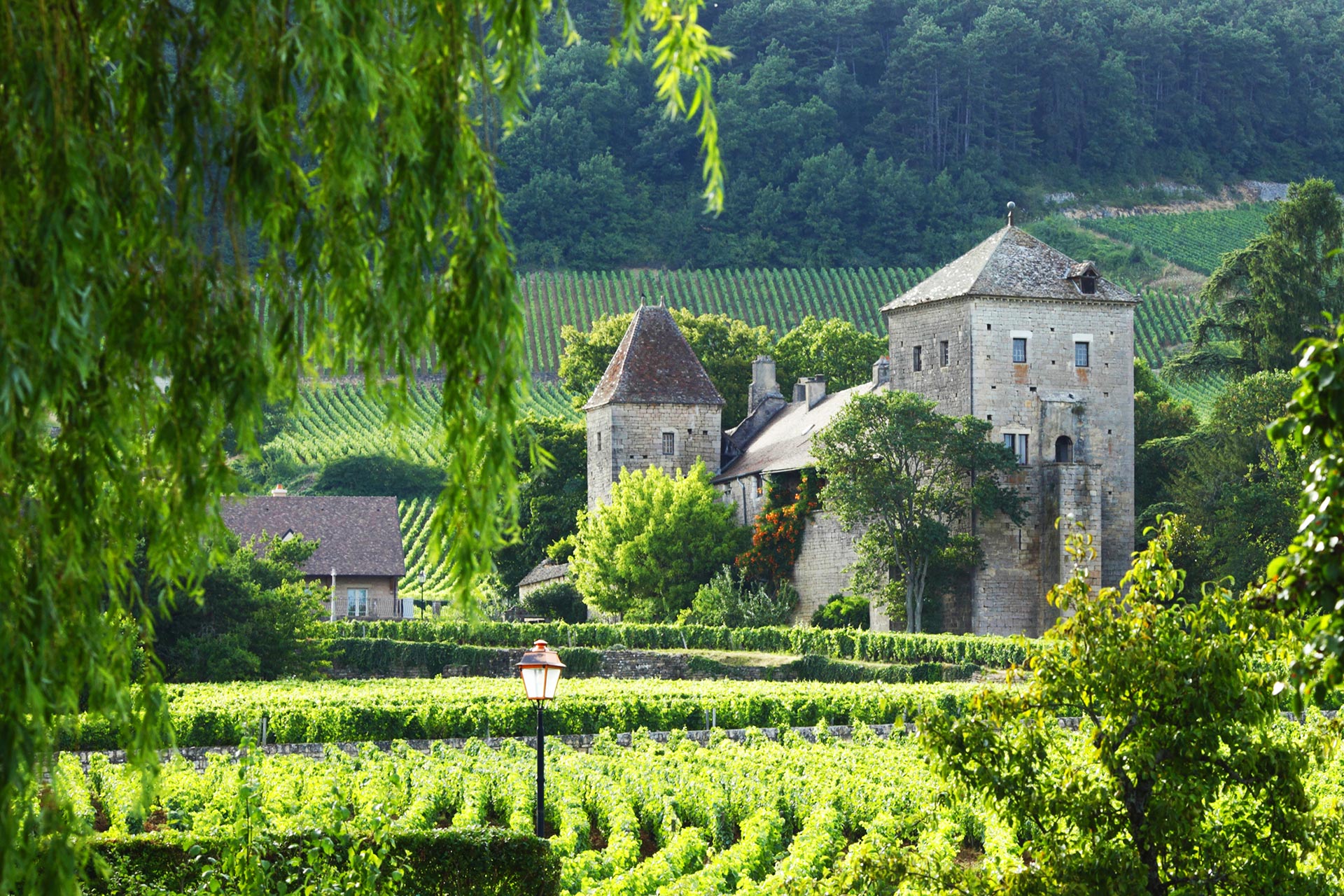
Then there is the Douro, for anyone who likes dramatic landscapes, historic quintas and vineyards that make you wonder how anybody manages to harvest them without ropes and a mild disregard for personal safety.
The region remains closely associated with Port but has also developed an increasingly strong reputation for dry red wines made from grapes including Touriga Nacional, Touriga Franca and Tinta Roriz.
Three wine travel experiences worth building a trip around
Sussex: English sparkling wine and regenerative farming
A three-day trip through Sussex can combine traditional-method sparkling wine, vineyard walks and local food without the organisational commitment of a long-haul flight.
Rather than attempting to visit every producer within driving distance, choose two or three estates that take contrasting approaches. One might focus on regenerative farming, another on traditional sparkling production and a third on still wines or alternative methods.
Allow enough time for lunch, proper conversation and the possibility that one tasting overruns because the owner has decided to open something interesting.
The Douro: terraced vineyards and historic estates
The Douro rewards slower travel. Its steep terraces, winding river and remote estates make hurried itineraries impractical, which is probably good for everyone.
Base the experience around a mixture of established Port houses and smaller producers making dry table wines. Include a vineyard walk, a boat journey and at least one long lunch at a quinta.
The landscape explains the wines more effectively than any tasting sheet ever could.
The Cape Winelands: wine, food and scenery
Stellenbosch, Franschhoek and Paarl offer an unusually rich combination of wine, restaurants, architecture and mountain scenery.
The region suits travellers who want variety. A single itinerary can include Cabernet Sauvignon, Chenin Blanc, traditional-method sparkling wine and Rhône-style blends, alongside serious food and hospitality.
The danger is trying to fit too much into one day. Wine travel should create memories, not require the logistical discipline of a military exercise.
One habit I’ve developed is booking fewer wineries each day. Two thoughtful visits almost always leave a stronger impression than trying to squeeze five tastings into an afternoon. Your palate survives, your conversations improve, and you usually discover wines you’d otherwise have rushed past.
Why hospitality matters to winery economics
The commercial case for winery tourism is becoming impossible to ignore.
When a bottle passes through importers, distributors and retailers, each layer takes a margin. Transport, storage, tariffs and taxes further increase the final price without necessarily increasing the amount received by the producer.
Direct sales allow wineries to retain more value. Profit margins on direct-to-consumer sales can be around one-third higher than those achieved through traditional wholesale distribution. For some premium wineries, direct sales account for approximately 72% of revenue.
However, direct-to-consumer wine sales are not immune from pressure. US shipment volumes fell by 10% during 2024 to 6.4 million cases, while the value of shipments declined by 5% to approximately $3.9 billion. Volumes reportedly continued falling during the first half of 2025.
The average price of a shipped bottle has increased sharply, rising around 40% since 2019. Shipping wine has become more expensive, and consumers have become more selective.
This makes the physical visit more valuable. Hospitality creates an emotional connection before asking for a purchase or club membership.
In conversations with producers, the discussion increasingly turns away from simply selling bottles and towards building long-term relationships. A memorable visit today can create an online customer, a wine club member or someone who returns with friends next year.
The performance gap is widening. Top-performing wineries reportedly increased direct revenue by 22% during 2025, while weaker performers experienced declines of around 13%.
The lesson is not simply to build a smarter tasting room. Successful wineries are creating experiences that justify the price, encourage repeat purchasing and give visitors a reason to remain connected after they’ve returned home.
Wine club members can have an average lifetime value of around $2,803, making retention commercially significant.
Bottom Line
The tasting room is no longer the decorative front end of the winery. It is part showroom, part classroom, part restaurant and part customer acquisition strategy.
How younger consumers are changing wine travel
Millennial and Generation Z engagement with fine wine is often driven by friends, communities and memorable occasions rather than family tradition.
For many younger drinkers, the defining wine moment isn’t being handed a bottle from a parent’s cellar. It’s a vineyard visit, a shared dinner or a tasting organised by people they trust.
This explains the growth of informal tasting groups, university wine societies and friends sharing the cost of premium cases. Wine is being approached as a communal experience rather than a solitary badge of expertise.
Safety is becoming part of the hospitality conversation too. Younger consumers have expressed growing concern about drink tampering in traditional nightlife settings. Structured tastings, private events and controlled environments can therefore feel more attractive than crowded bars.
Wine estates are well placed to respond. They can offer seated tastings, visible pouring, smaller groups and hosts who explain what is being served.
The smartest wineries will recognise that younger visitors don’t necessarily want the ceremony stripped away. They want it explained, relaxed and made relevant.
What is the etiquette for vineyard wine tasting?
Good tasting-room etiquette is mostly common sense wearing slightly better shoes.
Hold the glass by the stem rather than the bowl, particularly with sparkling, white and lighter red wines. This prevents your hand from warming the wine and keeps fingerprints away from the part everyone is trying to inspect.
Follow a simple tasting sequence: look at the wine, smell it, then taste. There is no requirement to announce that you detect graphite, antique furniture or the inside of a violin case unless you genuinely do.
Spitting is normal during professional or extended tastings. It helps preserve concentration, especially when several estates are being visited in one day. Move close to the spittoon and use it confidently. Tentative spitting rarely improves the outcome.
Drink water, eat properly and avoid wearing strong perfume, aftershave or scented hand cream. Aroma is central to tasting, and nobody wants to evaluate a delicate old vintage through a fog of synthetic sandalwood.
Ask questions about the soil, grape varieties, farming practices and ageing methods. Good hosts generally prefer curiosity to performance.
Most importantly, describe what you enjoy in clear terms. Saying you prefer fresher wines with high acidity and less obvious oak is far more useful than explaining that you want something which tastes “expensive but not showy”.
Wine travel is becoming more human
The future of wine tourism is not about adding virtual reality headsets to barrel rooms or constructing ever larger visitor centres.
It is about access, relevance and connection.
Consumers want to understand who made the wine, why it tastes the way it does and how the vineyard fits within the surrounding landscape and community. Wineries need stronger margins, closer customer relationships and protection from unstable wholesale markets.
Those interests now align.
The best wineries I’ve visited all had one thing in common. They never tried to impress me with how important they were. They simply shared their vineyard, explained their decisions honestly and poured wines they were proud of. That’s exactly the direction wine tourism appears to be heading.
The best wine experiences in 2026 will often be the smallest ones: a vineyard walk with the grower, a bottle tasted beside the parcel it came from, lunch around a shared table or an honest conversation about the difficulty of keeping a family estate alive.
Wine has always sold itself through stories. The difference is that travellers increasingly want to step inside them.